


Tips and tricks for clearing snow
Advertisement
Hey there, time traveller!
This article was published 30/11/2021 (1657 days ago), so information in it may no longer be current.
Although the official start of winter is still a few weeks away, we’re already knee-deep in the snowy season.
For the next few months, snow-clearing will remain a top-of-mind topic.
Tim Muys, owner of Green Blade Lawn Care — which offers snow-clearing services to more than 1,000 residential customers — provided a few tips for dealing with ice and snow on your property.
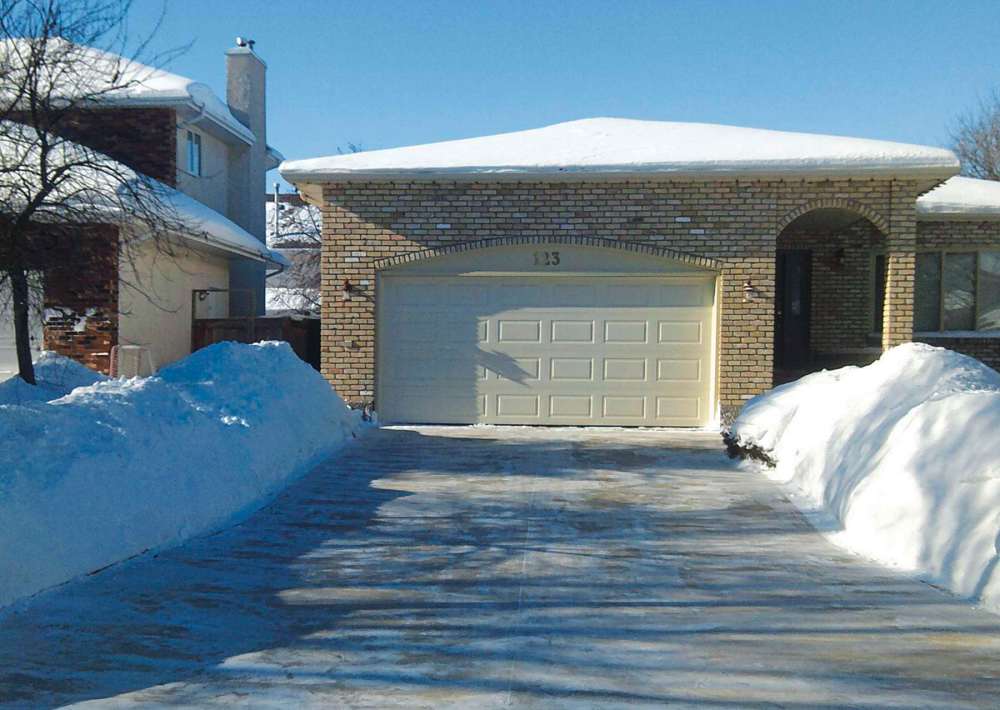
“Here in Winnipeg, we get dandelions and we get snow. It happens every year, yet we wait until the dandelions are blooming to do something about them and it’s the same thing with the snow,” he said.
“If you forget anything under the snow, you can damage your own equipment. It’s easy to forget items, so it’s best to take some time and put them away before the snow flies. Don’t defer.”
Over the years, Muys and his crews have discovered many surprises hidden under the snow — everything from extension cords to bricks to dog chains and much more.
“I’ve been doing this for 25 years. In all those years, we’ve gotten extension cords tangled up in our snowblowers and wrapped around our equipment. Get those Christmas light extensions out of there and don’t let them lay around,” he said.
“Our machinery has also sucked up loose bricks that people have used to prop up downspouts. You should get those downspouts off the house or put them up. Snow and ice can accumulate in the extensions on downspouts, and then they weigh a ton — and they can even snap right off.”
Likewise, Muys suggests that residents move their planters away from the edges of their driveways since that’s where the white stuff piles up during snow clearing. If you accidently tap planters during the winter, when they’re frozen and brittle, they might end up breaking.
“Also, people who leash their dogs outside often leave the dog chain on the steps,” he said.
“When it snows, you can’t see it. If a snowblower goes on top of that and sucks it in, that’s no fun at all. Put the leash off to the side or take it inside.”
This year, the first snowfall was wet and heavy, leading to lots of slush on walkways and driveways. Muys recommends removing slushy messes as soon as possible before they turn to ice.
“The quicker you get snow off, the less tracks you’re going to have to scrape off due to compaction later on,” he said.
“Speaking of compaction, we have full-time staff who work all winter long. In between snowfalls, their task is to scrape off all the tire tracks and any little bits of snow on driveways so it doesn’t begin to accumulate,” Muys said.
“If you don’t get those tire tracks off the driveway, it makes it very inefficient to clear snow. Yet if you keep those tire tracks off, it just makes the job so much easier the next time it snows.”