


Indigenous tourism in Manitoba

Advertisement
Hey there, time traveller!
This article was published 28/06/2023 (1215 days ago), so information in it may no longer be current.
Indigenous Tourism Manitoba is an organization created to support the more than 150 Indigenous tourism operators throughout the province. They help bring both domestic and international visitors to businesses that contribute to Indigenous economies through unique tourism offerings.
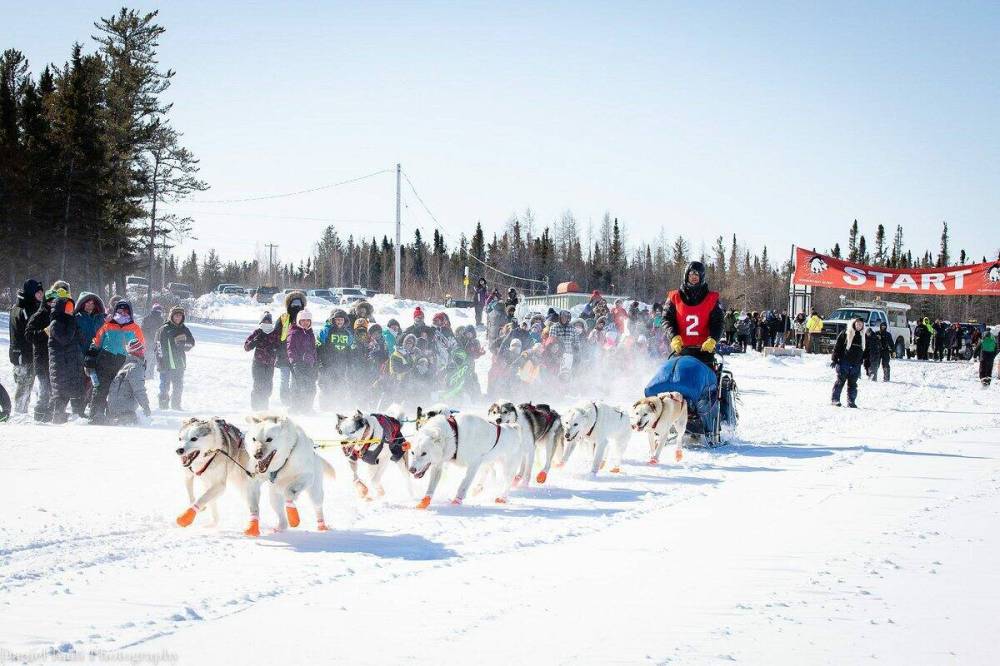
One of the trailblazers of Indigenous tourism is Wapusk Adventures in Churchill. The company started in 2001, when dog musher Dave Daley began running dog-sled excursions. What began with 10 dogs and a dream grew into a multi-award-winning company with more than four dozen dogs that takes thousands of tourists each year on rides through the beautiful boreal forest. Tours include dog sledding with cultural talks, snow shoe walks, and northern lights viewing.
Daley has long been a key player in the development of Indigenous tourism, and continues to be. As the chair of ITM he is an ongoing advocate for the sector, working together with Travel Manitoba and the Indigenous Tourism Association of Canada to develop opportunities for Manitoba-based companies. A fun fact about Daley is that he’s had a song written about him – The Ballad of Dave Daley, by Roy Mexted – which is available on streaming sites.
Supplied photo
Wapusk Adventures in Churchill is one of the trailblazers of Indigenous tourism in Manitoba. The company runs dog-sled excursions with more than four dozen dogs which take tourists on rides through the boreal forest.
Melanie Gamache is a francophone Métis beadwork artisan based in Ste. Genevieve. She took up beading in 2015 before beginning Borealis Beading, gradually growing the company from creating her own pieces to organizing and hosting cultural learning. Her hands-on creative experiences allow participants to practice the art of beading, finger weaving, or quilting.
Gamache’s teachings are delivered in a style reflective of the traditional beading circle, where family and friends would gather together to do beadwork and share stories. Along with the hands-on introduction to beading, other activities include fireside chats, walks through the aspen forest to identify medicinal plants, and tastings of locally-sourced foods like bison jerky, honey, cheese, and butter.
While tourism is most times enjoyable, sometimes it isn’t. The National Indigenous Residential School Museum of Canada was established at the former Portage la Prairie Indian Residential School. Construction of this building started in 1914, and by 1915 it was ready to house staff and students. Children from Long Plain First Nation and northern communities, as well as Inuit children, attended here.
The Portage Indian Residential School was one of 17 residential schools in Manitoba and one of 164 across Canada, resulting in an estimated 150,000 Indigenous children being taken from their homes. Today, the museum is an important part of Canada’s history, helping to shed much-needed light on this dark past, and preserving a heritage that needs to be preserved.
While there have been many songs written in recent years that reflect on residential schools, no song says it better than Perfect Crime, by Aaron Peters. The accompanying music video released in 1996 features the actual building, and depicts the disturbing reality of what life would have been like for young children at the former Portage Indian Residential School.
The haunting rock ballad will give you chills, especially these opening lyrics: “From unmarked graves their bones cry out, don’t let what happen to us be forgotten…” It’s especially chilling when you realize that Perfect Crime was released a full 25 years before the remains of 215 children were discovered buried in unmarked graves.
Let’s not let them be forgotten.
RoseAnna Schick
Travelations
RoseAnna Schick is an avid traveller and music lover who seeks inspiration wherever she goes. Email her at rasinspired@gmail.com
Our newsroom depends on a growing audience of readers to power our journalism. If you are not a paid reader, please consider becoming a subscriber.
Our newsroom depends on its audience of readers to power our journalism. Thank you for your support.
RoseAnna Schick
Travelations
RoseAnna Schick is an avid traveller and music lover who seeks inspiration wherever she goes. Email her at rasinspired@gmail.com
Our newsroom depends on a growing audience of readers to power our journalism. If you are not a paid reader, please consider becoming a subscriber.
Our newsroom depends on its audience of readers to power our journalism. Thank you for your support.
Advertisement Advertise With Us
Advertisement Advertise With Us