


The ins and outs of prenuptial agreements

Advertisement
Hey there, time traveller!
This article was published 01/05/2024 (843 days ago), so information in it may no longer be current.
Dear Money Lady,
How do I get a prenuptial agreement without paying high lawyer fees? This is a second marriage; I am very close to retirement plus we both have government pensions. My partner has three adult kids and I have two. We are both agreed that we should have something in writing.
Thanks,
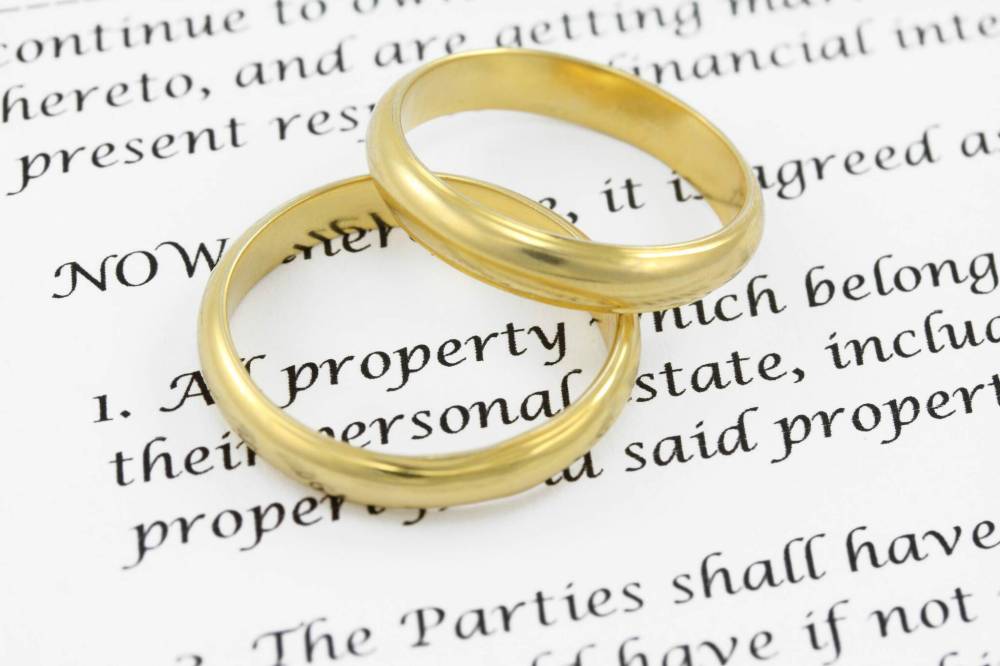
Dreamstime
If you have assets – the car, the house, the cottage, and all your stuff, why would you risk all you’ve worked for by not having a prenuptial or cohabitation agreement?
Helen M.
Hello Helen,
This is a question I am often asked. It seems like people know it’s a good idea to have a prenuptial or cohabitation agreement, but they don’t want to spend the money to get one. My answer to this is: Why not?
If you have assets – the car, the house, the cottage, and all your stuff, why do you want to risk all that you’ve worked for by not having a written understanding? Even if it costs you a couple of thousand dollars to get one, isn’t that money well spent, for both of you?
Let’s start with the easiest domestic contract, and the least expensive — a cohabitation agreement. Cohabting partners have very few legal rights to property when compared to married couples. Typically, the property you bring into the relationship, plus any increase in its value, continues to belong to you alone. This would include investment assets, registered accounts, real estate, or chattels.
The main reason for drawing up a cohabitation agreement is to provide for a division of property if the relationship breaks down. The most straightforward way is to state that all property remains the separate property of each individual and to provide in the contract for a “separation of property regime.” This means that all property, including assets owned before cohabitation, plus any increases in value, and all property acquired during the relationship is owned strictly according to title. This type of domestic agreement is very different to a marriage contract and not usually ideal for long-term partners. That said, cohabitation agreements are not as rigid as marriage prenups, they’re a lot less costly, and contracts can be crafted with a lot more freedom or creativity based on the conditions and circumstances that each party is in when they begin their union and plan a life together. If you don’t have a lot of assets and you’re planning on just living together and not getting married, a co-habitation agreement is a good, less expensive option.
Now let’s talk about prenups. This is a marriage contract you typically enter prior to the marriage. However, they can also be signed or amended at any time during a marriage. I have always recommend getting a marriage contract for older couples who bring assets to the marriage.
Prenups are extremely beneficial for comprehensive estate planning, which always must include death succession, not just the possibility of divorce. To protect each other, you want your lawyer to be interested in what will happen in the event of one of you dying and you must have the marriage contract and your new will “in synch.”
The reason I say this is that marriage contracts can, and often do, override existing wills. Marriage contracts can be limited in scope and to be valid and enforceable, the spouses must have made full and complete disclosure of all their assets and the current values, including debts and liabilities. You also want independent legal advice, so that the marriage contract is less vulnerable and can’t be challenged by family members after a death and set aside by the courts. Remember, this is not about a lack of love but rather a mutual understanding that you both agree to, drafted with your lawyer and signed well in advance of your wedding date.
Christine Ibbotson
Ask the Money Lady
Our newsroom depends on a growing audience of readers to power our journalism. If you are not a paid reader, please consider becoming a subscriber.
Our newsroom depends on its audience of readers to power our journalism. Thank you for your support.
Christine Ibbotson
Ask the Money Lady
Our newsroom depends on a growing audience of readers to power our journalism. If you are not a paid reader, please consider becoming a subscriber.
Our newsroom depends on its audience of readers to power our journalism. Thank you for your support.
Advertisement Advertise With Us
Advertisement Advertise With Us