


North, to the Yukon

Advertisement
Hey there, time traveller!
This article was published 07/08/2024 (732 days ago), so information in it may no longer be current.
There are a few different ways to get to Dawson City in the Yukon Territory. You can fly-in by passenger or charter flight, take a float plane or a helicopter. You can drive up on Highway 2, the only road that gets you there. Or you can boat in on a waterway like the Yukon River which flows north from northern B.C, into the Yukon and beyond into Alaska, before emptying into the Bering Sea.
Or you can do it the hard way – and perhaps the most memorable way – as I did in August of 2023. Along with my niece Brittani Schick, we paddled by canoe from Whitehorse to Dawson City. The exhilarating (and sometimes exhausting) 706-kilometre journey took us 10 days. We travelled through pristine wilderness, earning the privilege of witnessing stunning landscapes, gorgeous sunsets, and lots of wildlife, too.
Gold was discovered in Bonanza Creek, a tributary of the Klondike River, in August 1896, sparking the Klondike Gold Rush and attracting a steady influx of prospectors and adventurers, who arrived in droves from around the world. The journey up the Yukon River from Whitehorse to the gold fields was a crucial part of the process.
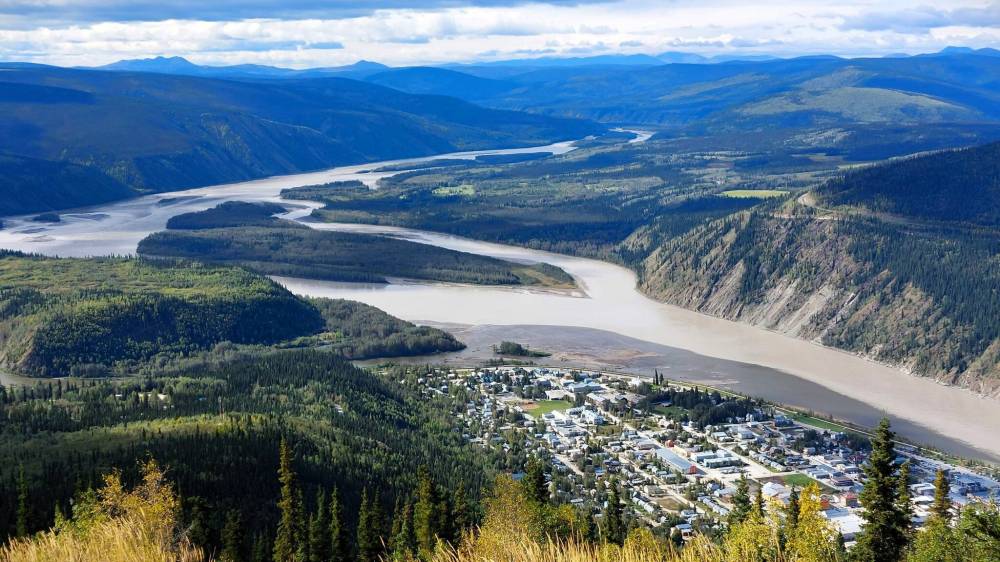
Photo by RoseAnna Schick
Dawson City is located on a picturesque part of the Dawson River.
Dawson City was founded that same year, along the banks of the Yukon River. Before it grew into a bustling hub, the region was inhabited by Indigenous peoples who had lived in the Yukon for thousands of years – including the Hän, the Gwich’in, and the Kaska Dene.
By 1898, Dawson City had grown from a modest settlement into a booming town of about 30,000 people. At its peak, it was home to a vibrant and rowdy atmosphere known for its saloons, gambling halls, and brothels. It also became a hub of northern aviation, as the first successful aircraft landing in the Arctic was in Dawson City in 1925.
The Yukon River was a critical lifeline during this busy era, connecting Dawson City to the outside world and facilitating the flow of people and goods. The journey up from Whitehorse was arduous but essential for those seeking their fortunes. Despite the extreme conditions, treacherous terrain, and gruelling physical demands, the lure of gold continued to draw newcomers.
In the late 19th and early 20th centuries, the river journey typically took two to three weeks. The trip was challenging, with strong currents, shallow shoals, rugged terrain, and rapidly changing weather. Riverboats were vital for transportation, carrying supplies, mining equipment, and passengers. Those who couldn’t afford a ticket had to make their own way up the river by other means – with countless people perishing along the way.
The “Shipwreck Graveyard,” a short distance downstream from Dawson City along the opposite riverbank, has become a notable historical site. Here you’ll find remnants of several steamboats that were abandoned and left to decay, providing a ghostly glimpse into the important role they played during the Klondike Gold Rush.

Visitors to modern-day Dawson City can tour a historic steamboat on the town’s waterfront. The S.S. Keno operated on the Yukon River from 1922 to 1955, and was one of the last paddle-wheelers to make the journey up from Whitehorse. Today, the S.S. Keno is preserved as a Klondike National Historic Site, and is a classic example of the riverboats that once kept Dawson City connected to the outside world.
MORE TO COME: My next Travelations column will share more about Dawson City’s modern era, some of the must-see attractions, and the warm and welcoming community of people who live there today.
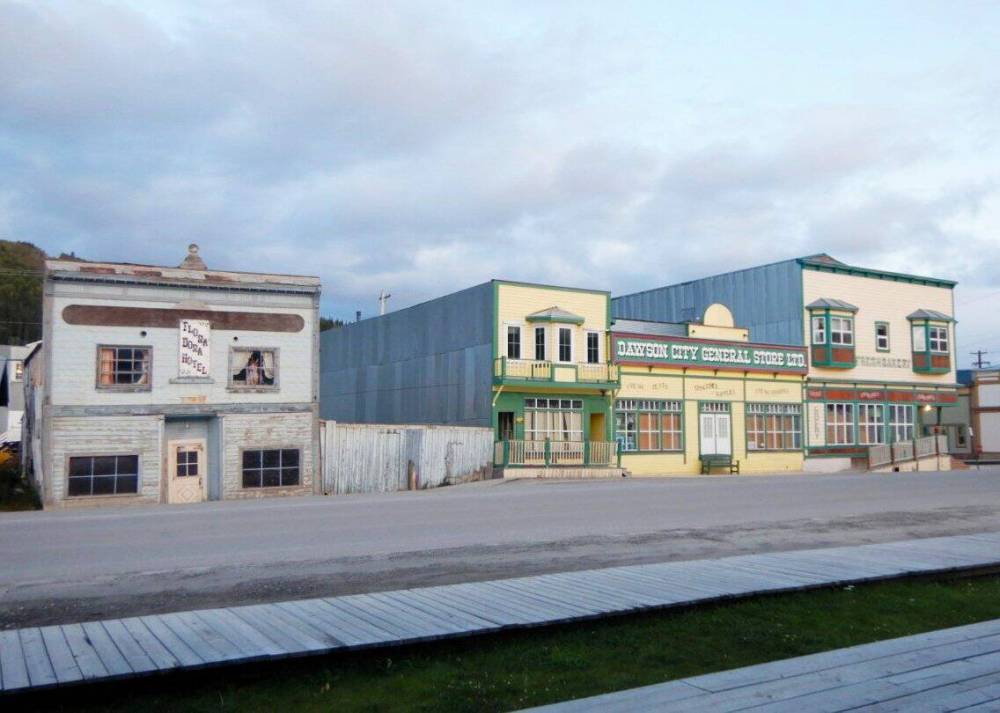
Photo by RoseAnna Schick
At the peak of the Klondike Gold Rush, Dawson City was a teeming little metropolis of 30,000 people
RoseAnna Schick
Travelations
RoseAnna Schick is an avid traveller and music lover who seeks inspiration wherever she goes. Email her at rasinspired@gmail.com
Our newsroom depends on a growing audience of readers to power our journalism. If you are not a paid reader, please consider becoming a subscriber.
Our newsroom depends on its audience of readers to power our journalism. Thank you for your support.
RoseAnna Schick
Travelations
RoseAnna Schick is an avid traveller and music lover who seeks inspiration wherever she goes. Email her at rasinspired@gmail.com
Our newsroom depends on a growing audience of readers to power our journalism. If you are not a paid reader, please consider becoming a subscriber.
Our newsroom depends on its audience of readers to power our journalism. Thank you for your support.
Advertisement Advertise With Us
Advertisement Advertise With Us