


Galicia in Spain

Advertisement
Hey there, time traveller!
This article was published 30/04/2025 (392 days ago), so information in it may no longer be current.
The northwest region of Spain, known as Galicia, is home to lush landscapes and historic sites. With rolling green hills, misty forests, and hidden hamlets, it feels untouched by time.
Galicia is known for the city of Santiago de Compostela. At the heart of its old town is the magnificent cathedral that marks the end of the Camino de Santiago pilgrimage, and the tomb containing presumed remains of Saint James.
Galicia has deep Celtic influences, and its own language – Galician – which is closely related to Portuguese. The countryside is diverse and unspoiled, featuring mountains, forests, vineyards, and rugged coastlines, with small villages that reflect the region’s cultural heritage.
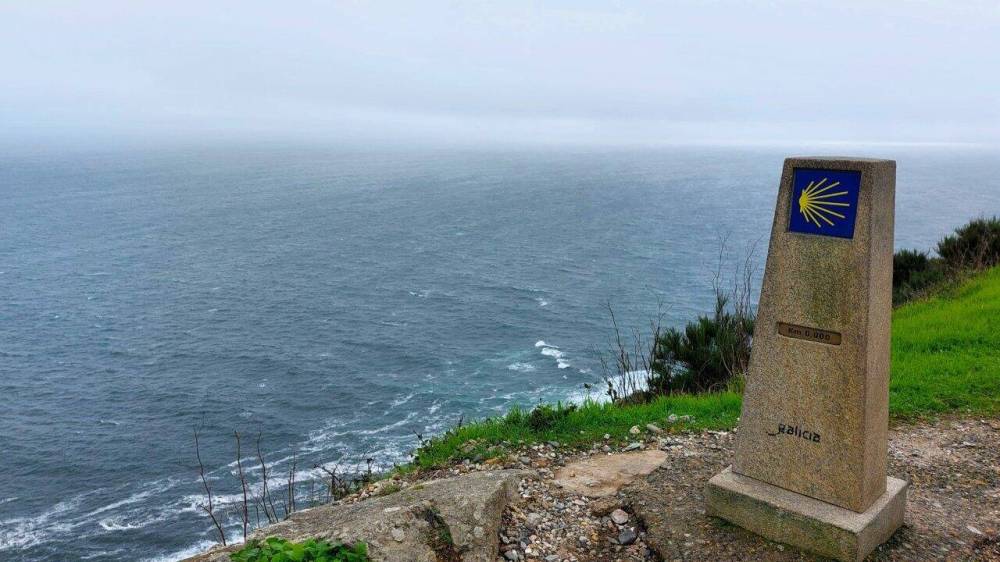
Photo by RoseAnna Schick
Fisterra, the rocky headland long regarded as the ‘end of the world,’ remains a symbolic point of arrival for pilgrims completing the Camino de Santiago, with its lighthouse serving as a prominent landmark, and the highly photographed ‘0.000’ kilometer marker.
Travelers seeking a nature-focused experience will find several cool places worth exploring. One of Galicia’s striking landscapes is Ribeira Sacra, an area defined by breathtaking river canyons and terraced vineyards. The Sil River winds through the valley, creating dramatic scenery visible from viewpoints like Mirador de Cabezoás.
The region features centuries-old monasteries, many of which are still in use today. Riverboat tours provide an opportunity to see the area from a different perspective, highlighting its unique geological formations and historical landmarks.
Another interesting destination is Fragas do Eume, one of Spain’s best-preserved and most magical forests. This protected area is characterized by dense vegetation, moss-covered trees, medieval ruins, and well-marked hiking trails. Within the forest visitors can find Caaveiro Monastery, a secluded structure surrounded by nature. Vía Verde del Eo is a beautiful greenway that follows an old railway track through valleys and alongside stunning rivers.
For those who like mountainous terrain, Los Ancares offers a remote and rocky setting. Situated near the border with Asturias and Castilla y León, this region is known for its traditional pallozas, or round stone houses with thatched roofs. Hiking trails that pass through valleys and ridges provide views of the surrounding peaks. Due to its isolation, Los Ancares remains one of Galicia’s least-visited natural areas, appealing to those in search of tranquility.
Galicia’s coastline boasts impressive landscapes, particularly in the region known as Costa da Morte. The wild shore here is characterized by dramatic cliffs, remote fishing towns, and historical sites linked to legendary shipwrecks and maritime history.
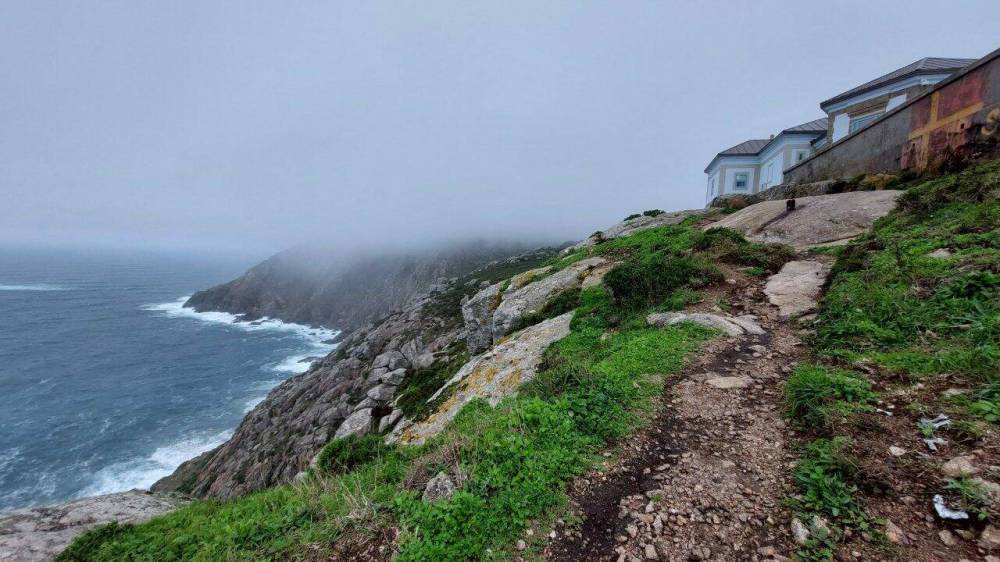
Photo by RoseAnna Schick
Galicia’s coastline boasts impressive landscapes, particularly in the region known as Costa da Morte.
With so many intriguing coastal locales, it’s not a surprise that Galicia is famous for seafood – with one of the favourites being octopus (pulpo a la gallega). You’ll find this dish present on just about every menu, prepared in several different ways.
A must-see location is Fisterra, the rocky headland long regarded as the ‘end of the world’. Today, it remains a symbolic point of arrival for pilgrims completing the Camino de Santiago, with its lighthouse serving as a prominent landmark, and the highly photographed ‘0.000’ kilometer marker.
Whether exploring the forests, mountains, or coastal areas, visitors to Galicia are sure to experience the natural beauty and historical significance that define this special part of Spain.
Photo by RoseAnna Schick
Galicia’s coastline boasts impressive landscapes, particularly in the region known as Costa da Morte.
Photo by RoseAnna Schick
Fisterra, the rocky headland long regarded as the ‘end of the world,’ remains a symbolic point of arrival for pilgrims completing the Camino de Santiago, with its lighthouse serving as a prominent landmark, and the highly photographed ‘0.000’ kilometer marker.
RoseAnna Schick
Travelations
RoseAnna Schick is an avid traveller and music lover who seeks inspiration wherever she goes. Email her at rasinspired@gmail.com
Our newsroom depends on a growing audience of readers to power our journalism. If you are not a paid reader, please consider becoming a subscriber.
Our newsroom depends on its audience of readers to power our journalism. Thank you for your support.
RoseAnna Schick
Travelations
RoseAnna Schick is an avid traveller and music lover who seeks inspiration wherever she goes. Email her at rasinspired@gmail.com
Our newsroom depends on a growing audience of readers to power our journalism. If you are not a paid reader, please consider becoming a subscriber.
Our newsroom depends on its audience of readers to power our journalism. Thank you for your support.
Advertisement Advertise With Us
Advertisement Advertise With Us