


Elm trees a priceless neighbourhood treasure
Advertisement
Hey there, time traveller!
This article was published 25/07/2012 (5183 days ago), so information in it may no longer be current.
One of the nicest things about living in River Heights is all the wonderful old elm trees in the neighbourhood.
This can be both a blessing and a curse. But there are few finer sights in the summer than seeing the streets of old character houses in our neighbourhood sitting under a lush canopy of elms in full bloom. It’s like having our own personal rain forest, on a miniature scale, and a living testament to the foresight of city planners of a hundred years ago.
In those days before air conditioning, the shade afforded by these trees was the principal means of keeping your house cooler during the summer months.
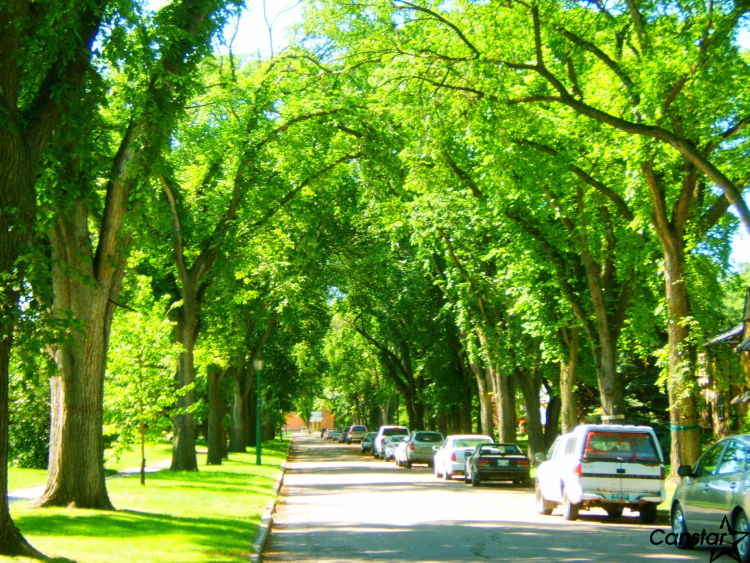
Elm trees can have a life span of 200 to 300 years, so technically you could still call them young trees, or perhaps middle-aged.
They can also be a curse, though, as blights such as Dutch elm disease and cankerworm infestations ravage these trees. Dutch elm was first noticed in Winnipeg in 1975 and five years later the provincial government of the day enacted the Dutch Elm Disease Act and set in motion a control program to save our elms.
This program is run today by the City of Winnipeg which inspects all elm trees in the city annually between mid June and mid September for signs of Dutch elm disease. Early warning signs are premature wilting, yellowing or browning of leaves. If you notice any such problems with your trees you can call the city’s 311 information line and request another inspection.
According to Trees Winnipeg (Coalition to Save the Elms), there are 280,000 boulevard trees in Winnipeg, 170,000 of which are American elms. Each year between 2% to 3% of these trees are lost to Dutch elm disease. There’s no sadder sight than that of a dead elm denuded of its foliage and emblazoned with the dreaded red circle of death that city workers use to indicate it’s time has come to an end.
Another problem is bugs, specifically cankerworms which can strip a tree of its leaves in no time at all. And this is where a homeowner, or should I say tree owner, can be proactive by banding the trees.
Tanglefoot bands can be bought and installed by homeowners. Wrap the band around the tree four to five foot above the ground and “goop” it up with the tanglefoot compound. For best results band the trees in late fall to prevent spring infestations. Check the bands in the spring and re-goop if necessary. Bands should be removed for the summer, usually after the Victoria Day weekend and reinstalled again after Labour Day.
If you don’t want to do it yourself then commercial tree banding services are available at a modest fee. One such reasonably-priced service in our neighbourhood is run by Alastair Knowles of Montrose Street who will come out to your house with his crew and attach tree bands, goop them, remove them and reinstall them as required. He can be contacted at (204) 488-6633 or alastairjknowles@gmail.com.
If you feel you need more trees, be aware that Manitoba Hydro is running a forest enhancement program whereby volunteer groups and non-profit organizations that oversee community parkland or playgrounds can get assistance with tree planting. For more information contact www.hydro.mb.ca/environment/forest_enhancement or phone (204) 360-3356.
Now get out there and hug a tree.
Trevor Smith is a community correspondent for River Heights. You can contact him via email at smitht@mymts.net.