


In search of a sash for Festival?
Advertisement
Hey there, time traveller!
This article was published 26/01/2016 (3887 days ago), so information in it may no longer be current.
Each year, when Festival du Voyageur rolls around, I think about getting a sash.
Sashes have been part of traditional Métis and French-Canadian dress in Canada for over two centuries. They also happen to be a common sight at the Festival, along with Sorels, smiling faces, and ice glasses filled with Caribou.
For me, getting a sash is not about completing a look but recognizing a part of my own past. My French-Canadian roots run deep through Canadian history, reaching as far back as the mid-1600s. My wide-ranging ancestors include royal appointees of King Louis XIV; and a character who stole weapons from a British garrison to arm the Acadians, later getting captured, flogged, and branded on the forehead with a goose’s foot to mark him as a thief. Most, I assume, lived lives somewhere between these two extremes.
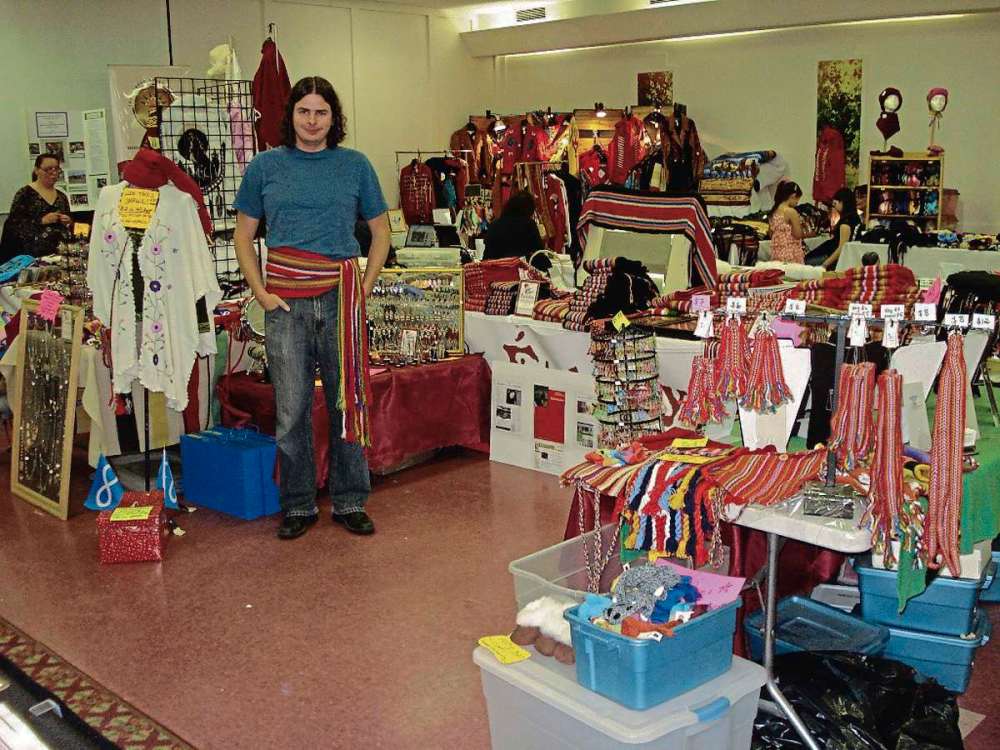
My quest for a sash took me to Miguel Vielfaure, proprietor of Étchiboy — a local business that creates and sells traditional Métis products including sashes. Étchiboy sells several different sashes, each with its own historical connection, and I was hopeful that he could find something that connected with my past.
Miguel explained that, much like other items of clothing, there were casual sashes and formal sashes — the formal ones being finger-woven and typically more colourful. I settled on a replica of an Assomption sash, similar to that worn by Jean-Baptiste Lagimodière, voyageur and grandfather to Louis Riel. It is a fine-looking, colourful arrow sash, or ceinture fléchée, so called because of the opposing diagonal weave pattern.
Assomption Quebec was a hub of sash-making back in the day, just across the river from where Jean-Baptiste Lagimodière was thought to be born and also, as it turns out, an area where several of my ancestors lived at that time. An Assomption sash was therefore a logical choice for me. If my ancestors were stylish enough to wear a sash, it would probably have been something like this.
The Étchiboy sashes are not made in Assomption, Que. They are made in Peru by single mothers and orphans of the indigenous Quechua people. This unique connection between Canadian Métis culture and the Peruvian Quechua not only keeps the sashes affordable by reducing the cost of production but it provides a good income for people living in difficult circumstances.
For those interested in sashes, or Métis-themed clothing and accessories, you can find Miguel’s creations at Neechi Commons, the St. Boniface Museum, or on-line at etchiboy.com. You will also find him at Festival du Voyageur where he will be set up in Voyageur Park throughout the week.
Derick Young is a community correspondent for Southdale.