


East bank of Seine must be stabilized

Advertisement
Hey there, time traveller!
This article was published 30/10/2017 (3211 days ago), so information in it may no longer be current.
Last month, I wrote about the need for more water in the urban Seine River. Abundant, clean, and reliable water is vital to the health of every river.
This summer, the source of water for the urban Seine River was not abundant or reliable. The river dried up in places by mid-August. Even the mouth of the river (east of Lagimodiere-Gaboury Park) was almost dry last week when I visited the site of the Branch 1 aqueduct. The Red River is low and it is not backing up into the Seine. The old shoring for the aqueduct was clearly visible in the exposed mud.
The topic of low water levels in the river attracted many people to Save Our Seine’s annual general meeting on Oct. 23. The room was filled to capacity. People wanted to understand why the river they love is ailing.
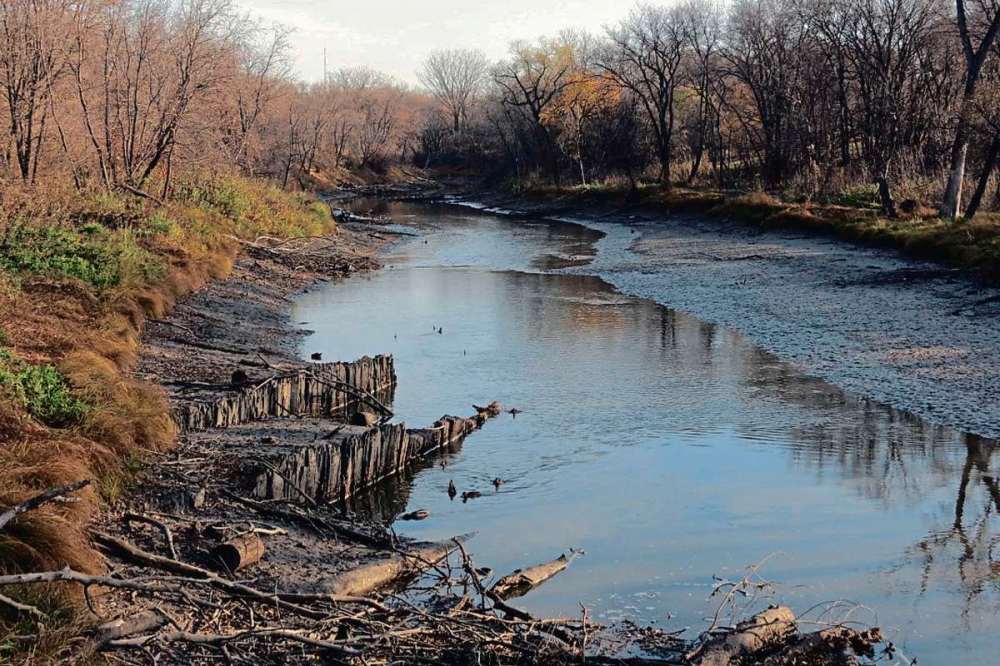
Speakers talked about the summer droughts the region has experienced since 2008 as well as the large-scale changes to the watershed that have reduced the amount of water in the river before it enters Winnipeg. Presentations sparked questions and ideas about ways to improve the flow in the river during droughts.
Clean, reliable, and abundant water is also vital to the growth of a city. Shoal Lake, southeast of Falcon Lake, has been a reliable source of water for Winnipeg since 1919. Branch 1 of the aqueduct carries water under the Seine River to the McPhillips Pumping station. It provides clean water to 40 per cent of Winnipeg.
Monitoring has shown that the east bank of the Seine River has become unstable. Further movement of the bank could damage the 98-year-old aqueduct. The west bank was stabilized in 2001. It is now necessary to stabilize the east bank.
This involves clearing a 30- to 50-foot area and installing four rows of rock-filled steel columns into the riverbank. Each column is eight feet in diameter and 45 feet long.
Some riparian forest will be removed during the construction beginning in January. Trees and natural vegetation will be restored once the project is complete. Unfortunately, the popular river trail and bike path will be inaccessible during this work.
Scatliff+Miller+Murray is hosting a public information session to explain more about the project and answer questions between 4 and 7 p.m. on Wed., Nov. 8 at the Notre Dame Community Centre (271 Avenue de la Cathédrale). See you there.
Michele Kading is a community correspondent for St. Vital and the executive director of Save Our Seine — www.saveourseine.com
Michele Kading
St. Vital community correspondent
Michele Kading is a community correspondent for St. Vital. She is also the executive director of the Association of Manitoba Museums.
Our newsroom depends on a growing audience of readers to power our journalism. If you are not a paid reader, please consider becoming a subscriber.
Our newsroom depends on its audience of readers to power our journalism. Thank you for your support.
Michele Kading
St. Vital community correspondent
Michele Kading is a community correspondent for St. Vital. She is also the executive director of the Association of Manitoba Museums.
Our newsroom depends on a growing audience of readers to power our journalism. If you are not a paid reader, please consider becoming a subscriber.
Our newsroom depends on its audience of readers to power our journalism. Thank you for your support.
Advertisement Advertise With Us