


The downside of infill development

Advertisement
Hey there, time traveller!
This article was published 15/04/2019 (2719 days ago), so information in it may no longer be current.
In 2011, Winnipeg developed Infill Development Guidelines to “encourage the construction of multiple-family infill developments in Areas of Stability.”
On the surface, this seems logical. Older, stable areas already have city services (roads, water, waste and transit).
So why do many people oppose infill development projects? People get upset when the river lot next door changes from one small house with trees to a dozen townhouses, parking lot, and no trees. Converting a one-storey business with a large gravel parking lot to a four-storey building filling the entire lot is equally unwelcome.
Too often, “infill” has been interpreted as “filling-in” every square metre.
The environmental impact of infill developments has been largely ignored.
There is a clear link between impervious surfaces, water quality, and hydrology. Impervious surfaces repel rainwater. Roads, parking lots, driveways, and rooftops do not allow rain to soak into the ground. Runoff flows across these surfaces, picking up dirt, oil, salt, and other pollutants. The polluted water goes down the closest drain to a nearby river.
Research suggests that if even 10 per cent of a watershed is impervious, water quality in nearby rivers is impacted. If 20 per cent is impervious, there is less infiltration and more runoff. If 30 per cent is impervious, stream health is degraded.
Infiltration to the groundwater is crucial for maintaining baseflow in streams throughout the summer. Impervious surfaces prevent rain from replenishing the groundwater. This can cause the water table to drop. During dry to normal conditions, a low water table may cause streams to dry up so they can no longer support aquatic species.
Based on existing development within the urban Seine River watershed, it is likely that impervious surfaces already surpass the 30 per cent threshold. The river shows signs of degradation, low water table, and drying up.
To address this issue, some cities have set limits on impervious surfaces for each land use type. Hillsborough, N.J., monitors impervious surfaces on every property. If homeowners want to add an impervious surface (shed, driveway, patio, walkway, etc.), it must fit within the total they are allowed.
Winnipeg’s guidelines for infill development do not limit the amount of impervious surfaces. Infill projects can be 85 per cent to 100 per cent impervious. Landscaping is addressed for esthetic purposes rather than stormwater management.
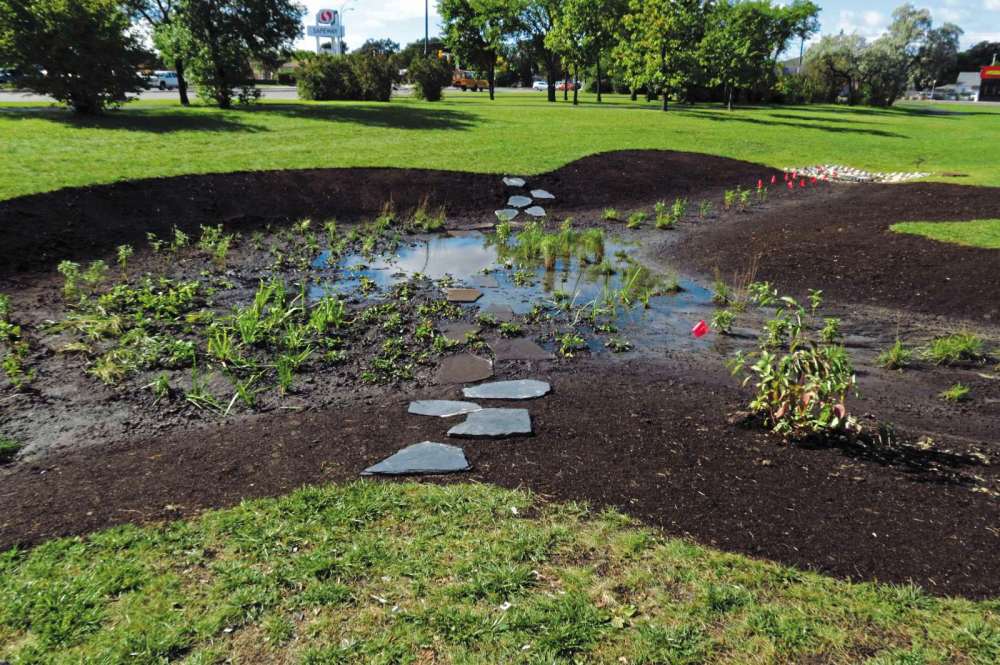
Rain gardens improve infiltration and clean polluted runoff. Requiring a rain garden in every infill project in the watershed would be a giant step toward a healthier Seine River.
Michele Kading is a community correspondent for St. Vital and the executive director of Save Our Seine.
Michele Kading
St. Vital community correspondent
Michele Kading is a community correspondent for St. Vital. She is also the executive director of the Association of Manitoba Museums.
Our newsroom depends on a growing audience of readers to power our journalism. If you are not a paid reader, please consider becoming a subscriber.
Our newsroom depends on its audience of readers to power our journalism. Thank you for your support.
Michele Kading
St. Vital community correspondent
Michele Kading is a community correspondent for St. Vital. She is also the executive director of the Association of Manitoba Museums.
Our newsroom depends on a growing audience of readers to power our journalism. If you are not a paid reader, please consider becoming a subscriber.
Our newsroom depends on its audience of readers to power our journalism. Thank you for your support.
Advertisement Advertise With Us