


‘Kissing spines’ can be hard to diagnose
Advertisement
Hey there, time traveller!
This article was published 09/09/2019 (2455 days ago), so information in it may no longer be current.
Back pain can seriously limit your horse and kissing spines is one of those painful conditions which causes unsoundness and changes in the demeanour of your horse. Knowing the signs and symptoms as well as the treatments available will help you to detect and avoid this condition.
Just as painful as it sounds, kissing spines — also known as impingement of the dorsal spinous process — occurs when the spine processes that protrude vertically from the spine through the thoracic and lumbar spine interfere with each other.
In the back, the vertical processes make up the withers and then continue along the midline of the back to the pelvis. Between each bony process is a ligament which holds the spine in alignment, along with several other ligaments and muscles. When the ligament between the bony processes is irritated or injured during training or exercise, it becomes inflamed and contracts. Over time this repeated contracture of the ligament between the processes results in the processes hitting each other and can cause considerable pain — kissing spines.
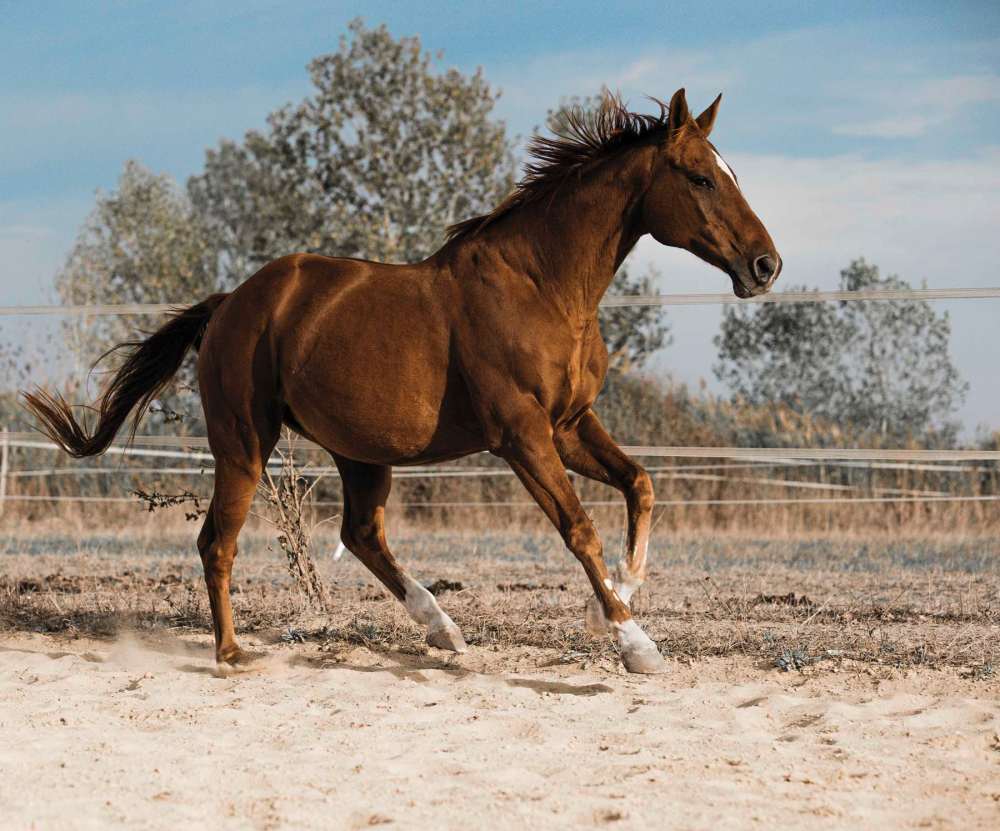
Symptoms you can see include bucking, resistance to saddling and pain on pressure along the midline of the back. During exercise, the horse will have a preference for extending the neck and when asked to gallop will extend the neck and hollow the back. This is often attributed to saddle fit and can be misdiagnosed.
An equine veterinarian can make the diagnosis through history, physical examination and X-rays. Additional options include ultrasound and nuclear scintigraphy. The X-rays will show the spines to be touching or even overlapping as well as significant bony damage to the dorsal spinous processes.
Treatment options have evolved over the years. Injections along the interspinous ligament have some efficacy but must be repeated to continue effect. Shockwave therapy is also useful to manage kissing spines but requires repeated treatments.
Alternative medicine modalities such as laser, acupuncture, and pulsed electromagnetic field therapy have all been tried with variable success.
The gold standard treatment is surgery to transect (cut) the ligament between the bony processes to allow them to open up and come out of contact with each other. This is followed by a prescribed rehabilitation program over six weeks. The success rate with surgery is greater than 90 per cent, with horses returning to full athletic use.
If you have concerns about your horse’s back, give an equine veterinarian a call.
Chris Bell is an equine veterinarian and surgical specialist who operates Elders Equine Veterinary Service, with clinics in Cartier and Winnipeg. See www.eldersequineclinic.com