Rehabilitation through connection to nature

Advertisement

Advertise with us

Hey there, time traveller!
This article was published 19/12/2019 (2441 days ago), so information in it may no longer be current.

This fall, I have been teaching writing at San Quentin State Prison in the San Francisco Bay area. 
While here, I have learned about many other projects going on at San Quentin and other California prisons that focus on rehabilitation. Besides the Society of Professional Journalists (SPJ), which I wrote about last month, I have also been able to briefly participate in the Insight Garden Program (IGP). 
Prisons’ traditional punitive approach has led to a high rate of recidivism and lack of rehabilitation. The Insight Garden Program (IGP) , on the other hand, focuses on a restorative rehabilitation approach by transforming lives through connection to nature.
IGP staff and dedicated volunteers work with incarcerated people to prepare and plant a garden on the prison grounds. Not only do they spend time gardening outside, the active learning part of the program is the transformative curriculum. During the weekly presentations and group work, participants engage in self-reflection and self-analysis using the metaphor of life as a garden. 
Outer gardening happens outside digging in the soil, planting seeds, watering plants, and eventually harvesting a crop. Inner gardening incorporates and transfers the outside gardening skills through meditation and reflection on values through the lens of healthy patterns that stimulate growth in life, whether in plants or people. 
Deeply committed to exploring change in the criminal justice system through the intersection of environmental and social justice, founding director Beth Waitkus initiated the IGP in 2002 at San Quentin. 
Since then, the IGP has expanded to 10 other prisons serving men, women, and youth in California, two youth facilities in Indiana, and an adult male facility in Ohio.
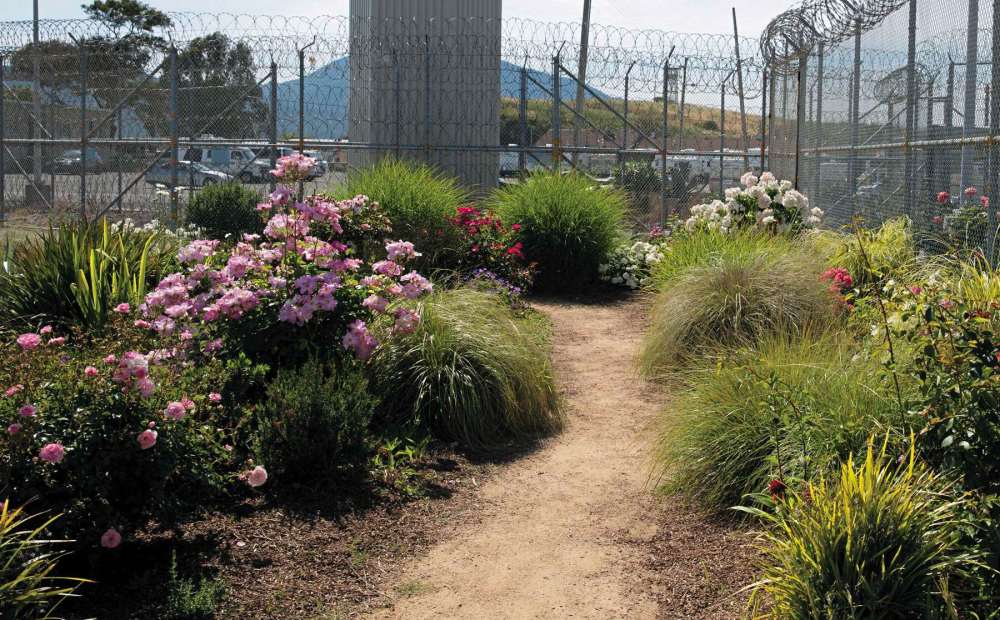
At San Quentin, the flower garden is not exactly what you would expect to find in a prison yard. Planted and maintained by IGP participants, beautiful rose bushes, native plants and flowers that attract bees and hummingbirds decorate this area of the prison that now serves general population, as well as people with mental health issues and physical disabilities.  
I was privileged to visit the IGP at two facilities in Vacaville, Calif.: the California State Prison-Solano and the Correctional Medical Facility-Solano where I joined northern California IGP program manager and facilitator Amy Boyer and volunteers for their weekly classes and time in the gardens.
For the classroom portion of the program, we met in the chapel or visiting room with chairs arranged in a big circle to accommodate the 20-30 participants. Participants with leadership skills led the meditation and the group work with a list of questions for discussion. Participation was lively and engaged. 
After class, we went outside where we watered and weeded the garden. Whether sitting in a circle with a group of incarcerated people, or walking with them in the prison corridor after class to the outside garden, conversations indicated that IGP was providing a space and place for rehabilitation and restoration through connection to self, community and the natural world. 
Photo: Courtesy of CDCR
  
Helen Lepp Friesen is a community correspondent for Fort Garry. You can contact her at helenfriesen@hotmail.com

This fall, I have been teaching writing at San Quentin State Prison in the San Francisco Bay area. 

While here, I have learned about many other projects going on at San Quentin and other California prisons that focus on rehabilitation. Besides the Society of Professional Journalists (SPJ), which I wrote about last month, I have also been able to briefly participate in the Insight Garden Program (IGP). 

Sou'wester
The flower garden at San Quentin State Prison is not something one might expect to see in a prison yard.
Sou'wester The flower garden at San Quentin State Prison is not something one might expect to see in a prison yard.

Prisons’ traditional punitive approach has led to a high rate of recidivism and lack of rehabilitation. The Insight Garden Program, on the other hand, focuses on a restorative rehabilitation approach by transforming lives through connection to nature.

IGP staff and dedicated volunteers work with incarcerated people to prepare and plant a garden on the prison grounds. Not only do they spend time gardening outside, the active learning part of the program is the transformative curriculum. During the weekly presentations and group work, participants engage in self-reflection and self-analysis using the metaphor of life as a garden. 

Outer gardening happens outside digging in the soil, planting seeds, watering plants, and eventually harvesting a crop. Inner gardening incorporates and transfers the outside gardening skills through meditation and reflection on values through the lens of healthy patterns that stimulate growth in life, whether in plants or people. 

Deeply committed to exploring change in the criminal justice system through the intersection of environmental and social justice, founding director Beth Waitkus initiated the IGP in 2002 at San Quentin. 

Since then, the IGP has expanded to 10 other prisons serving men, women, and youth in California, two youth facilities in Indiana, and an adult male facility in Ohio.

At San Quentin, the flower garden is not exactly what you would expect to find in a prison yard. Planted and maintained by IGP participants, beautiful rose bushes, native plants and flowers that attract bees and hummingbirds decorate this area of the prison that now serves general population, as well as people with mental health issues and physical disabilities.  

I was privileged to visit the IGP at two facilities in Vacaville, Calif.: the California State Prison-Solano and the Correctional Medical Facility-Solano where I joined northern California IGP program manager and facilitator Amy Boyer and volunteers for their weekly classes and time in the gardens.

For the classroom portion of the program, we met in the chapel or visiting room with chairs arranged in a big circle to accommodate the 20-30 participants. Participants with leadership skills led the meditation and the group work with a list of questions for discussion. Participation was lively and engaged. 

After class, we went outside where we watered and weeded the garden. Whether sitting in a circle with a group of incarcerated people, or walking with them in the prison corridor after class to the outside garden, conversations indicated that IGP was providing a space and place for rehabilitation and restoration through connection to self, community and the natural world. 

Helen Lepp Friesen is a community correspondent for Fort Garry. You can contact her at helenfriesen@hotmail.com

Report Error Submit a Tip

Community Correspondents

LOAD COMMUNITY CORRESPONDENTS ARTICLES