



Cold snap emphasizes need for shelter

Advertisement
Hey there, time traveller!
This article was published 01/03/2021 (1863 days ago), so information in it may no longer be current.
Winnipeg has finally emerged from a record-breaking deep freeze that was part of the coldest and longest cold snap in Western Canada in decades.
Dubbed in one source as the Canadian Chill of the Century, multiple weather records were smashed across the country. Winnipeg dragged through 13 consecutive extreme cold weather alerts. One Winnipeg Free Press writer likened the cold to a slow moving tarantula creeping across the prairies.
Prior to the cold snap, you might recall we enjoyed some unusually mild winter days, even some with above-freezing temperatures. As these mild days turned into night, freeze-thaw cycles made streets and sidewalks like skating rinks, prompting the city to investigate how to make treacherous sidewalks safer along with a request for costs of slip-and-fall injuries from the Winnipeg Regional Health Authority.
Then the cold spell came.
Climatologists explained that the polar vortex (a cold stream of air swirling counter clockwise high up in polar regions), had weakened, causing its swirl to wobble and blossom out in wavy lobes of cold air that reached down into the prairies.
It is natural for the polar vortex to undergo changes but some scientists say these changes are increasingly impacted by recent and unprecedented northern ice melt which in turn enlarges water mass that absorbs light and its heat.
The cold air finally retreated north after Winnipeg experienced an eerie 13 consecutive days of extreme cold weather warnings. For many, the harsh cold made COVID isolation worse.
Fortunately, I was able to get outside to do some winter biking, an activity that keeps you warm through constant pedalling. Although my bike’s gears had frozen solid (in a high gear, no less) along with the brake cables, allowing only partial function, it didn’t matter much because I couldn’t get up enough speed to require any serious braking. (I lock up my winter “beater” bicycle in an unheated space, as it drips rusty water inside).
On another cold morning, to my surprise no water flowed at all from the kitchen taps until I took the portable heater into the basement and aimed it at the frozen pipes. But I learned that keeping the kitchen tap dripping all night prevented the water line from freezing (thanks, Google).
The worst of it came late one very cold, clear night.
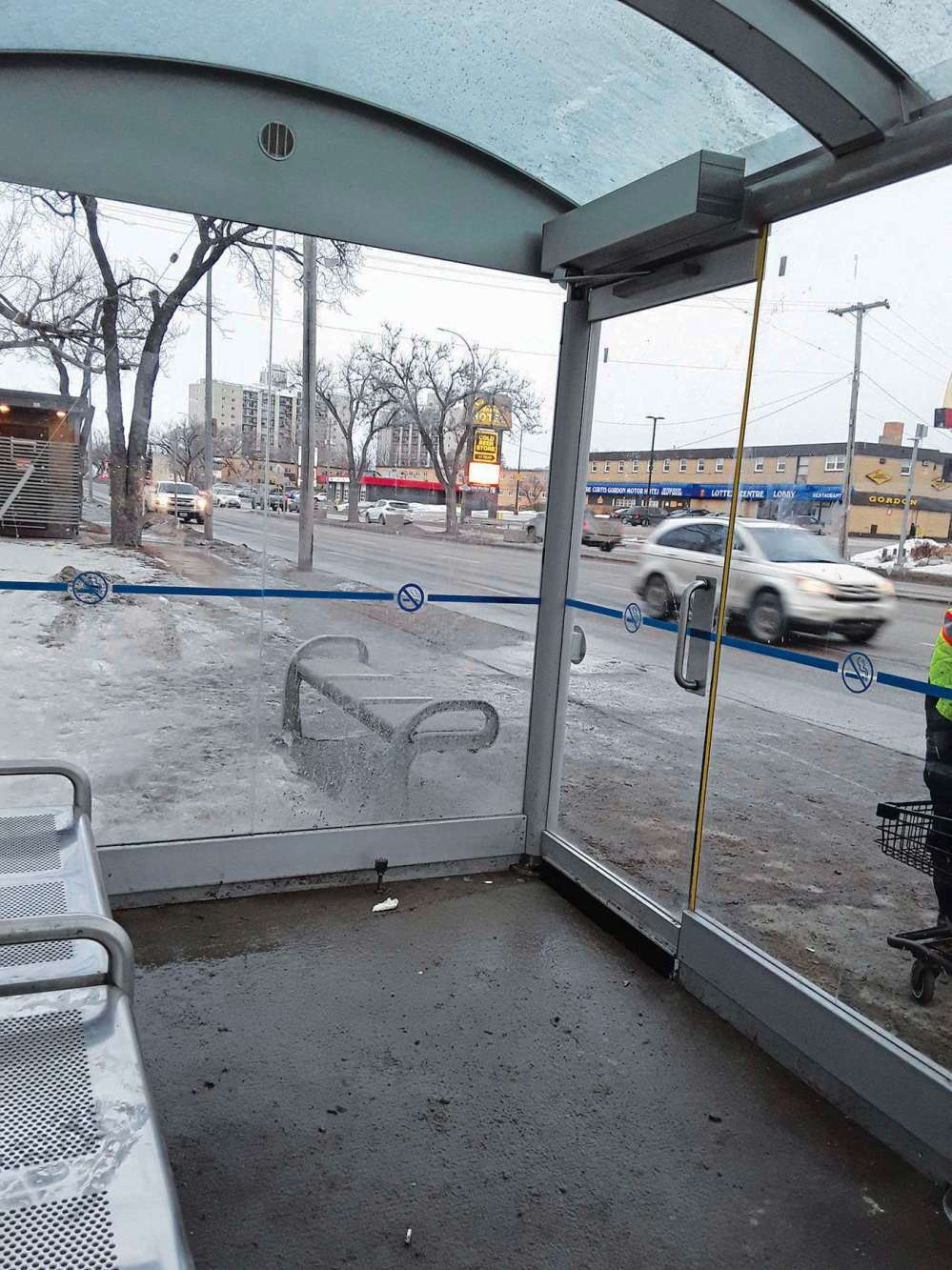
As I travelled past an East Kildonan bus shelter, I saw, under its glowing light, what appeared to be two bodies upon the benches, draped in what looked like white burial shrouds. Suddenly, one figure moved and I realized that two people were sheltering there in the -31 C night. (I learned they had been asked if they needed help, and observed that they stayed for days).
I had not seen this before in the neighbourhood but have heard of projects that aim to build shelters according to the stated needs of the homeless. I hope this will eliminate the need for people to dangerously shelter in bus shacks or other unsafe spaces. Everyone deserves a trusted and safe home; these projects sound like a situation from which all will benefit.
Shirley Kowalchuk is a Winnipeg writer who loves her childhood home of East Kildonan where she still resides. She can be reached at sakowalchuk1@gmail.com
Shirley Kowalchuk
East Kildonan community correspondent
Shirley Kowalchuk is a Winnipeg writer who loves her childhood home of East Kildonan, where she still resides. She can be reached at sakowalchuk1@gmail.com
Our newsroom depends on a growing audience of readers to power our journalism. If you are not a paid reader, please consider becoming a subscriber.
Our newsroom depends on its audience of readers to power our journalism. Thank you for your support.
Shirley Kowalchuk
East Kildonan community correspondent
Shirley Kowalchuk is a Winnipeg writer who loves her childhood home of East Kildonan, where she still resides. She can be reached at sakowalchuk1@gmail.com
Our newsroom depends on a growing audience of readers to power our journalism. If you are not a paid reader, please consider becoming a subscriber.
Our newsroom depends on its audience of readers to power our journalism. Thank you for your support.
Advertisement Advertise With Us
Advertisement Advertise With Us