


Indigenous place names enrich us all

Advertisement
Hey there, time traveller!
This article was published 05/04/2023 (1150 days ago), so information in it may no longer be current.
Warning: This article contains details about residential schools that may trigger unpleasant feelings or thoughts of past abuse. If you or someone you know requires emotional support, please contact the 24-hour Residential School Crisis Line at 1-866-925-4419.
On Thursday, March 23, Winnipeg city council voted unanimously to rename Bishop Grandin Boulevard to Abinojii Mikanah, which means “children’s road” in the Ojibwa language. The multi-use path and greenway that runs along the road will be named Awasisak Mēskanow which means the same thing in Cree.
The reason for the change is that Bishop Vital Grandin, a prominent 19 century Catholic leader, was instrumental in the creation of the residential school system.
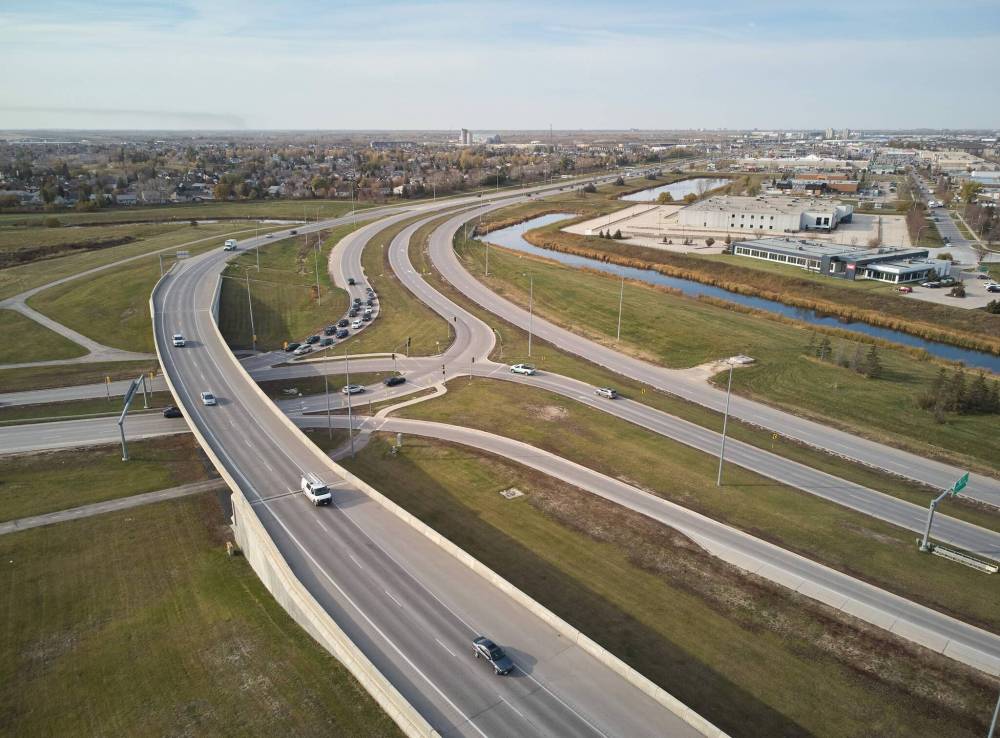
File photo
Bishop Grandin Boulevard, pictured here where it meets Kenaston Boulevard, has been renamed Abinojii Mikanah.
The devastating consequences of the residential school system, and the racist worldview from which they originated, can be seen all around us to this day. The pain and trauma they caused and continue to cause to multiple generations of Indigenous people up until the very recent past (the last residential school closed in 1996) can be seen reflected in problems that afflict our communities.
In order to heal, we must acknowledge the hurt. The architect of this devastation does not deserve a place of honour in our community. His crimes should be remembered in history books, not venerated on street signs.
In addition to cleaning this stain, we have also now had the opportunity to enrich our urban cultural fabric with place names from Indigenous languages. Winnipeg has long been a city with street names derived from a rich and diverse linguistic pool – French, English, Ukrainian, German, Hungarian, and many more. Indigenous languages have been conspicuously absent.
Abinojii Mikanah is pronounced a-bi-no-jii mi-ka-nah The word can easily be broken down into pronounceable syllables.
This conversation has prompted opportunities to search for and learn other Indigenous place names that belong on the cultural radar, such as for our beloved Seine River. An inset on the Save our Seine Greenway Map explains:
“In 1800, Alexander Henry wrote the first reference to the river as ‘La Seine’. It is commonly assumed that it was named after the Seine River in France. Others suggest, however, that it has been translated from an Aboriginal word for a seine or draw net, used by inhabitants for fishing. Therefore, the original name, which was later translated into French, may have been Tchimâhâgânisipi. (Tchimâhâgân – a draw net or Seine in French and Sipi – River)”
Pronounced chi- mah-ha-kan, this names represents one of many opportunities to enrich and broaden our appreciation for the history of this land and our people, and the cultures that are represented here.
Ryan Palmquist
St. Vital community correspondent
Ryan Palmquist is a Ward 3 trustee for the Louis Riel School Division, and a community correspondent for St. Vital.
Our newsroom depends on a growing audience of readers to power our journalism. If you are not a paid reader, please consider becoming a subscriber.
Our newsroom depends on its audience of readers to power our journalism. Thank you for your support.
Ryan Palmquist
St. Vital community correspondent
Ryan Palmquist is a Ward 3 trustee for the Louis Riel School Division, and a community correspondent for St. Vital.
Our newsroom depends on a growing audience of readers to power our journalism. If you are not a paid reader, please consider becoming a subscriber.
Our newsroom depends on its audience of readers to power our journalism. Thank you for your support.
Advertisement Advertise With Us