


Examining Elmwood’s demographic trends

Advertisement
Hey there, time traveller!
This article was published 13/09/2023 (1041 days ago), so information in it may no longer be current.
Elmwood is a longstanding, mature neighbourhood of Winnipeg with a lot of history that has gone through many changes over the years. The 2021 census allows us to spot trends and demographic developments over the 20 years since the 2001 census.
As a historic, urban working-class neighbourhood Elmwood has grown slower than newer suburban and exurban areas. Over the 20-year period from 2001 to 2021, Elmwood’s population grew a modest 5.2 per cent. By contrast, Winnipeg overall grew 21 per cent within city limits and 24 per cent in the metro area, which includes nearby municipalities and bedroom communities of the city.
Elmwood has lower income than the overall city and the greater metro area of Winnipeg. Incomes have grown, however, at a comparable rate to the city and region over the twenty years. Median individual income grew 80 per cent in the neighbourhood, while they grew 78 per cent in city limits and 80 per cent in the metro area. Median household income grew 89 per cent in Elmwood compared to 84 per cent in the city proper and 86 per cent in the metro region. Despite this growth, median household income was still $15,5000 lower in the neighbourhood than in the overall city and $18,500 lower than that of the metro area.
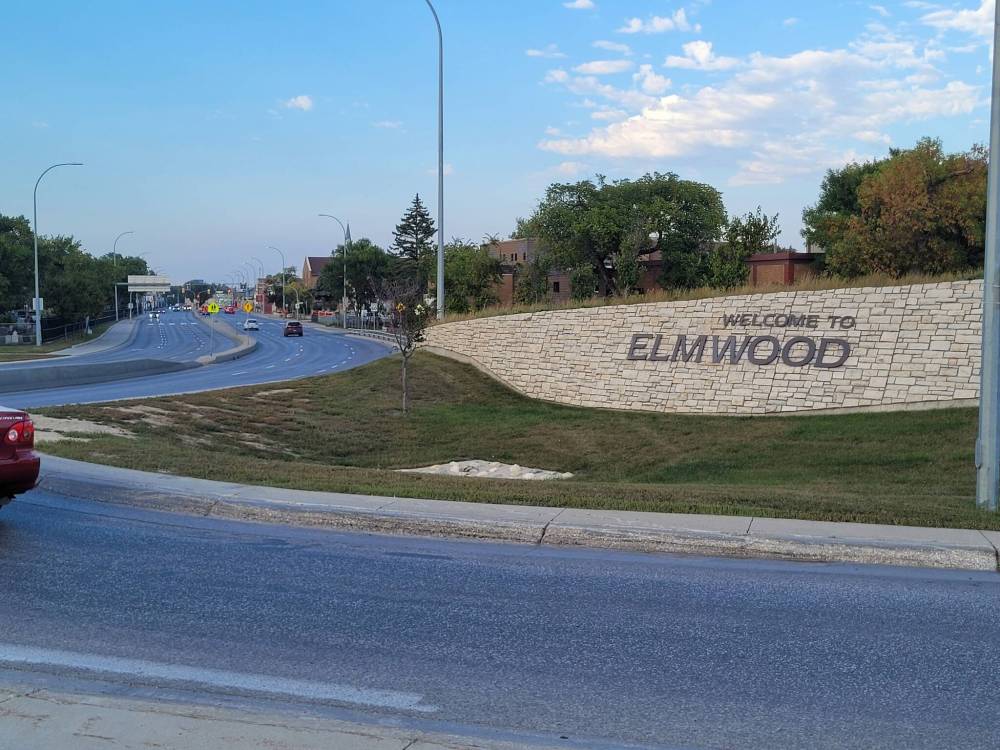
Photo by Dylon Martin
The 2021 census allows us to spot trends and demographic developments in Elmwood over the 20 years since the 2001 census.
International immigration has been a major factor in Winnipeg’s population growth over the last two decades. The share of the city population identified as immigrants in the census went from 17.3 per cent in 2001 to 27.3 per cent in 2021. For the metro area the figures were 16.5 per cent in 2001 and 25.4 per cent in 2021. Meanwhile, Elmwood’s immigrant population grew from 13.1 per cent in 2001 to 24.2 per cent in 2021. This growth in share is comparable to the overall city.
Another trend is that more people are getting to work by car, mostly as drivers. The share of people commuting to work by means such as transit, cycling, or walking, decreased over six percentage points in the 20-year period. In 2021, 22 per cent of Elmwood residents got to work by non-car modes of transportation, which is five percentage points higher than for the city proper and six percentage points higher than for the metro area.
As Elmwood and Winnipeg continue to grow, it will be essential to retain and expand transit ridership by improving service and supporting walkable neighbourhoods. Otherwise, congestion, idling, and pollution will be the future of our streets.
Dylon Martin
Elmwood community correspondent
Dylon Martin is a community correspondent for Elmwood.
Our newsroom depends on a growing audience of readers to power our journalism. If you are not a paid reader, please consider becoming a subscriber.
Our newsroom depends on its audience of readers to power our journalism. Thank you for your support.
Dylon Martin
Elmwood community correspondent
Dylon Martin is a community correspondent for Elmwood.
Our newsroom depends on a growing audience of readers to power our journalism. If you are not a paid reader, please consider becoming a subscriber.
Our newsroom depends on its audience of readers to power our journalism. Thank you for your support.
Advertisement Advertise With Us