


PHAs – connecting Manitobans to our past

Advertisement
Hey there, time traveller!
This article was published 27/12/2023 (1002 days ago), so information in it may no longer be current.
The holidays are a time for families. We gather to reminisce about the past, enjoy each other in the present, and plan the future.
Knowing our family roots is key to our identity. These days, we can buy a kit, take a cheek swab, and send it for genetic testing. This reveals the broad strokes of our ancestry based on bloodlines. But it is only half of the picture. Our identity is also shaped by the culture in which we were raised.
All Manitobans are relative newcomers. We all “came from away” as Newfoundlanders would say. Our indigenous ancestors came to Manitoba thousands of years ago as the glaciers melted from the land. Our European ancestors came within the last 300 years. Our ancestors from other parts of the world arrived more recently.
File photo
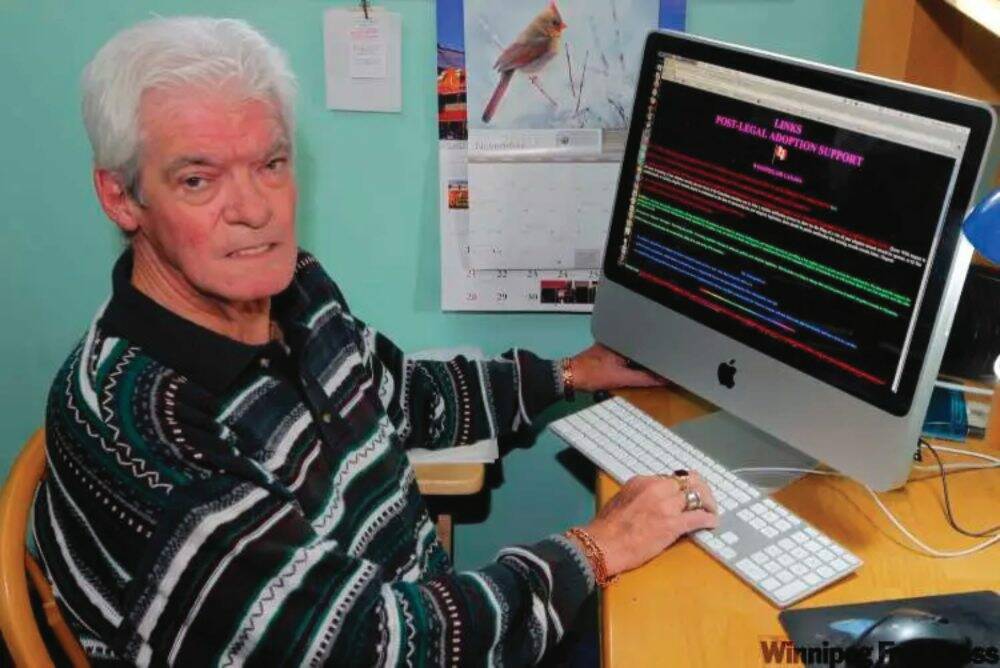
Roy Kading searches the records kept by PHAs to help adoptees and their genetic relatives reunite.
It is natural to want to know about our ancestors. Who were they? When and why did they come to live in Manitoba? How did they survive? What objects did they make and leave behind?
Manitoba’s Provincial Heritage Agencies (PHAs) help people find answers to these questions. PHAs are the keepers of objects, maps, photos, buildings, and other records that tell the stories of our shared heritage. In a nutshell, the eight PHAs are:
• Manitoba Genealogical Society – family histories;
• Association for Manitoba Archives – diaries, letters, photos, tapes, videos, records, maps;
• St. Boniface Historical Society – Francophone and Métis heritage (archives, genealogy);
• Jewish Heritage Centre of Western Canada – Jewish heritage (archives, genealogy, museum);
• Manitoba Archeological Society – objects from ancient cultures;
• Manitoba Historical Society – built heritage (sites, structures);
• Heritage Winnipeg – heritage buildings;
• Association of Manitoba Museums – diverse collections in 200 community museums.
Finding ancestors can be a challenge. Formal and informal adoptions add to the complexity. My own family tree has three trunks. My mom’s family is Ukrainian-Canadian. My Dad has an adoptive family and a genetic family. He pieced together his genetic family tree using clues from his adoption. All three trunks of my family tree have enriched my life and contributed to the person I am today.
My dad has helped over 1,000 people find their genetic relatives through an organization called LINKS. He regularly searches records that are only available through the PHAs. If you are researching your own family tree, reach out to a PHA and support their important work by becoming a member, donor, or volunteer.
Happy holidays from my family to yours!
Michele Kading
St. Vital community correspondent
Michele Kading is a community correspondent for St. Vital. She is also the executive director of the Association of Manitoba Museums.
Our newsroom depends on a growing audience of readers to power our journalism. If you are not a paid reader, please consider becoming a subscriber.
Our newsroom depends on its audience of readers to power our journalism. Thank you for your support.
Michele Kading
St. Vital community correspondent
Michele Kading is a community correspondent for St. Vital. She is also the executive director of the Association of Manitoba Museums.
Our newsroom depends on a growing audience of readers to power our journalism. If you are not a paid reader, please consider becoming a subscriber.
Our newsroom depends on its audience of readers to power our journalism. Thank you for your support.
Advertisement Advertise With Us