


Preserving chimneys to protect species at risk

Advertisement
Hey there, time traveller!
This article was published 12/06/2024 (835 days ago), so information in it may no longer be current.
Last year, I met some museum volunteers from a town in the Interlake. They told me that their historic church’s chimney was a risk to public safety but they feared they could not do anything because of an endangered species. Chimney swifts had been observed in 2019 — but were they still there?
The number of chimney swifts has declined by 95 per centin the last 40 years. The species is now considered to be threatened and is protected by both federal and provincial Species at Risk laws. It is an offence to kill or injure chimney swifts or destroy their habitat – in this case, the chimneys they rely on for roosting and nesting.
In pre-settlement times, swifts used large hollow trees. As forests were cleared for cities and towns, they adapted to using the unlined masonry chimneys that were the norm up to the 1960s. Chimneys suitable for swifts are no longer being built and many “swift-friendly” chimneys are being capped or demolished.
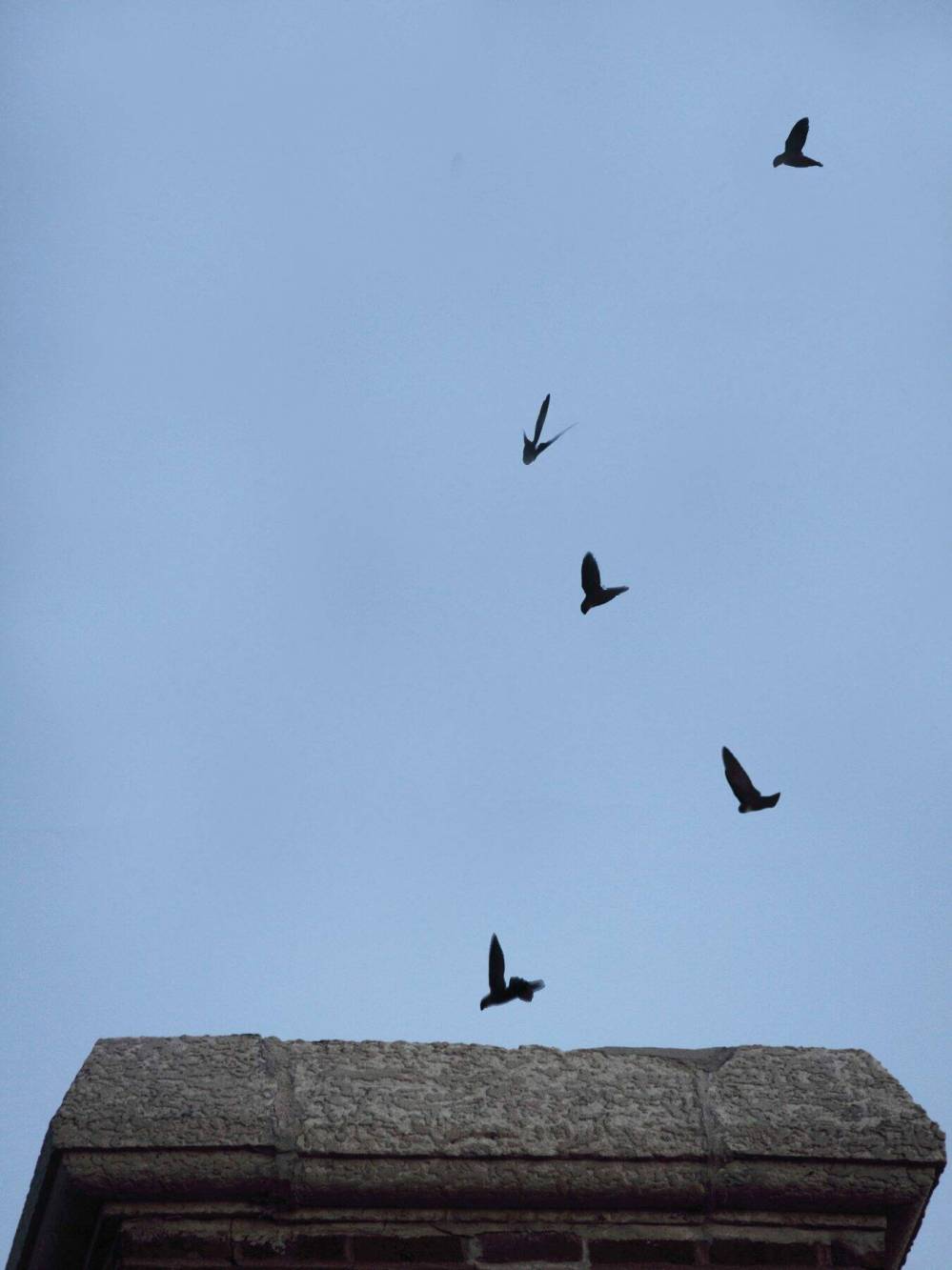
Supplied photo by Christian Artuso
At dusk on May 26, one volunteer saw at least 195 chimney swifts enter a chimney at 424 River Ave. in under 30 seconds.
What makes a chimney swift-friendly? The shaft is wide enough to accommodate their long wings as they fly in and out (at least 2.5 bricks by 2.5 bricks). The chimney is uncapped and unlined. Its rough interior is ideal for feet that are built for clinging.
Swifts will use any suitable chimneys south of The Pas from mid-May to late August. Although widespread, they are easily overlooked. They spend most of the day high in the sky, returning to roosts at dusk. They are excellent tenants. Swifts eat huge numbers of flying insects (1,000 to 12,000 per day) and make little mess. They do not damage the chimney and pose no fire or health hazard.
So what can you do if a chimney swift chimney is falling apart?
Reach out to the Manitoba Chimney Swift Initiative. This program was started in 2006 by birders Lewis Cocks and Frank Machovec of Nature Manitoba. As a part of its habitat stewardship, MCSI works with building owners and other organizations to cover the cost of chimney restoration rather than demolition.
Each spring, MCSI volunteers monitor chimneys on homes, churches, apartments, factories, hospitals, schools, businesses, and museums. The 2024 reports are encouraging. Swifts were recorded at dozens of sites including Lower Fort Garry, the National Indigenous Residential School Museum of Canada, Hillcrest Museum, and Assiniboine Park Zoo.
To learn how to be a Chimney Swift Champion, supporter, or good landlord, visit www.mbchimneyswift.com
Michele Kading
St. Vital community correspondent
Michele Kading is a community correspondent for St. Vital. She is also the executive director of the Association of Manitoba Museums.
Our newsroom depends on a growing audience of readers to power our journalism. If you are not a paid reader, please consider becoming a subscriber.
Our newsroom depends on its audience of readers to power our journalism. Thank you for your support.
Michele Kading
St. Vital community correspondent
Michele Kading is a community correspondent for St. Vital. She is also the executive director of the Association of Manitoba Museums.
Our newsroom depends on a growing audience of readers to power our journalism. If you are not a paid reader, please consider becoming a subscriber.
Our newsroom depends on its audience of readers to power our journalism. Thank you for your support.
Advertisement Advertise With Us