



Dealing with reactive dogs

Advertisement
Hey there, time traveller!
This article was published 16/10/2024 (518 days ago), so information in it may no longer be current.
You may have spotted dogs in your neighbourhood whose owners avoid other dogs or people due to their dog’s barking or reactivity. I wrote last year about fostering Lani (then Alani) through Manitoba Underdogs Rescue. Now that I am a pet parent to Lani, a reactive dog, I’ve learned a bit about the behaviour.
So, what is dog reactivity, what causes it, and how can we assist dogs as owners and good neighbours?
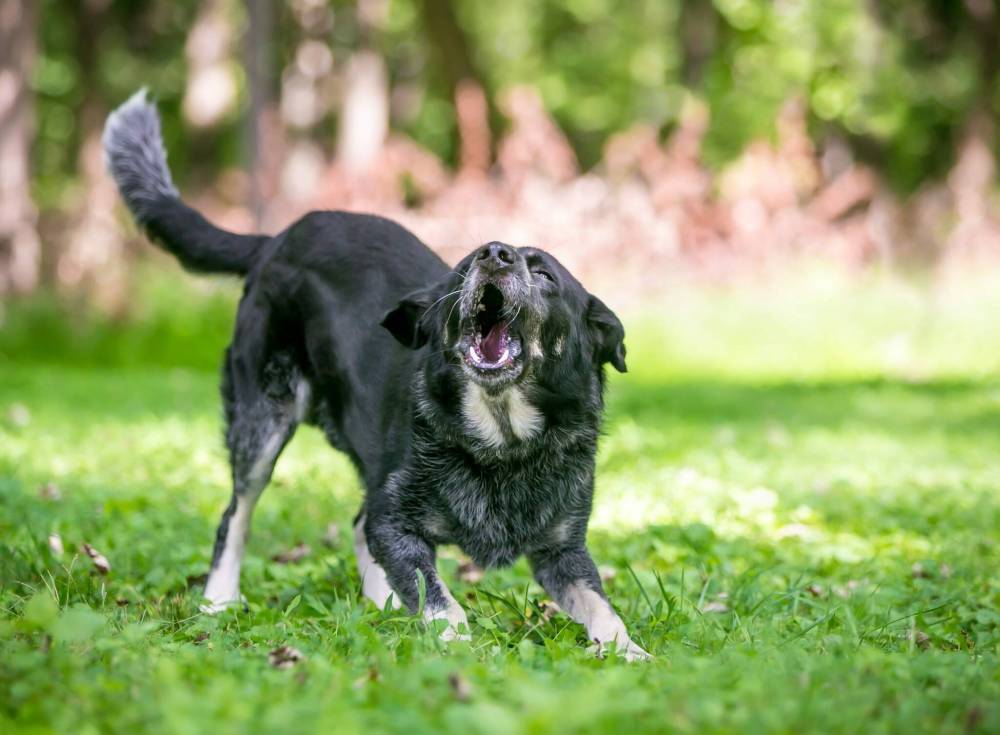
Dog reactivity is an overreaction to a common sight or trigger, such as a person walking, another dog, cars, children running, other animals such as squirrels and cats, and bikes. The reaction may include lunging, barking, leash pulling, fixation, and growling, but at a different level than other dogs.
Adobe
Reactive dogs are not necessarily vicious or dangerous — they’re barking because something has triggered them to react to what they perceive as a threat.
Dogs with reactivity cannot handle the excess emotion brought on by the trigger. Reacting is a dog’s way of communicating its inability to deal with the situation.
Reactivity is not necessarily aggression, though reactivity can lead to aggression if left unmanaged. The dog may discover that being aggressive gets results (i.e., it keeps the trigger away).
Causes of reactivity include fear of the trigger, the frustration and/or excitement of not being able to see the trigger, lack of socialization, negative experiences, high-stress environments, and lack of impulse control training.
Proper management can significantly improve reactivity. Training involves positive reinforcement, desensitization, and counterconditioning and often includes working with a qualified “no-fear” trainer. It’s never good to punish a reactive dog—reactivity is distressing to dogs, and they are trying.
Training involves giving treats (or praise/toys) when a dog sees a trigger until the dog associates the trigger with a good thing. The owner and dog start farther away and then move closer. Owners read their dog’s distress signs, such as whimpers and panting, and aim to avoid reactions, as dogs can’t learn once they are over the reactivity threshold (fully reactive).
When an owner with a reactive dog is walking in the neighbourhood, they may communicate that their pup needs space. Even though your dog may be friendly and have strong recall, when dogs on a lead are approaching, put the dog’s leash on (leads are the law, but in reality, many dogs go off leash) and keep your dog close.
Lani loves other dogs; she is just working on meeting them calmly, and we can all help such dogs live their best lives.
Kirby Gilman
Wildwood community correspondent
Kirby Gilman was a community correspondent for Wildwood. Email her at kirby.gilman@shaw.ca
Our newsroom depends on a growing audience of readers to power our journalism. If you are not a paid reader, please consider becoming a subscriber.
Our newsroom depends on its audience of readers to power our journalism. Thank you for your support.
Kirby Gilman
Wildwood community correspondent
Kirby Gilman was a community correspondent for Wildwood. Email her at kirby.gilman@shaw.ca
Our newsroom depends on a growing audience of readers to power our journalism. If you are not a paid reader, please consider becoming a subscriber.
Our newsroom depends on its audience of readers to power our journalism. Thank you for your support.
Advertisement Advertise With Us