


Spring has sprung

Advertisement
Hey there, time traveller!
This article was published 02/04/2025 (460 days ago), so information in it may no longer be current.
Well, spring has officially sprung, and it’s good to see the snow piles and ice in those shaded areas gradually melt away. I think it’s fascinating how life has evolved around the seasonal changes caused by that slight tilt in the earth’s axis.
Winters, especially here in the northern hemisphere, are particularly harsh, and we’re probably all aware that many species undergo various forms of hibernation during this time, when food is scarce. But it’s not just bears and squirrels that take a winter nap. Insects such as beetles and wasps undergo a form of hibernation, and fish, amphibians and reptiles experience a period of dormancy, with some even having the ability to be frozen and then wake up in warmer temperatures. Deciduous trees such as maple and aspen move the sap away from the leaves and branches into their trunks and roots in the fall, resulting in those beautiful orange and red colours. As the number and length of the warmer days increase, the release of sap and hormones such as auxin and cytokinin stimulate regrowth in the spring. Their coniferous cousins, like pines and firs, don’t need this process as their thin, needle-like leaves are coated in a waxy layer, which makes them resistant to winter conditions.
While plants and animals have adapted to the year-to-year differences in temperature conditions each spring, there are some effects of climate change that are beginning to show up. For example, migratory birds such as warblers, flycatchers and martins time their arrivals to coincide with the availability of local food, such as caterpillars or seeds, so they can compete with resident species. If different regions warm at different times than the past, spring visitors can miss the best time to take advantage of the food abundance. Another concern is the warming of more northern areas, creating conditions for southern species to expand their territories to add to local competition for food, and the potential spread of invasive species.
Adobe Stock photo
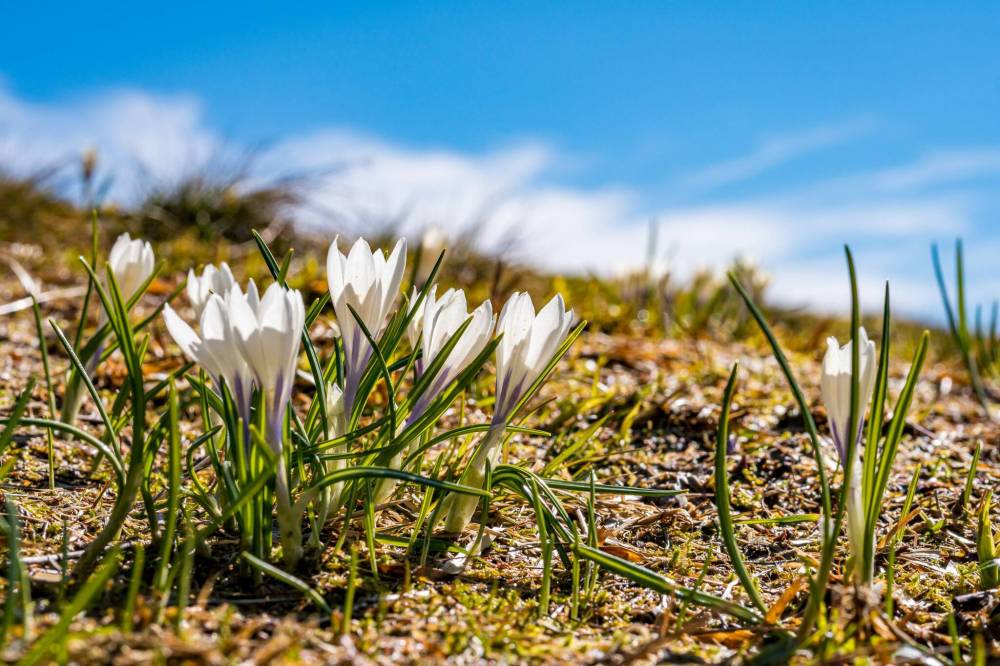
Spring has finally arrived (our usual late-March snowfall notwithstanding) and soon we’ll begin to see trees budding, grass turn green and flowers sprout.
The complex natural world is all co-ordinated around the warmer conditions of sprin to take advantage of the abundance of food. Plants grow, flowers bloom and animals give birth. And how about we humans? We’ve developed technology to insulate us (figuratively and literally) from the winter, but we still experience changes as spring appears. In general, there’s an increase in physical activity as we’re finally out of that phase of cold, dark mornings and early, cold evenings to and from work, and we can enjoy the warm bright sunshine again. Increased sunlight can boost serotonin levels in the brain, which acts as a natural anti-depressant for many people who struggle through winter. There are a few downsides – making sleep adjustments for daylight savings, and dealing with pollen-related allergies for some, but all in all, I think spring inspires optimism for the year to come.
Nick Barnes
Whyte Ridge community correspondent
Nick Barnes is a community correspondent for Whyte Ridge.
Our newsroom depends on a growing audience of readers to power our journalism. If you are not a paid reader, please consider becoming a subscriber.
Our newsroom depends on its audience of readers to power our journalism. Thank you for your support.
Nick Barnes
Whyte Ridge community correspondent
Nick Barnes is a community correspondent for Whyte Ridge.
Our newsroom depends on a growing audience of readers to power our journalism. If you are not a paid reader, please consider becoming a subscriber.
Our newsroom depends on its audience of readers to power our journalism. Thank you for your support.
Advertisement Advertise With Us