


Bird-friendly design standards should remain

Advertisement
Hey there, time traveller!
This article was published 21/01/2026 (198 days ago), so information in it may no longer be current.
Most people have heard the unmistakable thud of a bird hitting a window. Every year, an estimated 16 to 42 million birds die accidentally by hitting windows in Canada. Winnipeg alone may account for millions of fatalities that go largely unnoticed.
Window strikes can be prevented. We can adopt bird-friendly standards to design new buildings and retrofit existing buildings. Fear of huge costs often stands in the way of voluntary adoption of new standards. To be effective on a large scale, they must be part of zoning bylaws.
In January 2025, Winnipeg put bird-friendly standards into one tiny part of its zoning bylaw – the malls and corridors planned development overlay (PDO). The pushback from the building industry was immediate so the administration wants council to remove the standards.
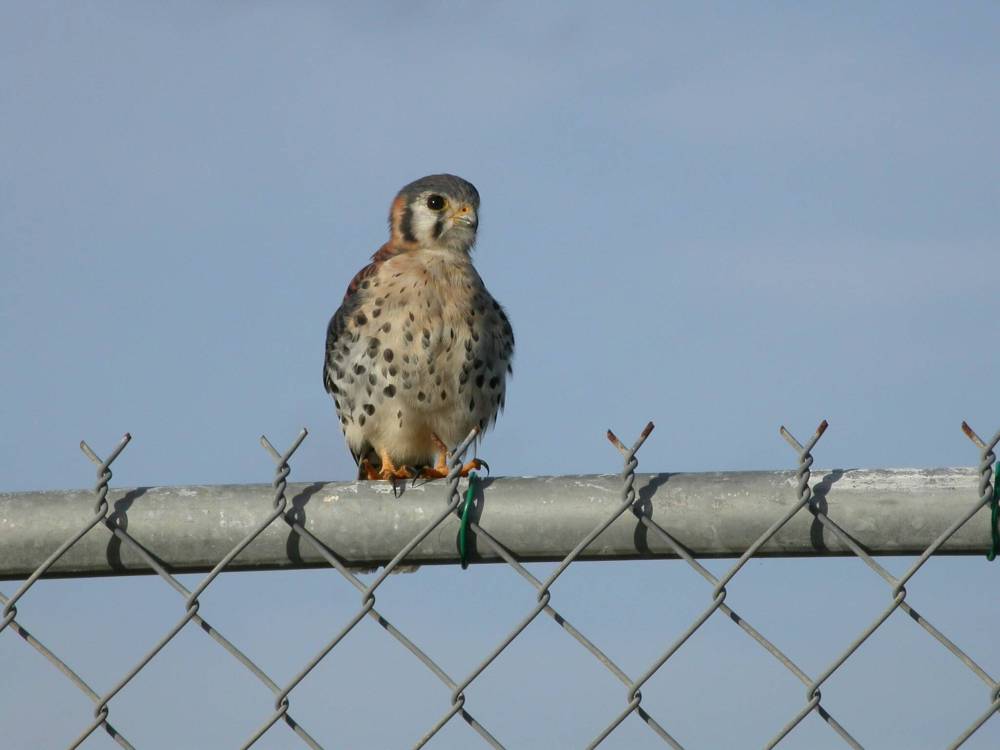
Supplied photo
Predators such as shrikes and kestrels (above) sometimes chase smaller birds into windows as a hunting strategy.
Pushback from conservationists was even swifter. The city received over 600 submissions opposing their removal. The public hearing was postponed to Jan. 21 at 9:30 a.m.
Folks unable to make submissions can still share their thoughts with their councillors. Here are a few ideas:
Good reasons to keep the standards
• “It’s the right thing to do.” – Bird populations have declined at an alarming rate in the past 50 years. This is an easy way for everyone to help stop the decline.
• “It’s the law.” – Canadian law prohibits building owners from killing migratory birds, including through unintentional collisions with glass. The national standard (CSA A460:19) for bird friendly building design is consistent with federal law. Following it shows due diligence that may protect owners from risk.
Bad reasons to remove the standards
• “They don’t work.” — False. The American Bird Conservancy tests bird-friendly glass treatments and assigns each a threat factor (TF). Products with a TF<30 reduce window strikes by at least 50 per cent. The lower the TF, the greater the reduction. A 2022 study showed that Feather Friendly decals reduced strikes by 95 per cent.
• “It’s too expensive.” –Fatal Light Awareness Program Canada (FLAP) estimates that custom glass increases the costs of window contracts by 5-10 per cent for low-rise and one per cent for high-rise buildings. Using a tool developed for builders, the Acopian Centre for Ornithology calculated that bird-safe glass added less than half a percent (0.38 per cent) for hypothetical medium and large glass-fronted buildings.
• “It’s a barrier to rapid housing development.” — Would the federal government really want or expect cities to sacrifice millions of migratory birds on the altar of affordable housing?
Michele Kading
St. Vital community correspondent
Michele Kading is a community correspondent for St. Vital. She is also the executive director of the Association of Manitoba Museums.
Our newsroom depends on a growing audience of readers to power our journalism. If you are not a paid reader, please consider becoming a subscriber.
Our newsroom depends on its audience of readers to power our journalism. Thank you for your support.
Michele Kading
St. Vital community correspondent
Michele Kading is a community correspondent for St. Vital. She is also the executive director of the Association of Manitoba Museums.
Our newsroom depends on a growing audience of readers to power our journalism. If you are not a paid reader, please consider becoming a subscriber.
Our newsroom depends on its audience of readers to power our journalism. Thank you for your support.
Advertisement Advertise With Us