


Families pay price for education funding cuts

Advertisement
Public education is one of the most important investments we make as a society. It ensures that every child, regardless of income, background or ability, has access to learning and the opportunity to succeed. Public schools prepare students not only for jobs and careers but also for citizenship. They teach the skills needed to participate in our democracy, strengthen our communities and build a more equal society.
For generations, Manitoba understood this responsibility. At one time, the province paid roughly 80 per cent of the cost of running our schools through general revenues, while the remaining 20 per cent was funded through education property taxes. This approach ensured that the burden of funding schools was shared fairly and that every community could provide strong programs and services to students.
Unfortunately, that balance has been lost.
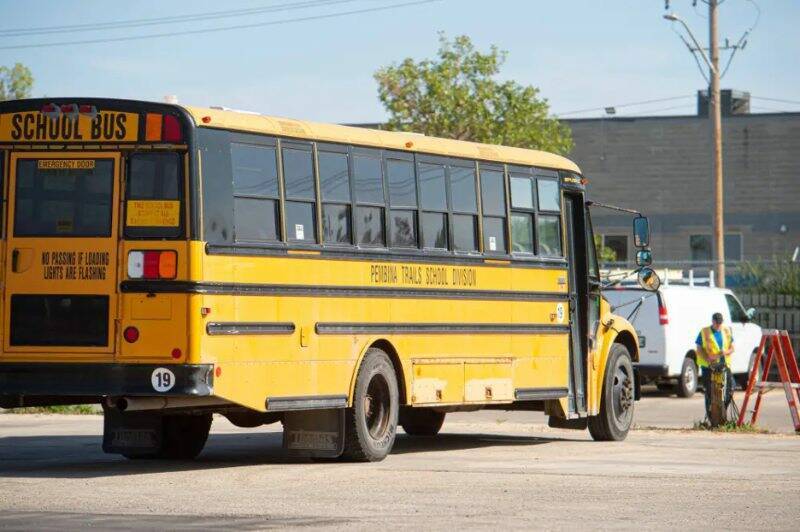
Free Press file photo
Families in Pembina Trails School Division shoulder a disproportionate amount of the cost of their children’s educations.
For years, provincial funding for education has either been frozen or increased only at the rate of the consumer price index. That may sound reasonable on paper, but it does not reflect the real costs of running schools. Around 80 per cent of school division budgets go toward salaries. When wages rise or inflation increases the cost of operating schools, funding that grows only with CPI effectively amounts to a cut.
School divisions have been left with two choices – cut programs and services for students, or raise education property taxes to make up the difference. Many have been forced to do both.
The Pembina Trails School Division shows exactly what is wrong with the current system. Over the past three years, education property taxes there have increased by a combined 17.2 per cent. Few Manitoba families have seen their incomes grow anywhere near that rate, yet they are being asked to shoulder a larger and larger share of the cost of public education.
The bigger issue is how much of the bill families are now paying. In the 2024-25 school year, the province covered just 41 per cent of the cost of schools in Pembina Trails while property taxes paid 59 per cent. The following year, the provincial share dropped to 38 per cent. This year it has fallen again to just 35 per cent, leaving families to cover 65 per cent through property taxes. That is the highest proportion anywhere in Manitoba.
Property taxes do not take into account a person’s ability to pay. Seniors on fixed incomes and families already struggling with rising costs are expected to pay more simply because they own a home.
At the same time, schools are facing growing pressures. South Winnipeg is experiencing record enrolment growth. More students are arriving with complex learning needs and social challenges that require additional resources and support. Yet funding has not kept pace. Instead of expanding programs, many schools are simply trying to maintain what they already have.
This raises a basic question of fairness. Why should families in one region of Manitoba pay a significantly larger share of the cost of educating their children than families elsewhere in the province? Manitoba needs one strong public education system where every student has access to high-quality programs and services. To restore fairness, the province must return to its original commitment and fund at least 80 per centof the cost of public education, with education property taxes making up no more than 20 per cent.
Our children’s educations should not depend on their postal codes.
Mark Wasyliw
Fort Garry MLA constituency report
Mark Wasyliw is the independent MLA for Fort Garry.
Our newsroom depends on a growing audience of readers to power our journalism. If you are not a paid reader, please consider becoming a subscriber.
Our newsroom depends on its audience of readers to power our journalism. Thank you for your support.
Mark Wasyliw
Fort Garry MLA constituency report
Mark Wasyliw is the independent MLA for Fort Garry.
Our newsroom depends on a growing audience of readers to power our journalism. If you are not a paid reader, please consider becoming a subscriber.
Our newsroom depends on its audience of readers to power our journalism. Thank you for your support.
Advertisement Advertise With Us
Advertisement Advertise With Us