


Freedom of information system fails the public

Advertisement
Freedom of information laws exist to protect democracy. Their purpose is simple, Manitobans have a right to know what their government is doing, how taxpayer money is being spent and whether public officials are telling the truth. Without transparency, there can be no real accountability. But under the Kinew government, Manitoba’s freedom of information system is breaking down.
Over the past year, I have filed multiple requests under Manitoba’s Freedom of Information and Protection of Privacy Act, commonly known as FIPPA. Repeatedly, government departments claimed records did not exist when they clearly did, delayed responses far beyond legal deadlines or refused to comply with oversight from Manitoba’s Ombudsman, the independent office responsible for investigating complaints about government transparency and access to information.
One example involved chronic absenteeism in Manitoba schools. In July 2025, I requested absenteeism numbers by school division. The department of education responded that Manitoba “does not collect chronic absenteeism data” and denied the request because the records supposedly did not exist. That was false.
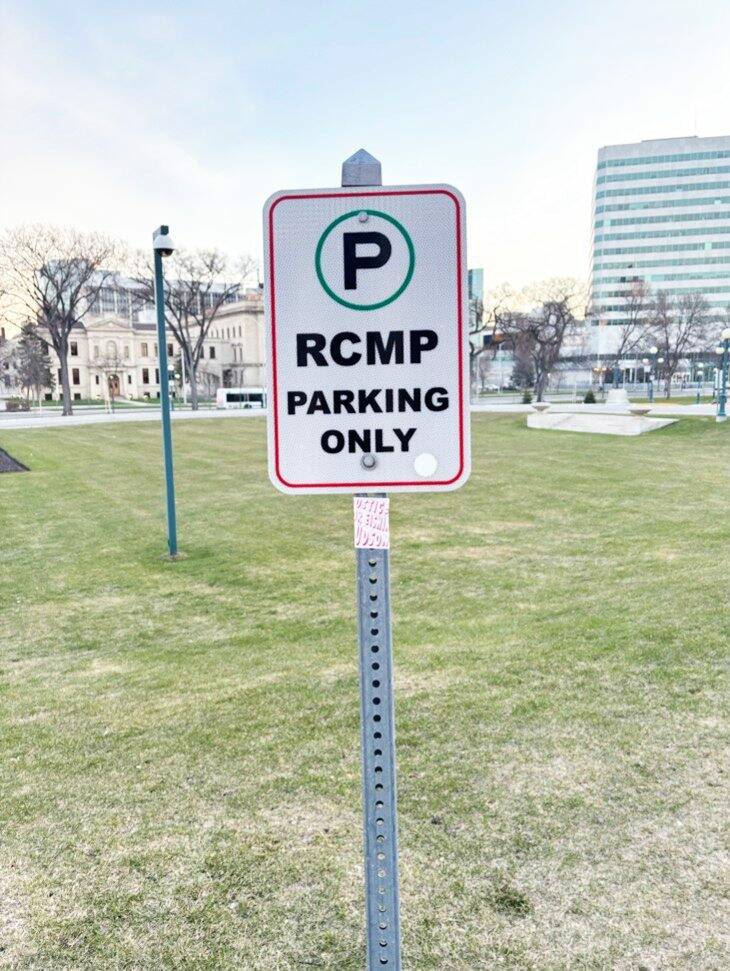
Supplied photo
The sign at the Manitoba legislature denoting the parking spot for the SUV used by Manitoba Premier Wab Kinew and his security detail. Despite a
Months later, after delays that violated FIPPA timelines, I obtained a ministerial briefing note proving the government had been collecting and tracking chronic absenteeism numbers the entire time. Not only did the department deny the records existed, it also failed to disclose briefing materials already in its possession.
The same pattern appeared when I requested the annual cost of the premier’s security detail and government SUV. The department of justice first refused to release the records, then later claimed the records did not exist at all. Manitobans were told that even releasing general cost information could somehow endanger security.
The Ombudsman rejected those explanations. In a January 2026 report, the Ombudsman concluded that “a thorough search for records was not conducted” before the department denied access and ordered the information released. Months later, the government still refused to comply.
This is not a small issue. Manitobans are paying for the premier’s security detail and chauffeur service. The idea that there are somehow no records tracking those costs is absurd.
Another request involved Manitoba’s ankle bracelet monitoring program. Justice claimed it did not track breaches or tampering incidents. But later, CBC obtained the exact same numbers directly from the ministry after Crown attorneys had already been using those statistics publicly in bail hearings.
This points to a larger problem inside government, a culture in which transparency laws are treated as optional and accountability is seen as an inconvenience. What should be major scandals come and go with little public discussion and no consequences for those involved.
That has real consequences for democracy. Nearly 45 per cent of Manitobans do not vote in provincial elections. When governments hide information, ignore transparency laws and refuse to follow independent oversight, public trust collapses and voter cynicism grows.
Manitobans deserve a government that respects transparency and follows the law. Public information belongs to the public, not the government of the day.
Mark Wasyliw
Fort Garry MLA constituency report
Mark Wasyliw is the independent MLA for Fort Garry.
Our newsroom depends on a growing audience of readers to power our journalism. If you are not a paid reader, please consider becoming a subscriber.
Our newsroom depends on its audience of readers to power our journalism. Thank you for your support.
Mark Wasyliw
Fort Garry MLA constituency report
Mark Wasyliw is the independent MLA for Fort Garry.
Our newsroom depends on a growing audience of readers to power our journalism. If you are not a paid reader, please consider becoming a subscriber.
Our newsroom depends on its audience of readers to power our journalism. Thank you for your support.
Advertisement Advertise With Us