


The subject is roses, Canadian roses

Advertisement
Hey there, time traveller!
This article was published 06/04/2022 (1644 days ago), so information in it may no longer be current.
By Barb Shields
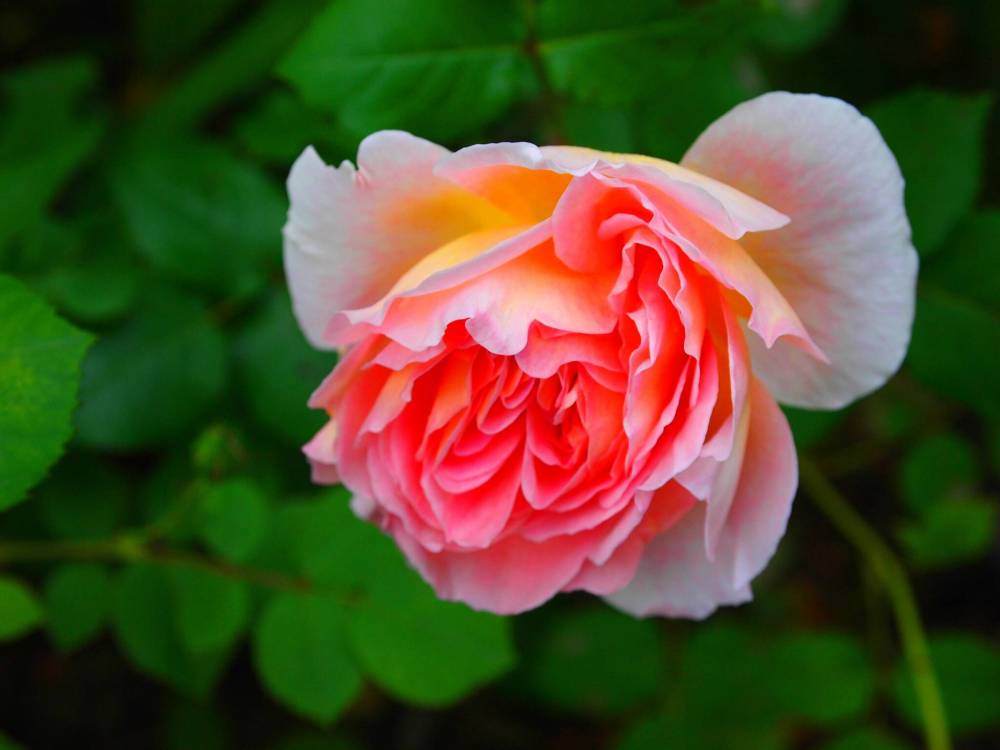
Roses have a grand and glorious history, and they have been rightfully called the “Queen of Flowers”. They grace gardens around the world, and more new hybrids are being developed each year to broaden our garden options.
And yet, I have been told many times, that growing roses is too time-consuming, too complicated. Let me assure you, it is not.
Here are the basics:
When planting a rose, dig a hole deep enough so that the ‘bud union’ is four inches below the surface of the soil, and wide enough to give the roots some room to spread. Do not fertilize when planting. Water about twice a week depending on the rainfall. Lightly cover with leaves or compost in the fall. By the way, the bud union is the “knobby bit” where the roots meet the stalks of the rose.
For several decades, roses were developed at two federal government research stations in Morden, Man., and at Ottawa. The Morden, or Parkland, roses include such beautiful specimens as Winnipeg Parks (deep pink), Morden Blush, Morden Fireglow (deep orange-red) and Morden Sunrise (yellow/apricot). Explorer roses and the Canadian Artist series of roses were developed in Ottawa.
Among the Explorer roses are several climbing roses that can be trained up lattices, walls and other vertical spaces. Among the more popular varieties are John Cabot, John Davis, and Captain Samuel Holland (varying shades of pink)
The Canadian Artist series consists of Emily Carr (deep red), Felix Leclerc (deep pink), Bill Reid (yellow/apricot), Campfire (for Tom Thompson), and Oscar Peterson (creamy white)
Unfortunately, most of the Canadian roses have more delicate scent, but Oscar Peterson has a particularly strong fragrance which only enhances its visual beauty.
Notwithstanding the termination of the government rose development programs, creation of new Canadian roses continues. Recent additions to our roses are found in the 49th Parallel Collection — Canadian Shield, developed for our country’s 150th anniversary, Chinook Sunrise and Aurora Borealis. These roses are deep red, deep pink and coral fading to pale pink respectively.
• • •
The St. Vital Agricultural Society is hosting A Gardener’s Evening on Weds., May 11 at 7 p.m. at
St. Mary’s Road United Church (613 St. Mary’s Rd.). The evening will feature flower arranging demonstrations by Top Hat Florists, a rainbow auction, a perennial plant sale and draws for arrangements. Refreshments will be available.
St. Vital Agricultural Society
The St. Vital Agricultural Society was founded in 1909. Find out more at www.svas.ca
Our newsroom depends on a growing audience of readers to power our journalism. If you are not a paid reader, please consider becoming a subscriber.
Our newsroom depends on its audience of readers to power our journalism. Thank you for your support.
St. Vital Agricultural Society
The St. Vital Agricultural Society was founded in 1909. Find out more at www.svas.ca
Our newsroom depends on a growing audience of readers to power our journalism. If you are not a paid reader, please consider becoming a subscriber.
Our newsroom depends on its audience of readers to power our journalism. Thank you for your support.
Advertisement Advertise With Us