


Alpaca fleece proves to be a winner

Advertisement
Hey there, time traveller!
This article was published 10/10/2013 (4667 days ago), so information in it may no longer be current.
Selling warm knitted hats and socks on a city sidewalk during a hot day in July might sound a bit crazy, but Penny Gogush was surprised at how many people bought them.
“It was wonderful,” said the Lido Plage resident. “I had said, ‘I don’t know how we’re going to sell winter gear in July,’ but we did.”
Gogush was selling knitted clothing made with yarn spun from alpaca fleece, as well as teddy bears with fur made of alpaca fleece. She was one of the vendors participating in the first weekly farmers market held in front of Manitoba Hydro’s head office in downtown Winnipeg.
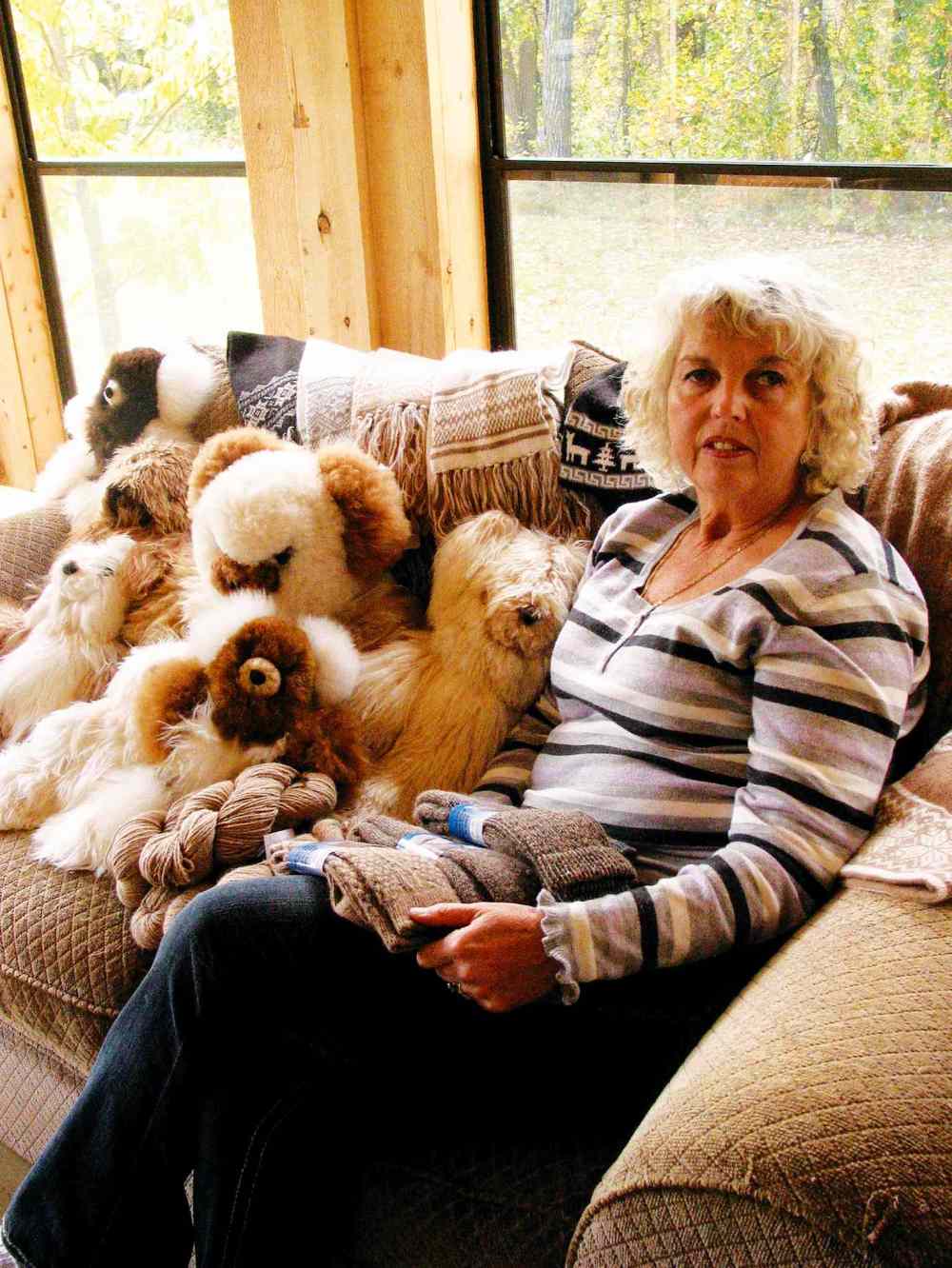
She also had a booth at the Saturday farmers market at Exhibition Park.
She’s enthusiastic about the response she received at both locations. However, she noted an interesting trend at the urban market.
“The thing that amazed me the most is how many young people are knitting and crocheting,” she said, adding that even a few young men bought skeins of yarn spun at a wool mill in Innisfail, Alta. from fleece that she collected from alpacas in Manitoba herds.
Gogush says alpaca fleece is quite different from sheep’s fleece. It doesn’t contain any lanolin and is dander-free — two qualities that make it hypoallergenic.
As generations of South Americans in Peru, Chile and Bolivia have known, alpaca fleece is also very warm, strong and can wick away moisture well. Gogush said alpaca hair has a hollow shaft containing air, which increases its ability to hold warmth.
While alpacas in the Andes Mountains have been traced back 5,000 years, the shy animal is a relatively recent newcomer to the Canadian Prairies — Gogush said the first animals were imported in the late 1980s. She and husband Rick started their herd with two females and a male from an Alberta breeder in 1997 and formed Penny Lee Alpacas.
“I saw them and fell in love with them instantly,” she said, adding that the family had horses and a few other farm animals on their property, located adjacent to the Trans-Canada Highway in the RM of Cartier.
Alpacas easily adapted to the Manitoba winter by simply growing a thicker coat.
For the next 14 years, the Gogush family bred, showed and sold their alpacas across
Western Canada, with the herd growing to 35 animals at one point. However, in 2011, they decided to sell their herd, as their children had left home and they wanted to be free to travel.
They now have eight animals that they are boarding, and co-own six in the Killarney area.
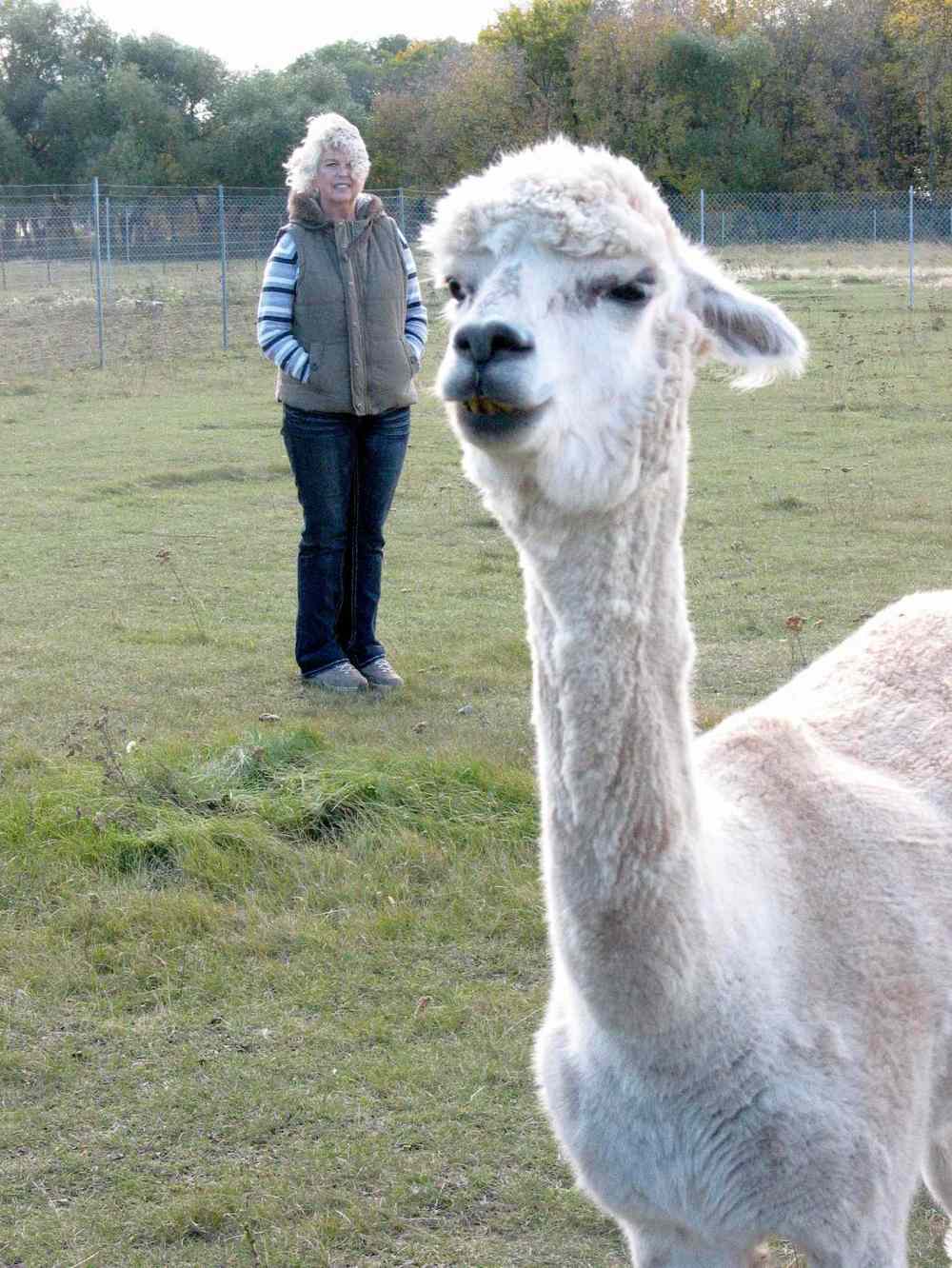
Gogush said it was tough for her to leave the provincial industry after being involved for many years, so she made up her mind to switch her focus from breeding and showing live animals to processing their fleece.
She and Rick are able to shear alpacas, and she knew that some owners don’t do anything with the soft fleece taken off their animals each spring. It took her about a year to find a company able to process the fleece. While the yarn is spun in Alberta, a knitting company in New Brunswick produces the machine-knit hats, mitts, scarves, socks and sweaters Gogush sells.
The knitted items vary in colour from white, cream, and tan to dark brown, as alpacas’ fleece grows in about 20 different colours. Gogush said she experimented with dying some yarn and it worked well.
The stuffed bears she sells are imported from a Peruvian company that follows fair trade practices. The bears’ fur is made from the finer fleece of the Suri breed of alpacas and the thicker fleece of the Huacaya breed.
“I couldn’t keep up with (stocking) the bears,”Gogush said. “They were the thing that caught people’s eyes.”
She will be selling her alpaca products at a holiday craft sale in the Manitoba Hydro Place (360 Portage Ave.) on Nov. 14 from 10 a.m. to 3 p.m. and at the St. François Xavier craft sale in the SFX Community Club on Nov. 23 from 10 a.m. to 4 p.m.
Andrea Geary
St. Vital community correspondent
Andrea Geary was a community correspondent for St. Vital and was once the community journalist for The Headliner.
Our newsroom depends on a growing audience of readers to power our journalism. If you are not a paid reader, please consider becoming a subscriber.
Our newsroom depends on its audience of readers to power our journalism. Thank you for your support.
Andrea Geary
St. Vital community correspondent
Andrea Geary was a community correspondent for St. Vital and was once the community journalist for The Headliner.
Our newsroom depends on a growing audience of readers to power our journalism. If you are not a paid reader, please consider becoming a subscriber.
Our newsroom depends on its audience of readers to power our journalism. Thank you for your support.
Advertisement Advertise With Us
Advertisement Advertise With Us