


Providing treatment, care through the years
Portage District General Hospital offers many medical services

Advertisement
Hey there, time traveller!
This article was published 03/10/2017 (3153 days ago), so information in it may no longer be current.
The changing nature of medical services is evident in the evolution of the Portage District General Hospital.
Originally opened as Portage District Hospital in 1899, the hospital was first housed in a courthouse built in 1880. Now the 88-bed Portage District General Hospital is one of three regional centres within Southern Health/Santé Sud, with the others being Boundary Trails and Steinbach’s Bethesda Hospitals.
“We cover the northern part of Southern Health. We offer a range of services,” said Portage Hospital’s director of health services Noreen Shirtliff, adding that patients come from an area stretching from Headingley to Alonsa, Man.
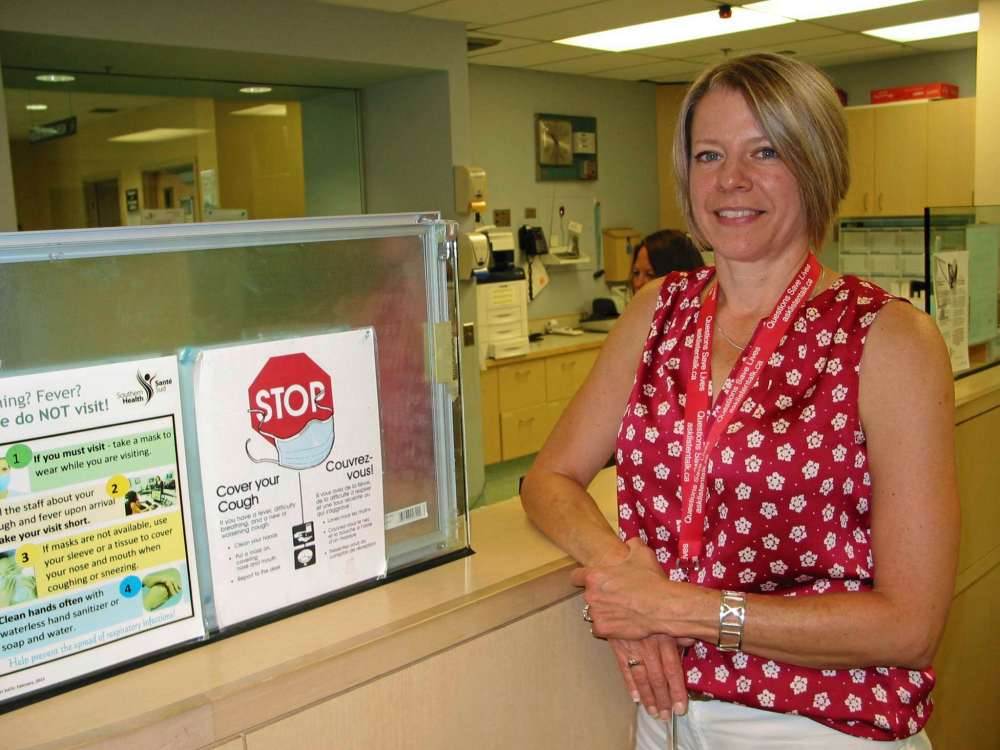
Portage Hospital ran a nurses’ training program with 240 nurses graduating between 1901 and 1952. The nurses’ residence was then used as a student dormitory but the building was closed a few years ago.
A wide variety of services offered
Portage Hospital’s outpatient services include emergency and critical care departments.
“We have a very busy emergency,” Shirtliff said. In 2016, between 26,000 and 27,000 visits were recorded.
Four beds are designated for intensive care service. If a patient needs a higher level of care, they are sent to a Winnipeg hospital.
Chief of Medical Staff Dr. David Kinnear has worked in the hospital since 1994 and served as chief for 12 years.
“Our emergency room has undergone substantial renovations and improvements,” Kinnear said.
Portage Hospital has a 36-bed pediatric unit and 17 beds for surgical/inpatient services. An extended treatment unit contains 26 beds primarily assigned to patients with long-term care needs or those who are receiving rehabilitation for surgery such as hip replacement. There are two fully equipped operating theatres.
General surgeons Jim Ross and Michelle Nostedt perform bowel, orthopedic, gall bladder and appendectomies and scoping. Ear, nose and throat specialists Bernard Thess and Michael Gousseau also work at the hospital. Orthopedic surgeon Hellmuth Muller and ophthalmologist Daniel Chin also see patients at the hospital. Obstetrician/gynecologist Robyn Gertenstein offers consultations and some procedures as well.
Kinnear said he’s seen the hospital’s capacity expand to reflect improvements in technology and also to meet patient needs.
“There’s a lot more things we can do now,” he said.
However, many medical and surgical patients have a combination of acute and chronic illnesses, including diabetes and heart disease, and so require specialized treatment.
Since he started working at Portage Hospital, Kinnear said a CT scanner was added. Radiologists, ultra-sound technicians, diagnostic imaging, lab services physiotherapy and occupational therapy staff offer more medical services and for longer hours.
Almost 300 babies were born in the hospital last year. Mothers-to-be are able to use three labour/delivery/recovery rooms and there are two postpartum rooms available.
Shirtliff said the hospital is a low-risk delivery centre. “We’ve been seeing a slow increase in numbers.”
Kinnear said the hospital’s ability to offer laboring women an epidural injection for labour pain has helped to boost the number of women choosing to deliver their babies in Portage.
Shirtliff said tele-health units allow medical specialists in Winnipeg or other locations to communicate directly with patients about medical conditions such as kidney disease and wound management. Samples can be taken by lab staff in Portage with the results sent to the specialists.
Mental health counselling is provided on an outpatient basis and a full-time social worker works with patients and their families.
A respiratory therapist attends to outpatients and those in the hospital’s wards requiring help.

The hospital’s dialysis unit is kept busy. The unit has nine beds — increased from six in 2013 — and can treat 36 patients a day with each staying for an average of four hours.
Andrew Roulette, 59, of Portage has been receiving dialysis treatment at the hospital three days a week for the past nine years due to kidney failure.
He said he’s gotten to know many of the hospital staff members and they have supported him when he’s been depressed.
“When I get fed up and have a bad day,” he said. “You want to quit (having dialysis) but you can’t quit.”
Working in conjunction with CancerCare Manitoba, cancer patients in Portage can receive chemotherapy at six treatment stations. Shirtliff said having this option spares local residents the need to drive to and from Winnipeg to get their treatment.
“This keeps you closer to home,” she said.
Nursing staff guide cancer patients through their treatment, and a psycho-social clinician position was recently filled to offer further support.
STARS provides emergency transportation
Shirtliff said the majority of hospital admissions come through the emergency department. If someone requires a higher level of care, they may be airlifted from Portage to Winnipeg by STARS air ambulance. STARS responds to between 15 and 20 emergencies in the Portage area each year.
“STARS is a valuable resource to have in rural Manitoba,” Shirtliff said.
The Portage District General Hospital Foundation has recently raised money through a lottery for construction of a certified heli-pad next to the hospital. The sod turning at the site took place on Sept. 25 and the pad is expected to be completed by Oct.17.
The hospital offers training for University of Manitoba medical residents. Shirtliff said the students receive a wide range of practical experience as the hospital offers diverse services.
Kinnear said having the students train in the hospital and also at the Portage la Prairie Medical Clinic gives them the chance to see what working in a rural community is like.
“We are expecting that we will retain some of those doctors to practice here,” he said.
Other than the heli-pad, there are no other plans to expand the hospital’s buildings or services, Shirtliff said. However, she and all the Portage hospital staff will continue to work to fulfil Southern Health/Santé Sud.’s mission statement which is ‘to support people and communities in achieving optimal health by providing innovative, sustainable and quality health services’.
For more information on the Portage District General Hospital, see https://www.southernhealth.ca/finding-care/portage-la-prairie/portage-district-general-hospital/
Helping Indigenous patients with their care
Doretta Harris is regional director of the Indigenous Health Program and works from an office in the hospital. She said the program’s four workers support Indigenous patients and their families upon their request.
“We help people to access the services they need,” Harris said. “We will help them from when they arrive right from the registration desk.”

The program began in 2009, and Harris said the need keeps growing. “There is definitely an increase and it continues to grow.”
Help is also available for people who need translation services, and for those requiring assistance when they’re in the Portage Hospital and also when arranging for health care service within their communities.
Another role for the Indigenous Health Program is to create cultural awareness among non-Indigenous hospital staff.
“We provide education and create an understanding,” Harris said. She gave an example of training on the importance of the Indigenous tradition of smudging that is regularly done within the hospital.
Harris said the program’s workers received good support from all levels of hospital staff.
“We work together in teams,” she said.
Making patients’ final days comfortable
A palliative care nurse is assigned to patients staying in two designated rooms that have been equipped by Sunset Palliative Care, a Portage la Prairie non-profit organization.
Sunset Palliative Care volunteer co-ordinator Aldene Moroz said a donation from Reg Tomalin, his wife Donna and family helped provide the money needed to redo the two rooms and add the proper furnishings.
“Everything has to meet infection control standards,” Moroz said. The cost of equipping one room is about $30,000.
Fundraising revenue and donations were also used to buy special paint, window coverings and place a sleeper sofa and fridge in each room.
“People coming from out of town to be with their loved ones may not have a place to stay,” Moroz said.
Sunset Palliative Care also supplies care baskets that include personal hygiene items such as toothbrushes and toothpaste for people who are staying with their relative or loved one around the clock.
Andrea Geary
St. Vital community correspondent
Andrea Geary was a community correspondent for St. Vital and was once the community journalist for The Headliner.
Our newsroom depends on a growing audience of readers to power our journalism. If you are not a paid reader, please consider becoming a subscriber.
Our newsroom depends on its audience of readers to power our journalism. Thank you for your support.
Andrea Geary
St. Vital community correspondent
Andrea Geary was a community correspondent for St. Vital and was once the community journalist for The Headliner.
Our newsroom depends on a growing audience of readers to power our journalism. If you are not a paid reader, please consider becoming a subscriber.
Our newsroom depends on its audience of readers to power our journalism. Thank you for your support.
Advertisement Advertise With Us
Advertisement Advertise With Us