Hey there, time traveller!
This article was published 25/09/2020 (2064 days ago), so information in it may no longer be current.
We often get calls in the spring and fall from owners concerned about horses having trouble catching their breath or labouring to breathe.
It is distressing to both horse and owner but the phenomenon is treatable and can be managed in many cases with some simple changes in husbandry.
‘Heaves,’ or inflammatory airway disease, is an inflammatory lung condition of horses caused by inhalation of fine dust particles and spores into the smallest airways of the lungs. When these small particles reach the depths of the lungs, an immune reaction occurs and causes the airways to swell which decreases their diameter and results in great difficulty breathing.
The condition is known by many names including recurrent airway obstruction, equine COPD and equine asthma. At its worst, it can result in a horse unable to maintain enough oxygen to the body but most cases result in a laboured, anxious breathing pattern and in some cases there is audible wheezing that can be heard as the horse “heaves” through its abdomen to breath in and out. Severe cases can also result in opportunistic infections within the lungs, resulting in pneumonia.
The treatment of this condition is primarily through modifying management of the horse’s environment. The mainstays of management are removal of the large round hay bales commonly used to feed horses.
These bales harbour many of the trigger spores and dust particles, and horses with free access to round bales will tunnel deep into them, inhaling huge quantities of the spores with every breath.
Other changes include feeding flakes of moistened hay, keeping horses outdoors or, if they are indoors, improving ventilation mechanisms. In some cases, medication may be required to improve lung function and increase comfort of breathing for the horse.
Prevention through modified husbandry practices will improve an affected horse’s quality of life. If round-bale feeding is the only option, then eliminating the ability of the horse to tunnel within the bales using commercially available bale nets is highly recommended. For more information, contact your veterinarian
In the horse world, ‘heaves’ is a bad word but if we can understand the root cause and adjust our management practices for these horses, it can be a breath of fresh air for them.
Chris Bell is an equine veterinarian and surgical specialist who operates Elders Equine Veterinary Service, with clinics in Cartier and Winnipeg. See www.eldersequineclinic.com.
We often get calls in the spring and fall from owners concerned about horses having trouble catching their breath or labouring to breathe.
It is distressing to both horse and owner but the phenomenon is treatable and can be managed in many cases with some simple changes in husbandry.
Dreamstime.com
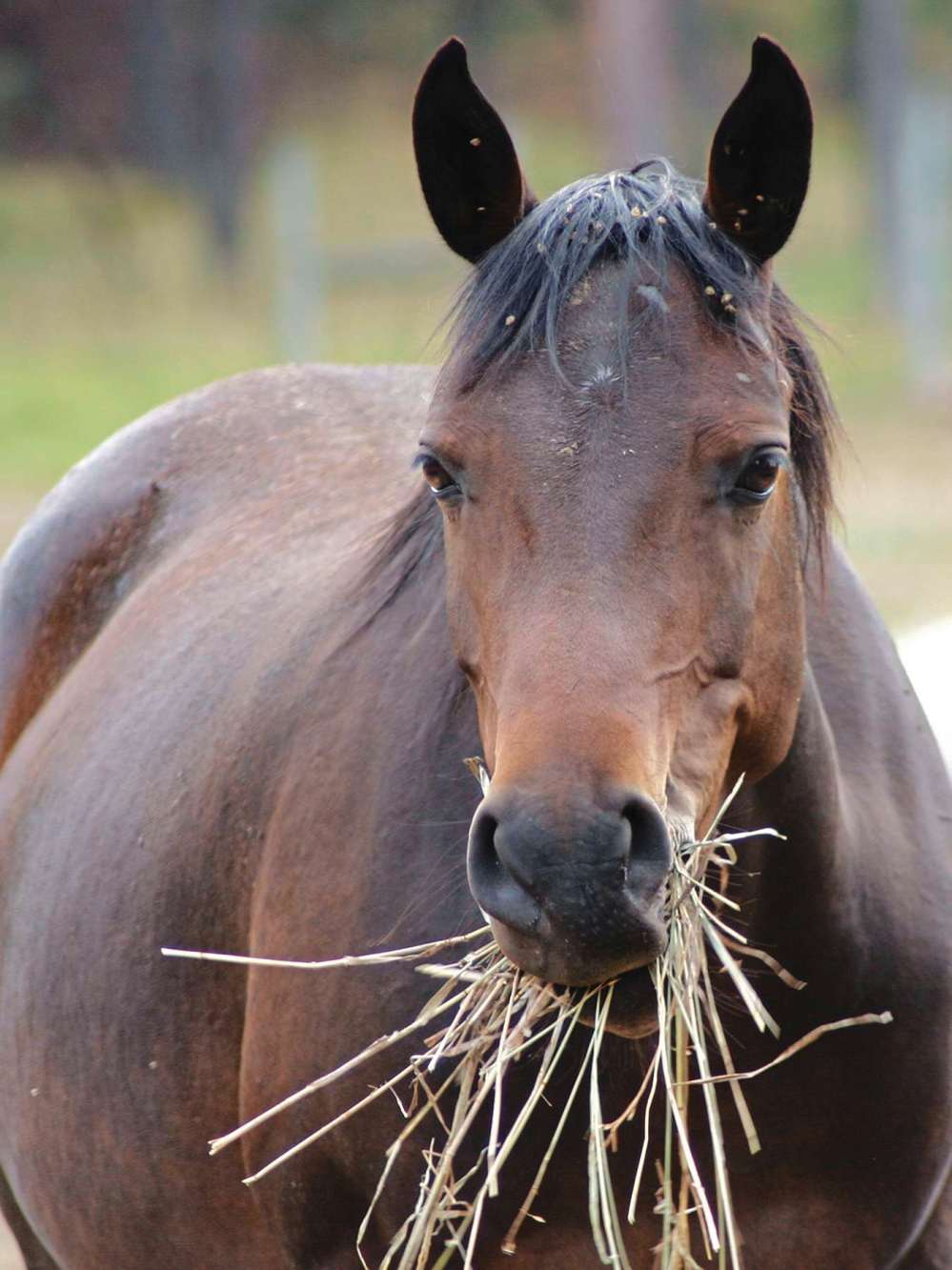
Managing how a horse accesses its hay will help horse owners avoid inflammatory airway disease, or ‘heaves’.
‘Heaves,’ or inflammatory airway disease, is an inflammatory lung condition of horses caused by inhalation of fine dust particles and spores into the smallest airways of the lungs. When these small particles reach the depths of the lungs, an immune reaction occurs and causes the airways to swell which decreases their diameter and results in great difficulty breathing.
The condition is known by many names including recurrent airway obstruction, equine COPD and equine asthma. At its worst, it can result in a horse unable to maintain enough oxygen to the body but most cases result in a laboured, anxious breathing pattern and in some cases there is audible wheezing that can be heard as the horse “heaves” through its abdomen to breath in and out. Severe cases can also result in opportunistic infections within the lungs, resulting in pneumonia.
The treatment of this condition is primarily through modifying management of the horse’s environment. The mainstays of management are removal of the large round hay bales commonly used to feed horses.
These bales harbour many of the trigger spores and dust particles, and horses with free access to round bales will tunnel deep into them, inhaling huge quantities of the spores with every breath.
Other changes include feeding flakes of moistened hay, keeping horses outdoors or, if they are indoors, improving ventilation mechanisms. In some cases, medication may be required to improve lung function and increase comfort of breathing for the horse.
Prevention through modified husbandry practices will improve an affected horse’s quality of life. If round-bale feeding is the only option, then eliminating the ability of the horse to tunnel within the bales using commercially available bale nets is highly recommended. For more information, contact your veterinarian.
In the horse world, ‘heaves’ is a bad word but if we can understand the root cause and adjust our management practices for these horses, it can be a breath of fresh air for them.