


KAP lobbies for industrial hemp classification
Federal government asked to separate it from marijuana

Advertisement
Hey there, time traveller!
This article was published 09/11/2017 (3154 days ago), so information in it may no longer be current.
Keystone Agricultural Producers is asking the federal government to remove industrial hemp from regulations governing the cultivation of marijuana.
KAP members passed a resolution on this issue at a district advisory committee meeting in Portage la Prairie on Nov. 2.
“We want a separate classification for industrial hemp,” KAP president Dan Mazier said. “It’s a different class of plant.”
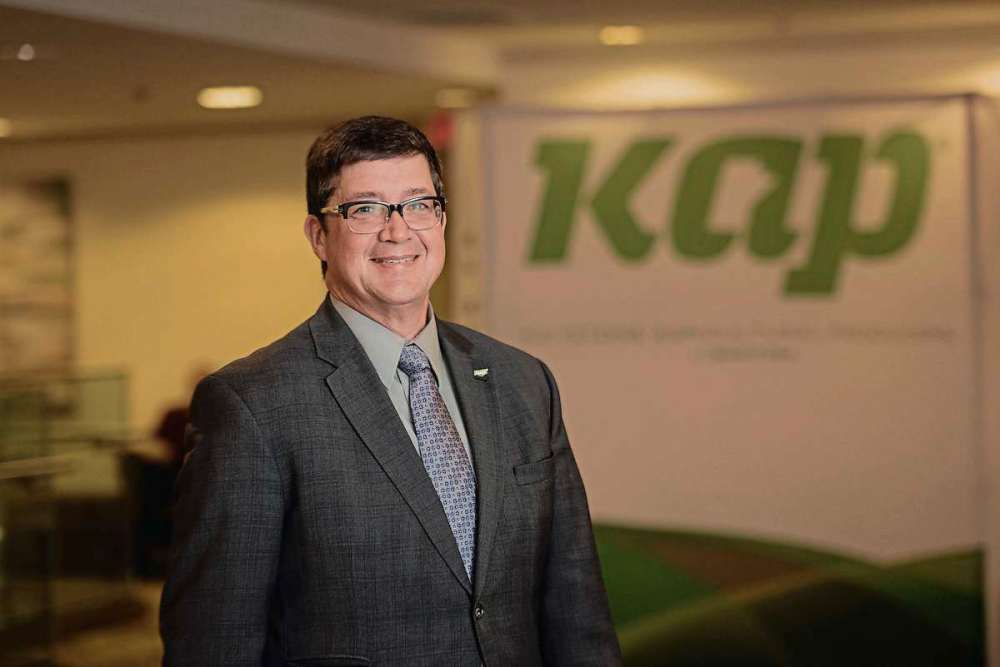
Manitoba farmers who grow industrial hemp, with the majority being in the Parkland region, are now required to pass a criminal record check before obtaining a licence to grow the crop. Mazier said industrial hemp falls under Health Canada regulations and is lumped in with medical marijuana. KAP feels that industrial hemp should be viewed in the same way as other field crops in terms of government regulations.
The resolution asks the federal government to expand allowable sales and processing to whole plants, and simplify licensing and seed testing requirements as well as listing hemp and hemp plant parts as exemptions in Bill C-45 The Cannabis Act.
Mazier said he hopes the resolution will prompt the government to act before marijuana is legalized on Canada in July 2018.
“There’s so much potential with industrial hemp,” he said, adding that Parkland farmers are growing a hybrid variety that has many uses.
Another resolution calls for improved farm chemical container recycling within Manitoba.
“We’ve got a real issue with recycling containers,” Mazier said.
The current number of recycling depots is inadequate and Mazier said there’s no onus on farm chemical retailers to collect the empty containers.
KAP members passed a resolution asking the provincial government to extend the crop insurance program to include hybrid fall rye and make it separate from open pollinated fall rye. Hybrid fall rye acreage is increasing as it has higher yields than conventional fall rye, but seed costs are higher.
Mazier said a resolution asking Manitoba Hydro to maintain its level of service and staffing in rural Manitoba relates to farmers’ increasing reliance on electricity and Manitoba Hydro’s service network.
Andrea Geary
St. Vital community correspondent
Andrea Geary was a community correspondent for St. Vital and was once the community journalist for The Headliner.
Our newsroom depends on a growing audience of readers to power our journalism. If you are not a paid reader, please consider becoming a subscriber.
Our newsroom depends on its audience of readers to power our journalism. Thank you for your support.
Andrea Geary
St. Vital community correspondent
Andrea Geary was a community correspondent for St. Vital and was once the community journalist for The Headliner.
Our newsroom depends on a growing audience of readers to power our journalism. If you are not a paid reader, please consider becoming a subscriber.
Our newsroom depends on its audience of readers to power our journalism. Thank you for your support.
Advertisement Advertise With Us