


Craftsman makes smokin’ axes

Advertisement
Hey there, time traveller!
This article was published 23/10/2015 (3855 days ago), so information in it may no longer be current.
They say one man’s trash is another man’s treasure.
In the hardscrabble years of the early 20th century, that was certainly true. Many a would-be musician would make do with whatever was readily available if they wanted to hone their craft. Instruments came quite often, and quite literally, from the trash heaps. With a wooden cigar box for a body, scrap lumber for a neck, and spare parts for hardware, the cigar box guitar became a lifeline for early rock ’n’ rollers like Elvis Presley, Bo Diddley, and Chuck Berry who first honed their chops on the twangy homemade three-stringers.
Today, the culture of cigar box guitars is kept alive by aficionados around the world. Here in Winnipeg, Wayne Seepish is making a name for himself as a purveyor of the craft.

“I’ve sold them to groups all over the city, and they’ve gone all over the world,” Seepish said.
Seepish said he first came across cigar box guitars when he was selling security systems before he retired.
“I saw a couple at this house,” he recalled. “So I asked the guy, ‘What the heck are these things?’ He said, ‘They’re made out of cigar boxes.’”
Seepish chuckled at the memory.
“That was it!” he said. “I asked, and he made me one, and now that I’ve made about 60 or 70 of my own.”
The North Kildonan resident has been making them for five years now. He builds each one of the delightful instruments in his basement, “on top of my freezer,” then sells them at St. Norbert’s Farmers Market. He counts local artists like Fred Penner and Karen Hammarstrand as customers, and he takes delight in seeing his creations played onstage.
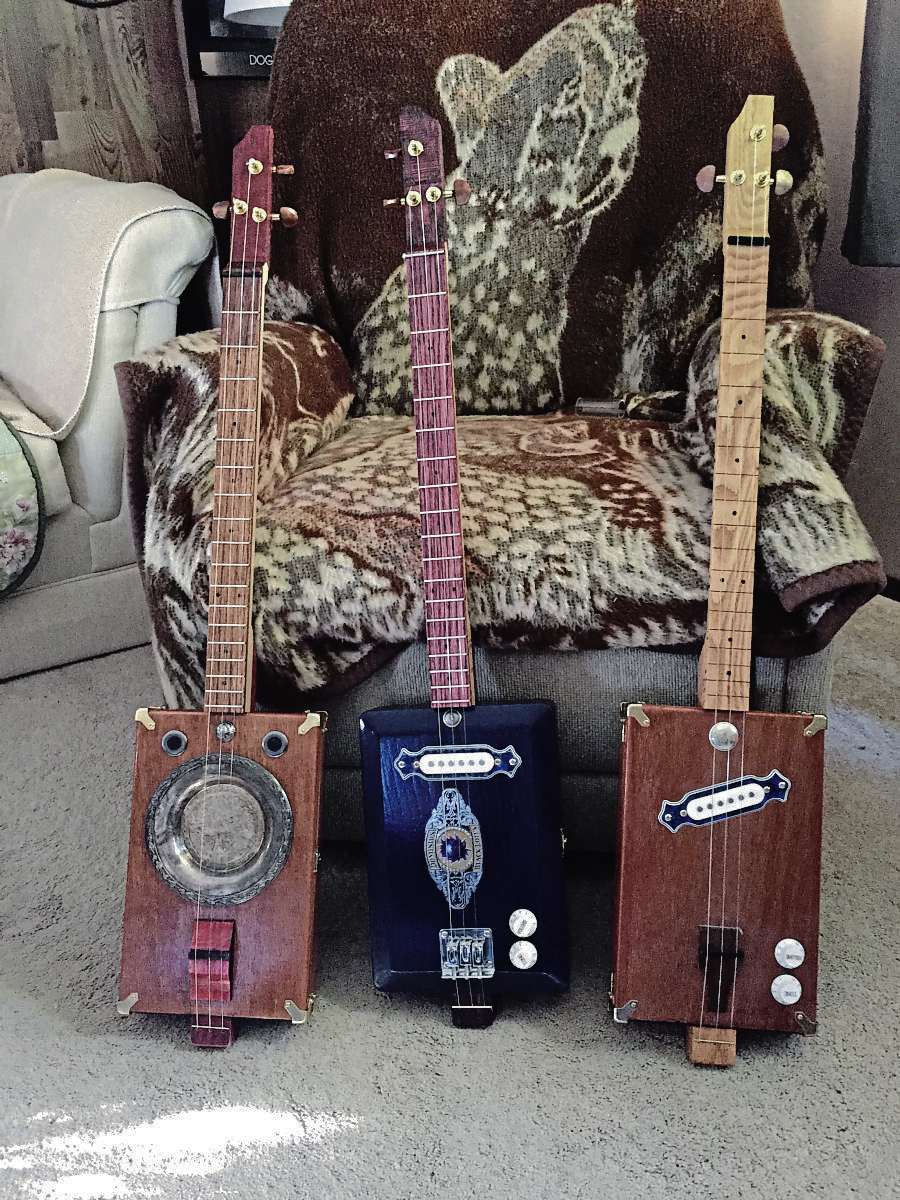
“I got goosebumps watching Dave Quanbury just go crazy on the guitar that I made at Karen’s CD release,” Seepish said with a smile. “It was crazy!”
Seepish said it takes him about a week to build a guitar, and sells an average of two each weekend at St. Norbert.
“I can’t keep up!” he said.
In the meantime, Seepish has tapped into an underground community of cigar box enthusiasts that stretches across the globe.
“As more and more people are getting into this, they’re improving what you can do with these guitars,” Seepish said. Seepish admits his own work has improved over the past five years.

“I’ve got some rough ones I made at the beginning, but you learn as you go,” he said. “Now, the guitars I make are stage ready. You can get bridges that allow you to set the intonation and tuning precisely. The guys who are steadfast musicians who really want their things to be in absolute tune — which isn’t really necessary — this will do it for them.”
Seepish sources the wood for his necks at the local Home Depot. Hardware and electronics he sources online, while other embellishments and stylistic flourishes he picks up and adds here and there.
As for the iconic cigar boxes themselves, Seepish said that if you know where to look, they aren’t hard to find.
“I just got wind of a guy who works for a cigar company who has 30 or 40 boxes,” Seepish said. “I’ve already got more boxes than I need, but I wouldn’t pass up the chance to get a good box. There are some beautiful boxes out there.”
Each instrument is unique. Each come with its own challenges and their own innate character.
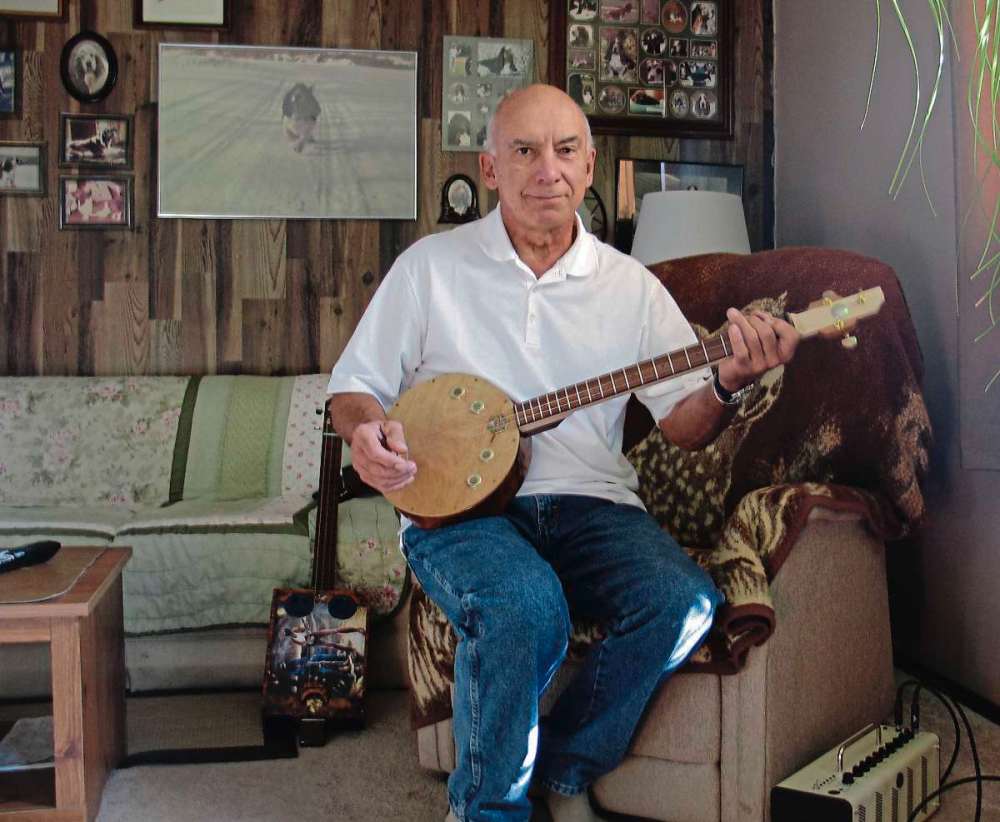
“It didn’t take me long to realize you can make these out of almost anything,” he said, displaying an instrument that looks more like a banjo than a guitar. “It’s a wooden salad bowl. Dollar ninety-nine at Value Village. I’m just amazed I could make something like this, that’s playable, out of a salad bowl for Pete’s sake!”
Facebook.com/TheHeraldWPG
Twitter: @heraldWPG
Sheldon Birnie
Community Journalist
Sheldon Birnie is a reporter/photographer for the Free Press Community Review. Email him at sheldon.birnie@freepress.mb.ca or call him at 204-697-7112
Our newsroom depends on a growing audience of readers to power our journalism. If you are not a paid reader, please consider becoming a subscriber.
Our newsroom depends on its audience of readers to power our journalism. Thank you for your support.
Sheldon Birnie
Community Journalist
Sheldon Birnie is a reporter/photographer for the Free Press Community Review. Email him at sheldon.birnie@freepress.mb.ca or call him at 204-697-7112
Our newsroom depends on a growing audience of readers to power our journalism. If you are not a paid reader, please consider becoming a subscriber.
Our newsroom depends on its audience of readers to power our journalism. Thank you for your support.
Advertisement Advertise With Us
Advertisement Advertise With Us