



How to speak to the world
RETSD’s immersion programs teach French, German, Ukrainian

Advertisement
Hey there, time traveller!
This article was published 01/12/2016 (3425 days ago), so information in it may no longer be current.
In an increasingly globalized society, it pays to be proficient in a second or third language, and the River East Transcona School Division (RETSD) is doing everything it can to give students that opportunity.
RETSD Consultant for Languages Other Than English Walter Nikkel said 3,143 of RETSD’s 16,000 students, or roughly one in five, are enrolled in a language immersion program. Most (2,495) take French, but German (526 students) and Ukrainian (122) are also offered.
Nikkel said RETSD’s French program involves 11 schools throughout the division. The German program begins at Princess Margaret and Donwood Elementary Schools before progressing to Chief Peguis Junior High and River East Collegiate while Ukrainian is offered at Bernie Wolfe and Springfield Heights before moving on to Chief Peguis Junior High.
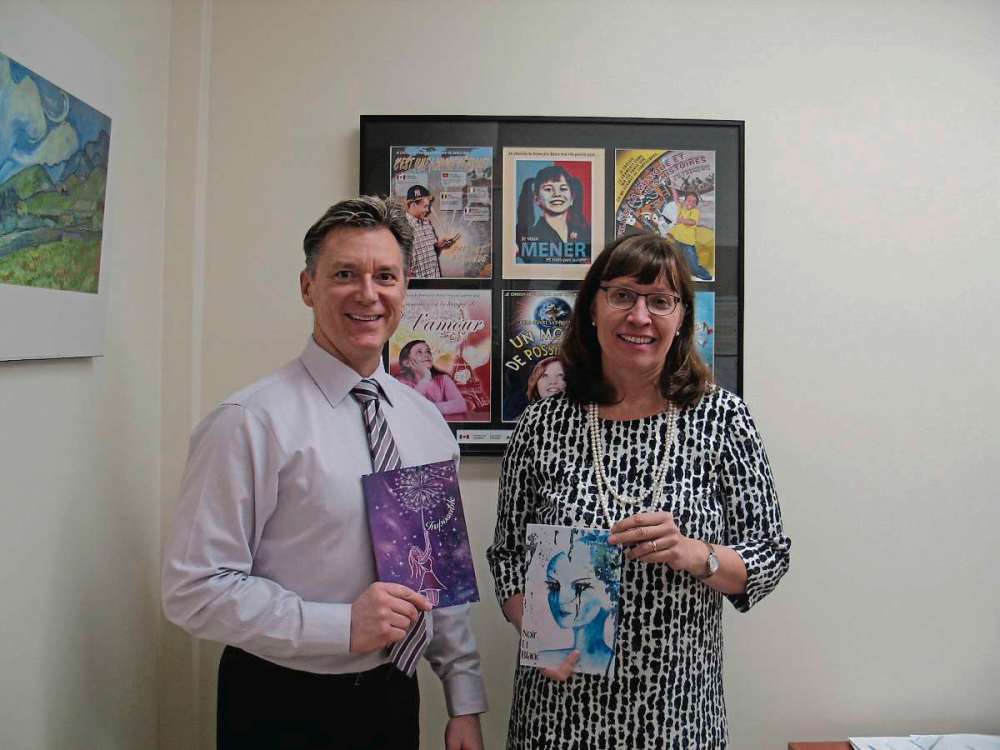
While the reasons for studying French remain clear, Nikkel said the motivations for those studying German and Ukrainian have changed over the decades.
“Those programs were very clearly heritage language programs at the beginning and connected to German and Ukrainian-speaking cultures and heritage. But there has been a change over the last 10 years as fewer enrolling speak German (or Ukrainian) at home.”
Many families may have grandparents or great-grandparents who emigrated to Canada from Germany and the Ukraine, and the cultural ties are often stronger than the linguistic ones.
“Twenty-five per cent have no (direct) connection to Germany,” Nikkel said. “Their parents might come from Eastern Europe and value German highly. Very often families who value language see it as an opportunity to learn a language and see value in the language itself.”
Good language immersion programs require good teachers, and RETSD is constantly looking for more, Nikkel said.
“Finding teachers who are very competent in German or Ukrainian can be a challenge. We need to have teachers who are very strong in both speaking the language and in teaching it.”
It is also challenging to find French teachers as demand for French immersion grows across Western Canada, Nikkel said. Universities are not producing enough graduates to meet the current need.
Recent immigration from the Ukraine has bolstered the ranks as Nikkel estimated half of RETSD’s Ukrainian teachers have emigrated from the Ukraine in the past decade.
Germany directly contributes teachers too, Nikkel added. The Central Agency for Schools Abroad pays for a full-time specialist who works with RETSD’s German program. Maran Koenig has a degree in German second language education and is in her second year working at all four schools.
At River East Collegiate, Koenig works closely with Irina Graeber, a teacher who brings the ideal combination of education and experience to her role.
“I don’t believe in forcing kids,” Graeber began when asked about her teaching methods. “I live it — you have to be so authentic as a teacher. With the right approach and a positive attitude as a teacher and department, they will take it. It’s natural.”
The daughter of educators, Graeber grew up in East Germany studying languages, becoming fluent in English, French and German. After traveling extensively she came to Winnipeg in 2001 and has been with the program since 2004.
Graeber shares her experience with students on everything from geography and language to subtle differences such as the strength with which different cultures shake hands.
Because many students will not speak German at home, Graeber and Koenig find creative ways to reinforce what is taught in the classroom, one of which is the global issues class, Graeber said.
“We touch on global issues and topics where everyone has an opinion.”
After beginning with recycling, the students are discussing Syria. In addition to learning words associated with the conflict like “refugee” and “war,” they also have to formulate cogent positions on topics they are passionate about, but in a new language. The forces the students to apply lessons in a new way.
“It begins with a discussion on what they know and what we should know,” Graeber said. “We talk about what we can do about it from Canada.”
In order to graduate, students have to pass exams developed and scored in Germany, Graeber said. Those scoring well can be confident they will be able to effectively communicate at home and abroad.

Thanks to social networking sites like LinkedIn Graeber is hearing from more and more students who are working around the world in Asia, Europe and the United States who share how much the German program helped them.
“Many people have education, but what are your special skills to help you get that one position?” Graeber asked.
The answer is often the ability to speak languages common in the countries where the growing number of global companies operate.
Ola Matusz and Marianne Sawatsky both plan on having their own unique impacts in the world and expect having proficiency in multiple languages to help. The Grade 11 students at River East Collegiate are enjoying the German program.
A Polish-Canadian, Matusz said her parents lived in Germany and believe in the importance of exposing their children to other languages.
“It gives you a broader understanding of places and languages in Europe. You can go anywhere and understand a bit of a language.”
Matusz plans on becoming an animator.
“If I want to move to Germany I can animate there.”
For Sawatsky the benefits are also both personal and professional. Her grandmother lives in Germany and only speaks German. They now have richer conversations.
After high school she plans on studying psychology at Leipzig University.
“There’s the pros and cons of studying in another language,” Sawatsky said. “You have another language which is a great experience to have and is really handy.
“It does have its pitfalls. In the last two years we have been studying judicial systems in Canada. Most of us cannot answer a single question in English, we only know the German terms.”
The net results are still overwhelmingly positive, Sawatsky said.
“It is a great experience to have on your resume that you have another language.”
Facebook.com/TheHeraldWPG
Twitter: @HeraldWPG
Tony Zerucha
East Kildonan community correspondent
Tony Zerucha is a community correspondent for East Kildonan. Email him at tzerucha@gmail.com
Our newsroom depends on a growing audience of readers to power our journalism. If you are not a paid reader, please consider becoming a subscriber.
Our newsroom depends on its audience of readers to power our journalism. Thank you for your support.
Multilingualism good for the brain
Extensive studies show a variety of benefits to studying additional languages, Nikkel said, citing a meta analysis of research conducted by researchers at the University of Calgary.
“There are personal, cognitive, intellectual, and academic benefits. Students who were studying additional languages or who were bilingual got better marks compared with peer groups. There are also economic benefits — more jobs are available. A number of studies show financial gains.”
Polyglots utilize additional areas of the brain with greater frequency, evidence which has led researchers to surmise they are safeguarding themselves against the effects of diseases causing mental degeneration.
Multiple language speakers tend to able to better empathize with people different from them, Nikkel added.
“(It’s) the ability to see things from more than one perspective. There are relationships you can better establish with people when you can actually speak their language.”
— Zerucha
Tony Zerucha
East Kildonan community correspondent
Tony Zerucha is a community correspondent for East Kildonan. Email him at tzerucha@gmail.com
Our newsroom depends on a growing audience of readers to power our journalism. If you are not a paid reader, please consider becoming a subscriber.
Our newsroom depends on its audience of readers to power our journalism. Thank you for your support.
Advertisement Advertise With Us
Advertisement Advertise With Us