


Investing in long-term, positive change
Netley-Libau marsh pilot project could be big for Lake Winnipeg’s health

Advertisement
Hey there, time traveller!
This article was published 22/10/2021 (1676 days ago), so information in it may no longer be current.
A pilot project in the Netley-Libau marsh could yield major results in the efforts to clean up Lake Winnipeg.
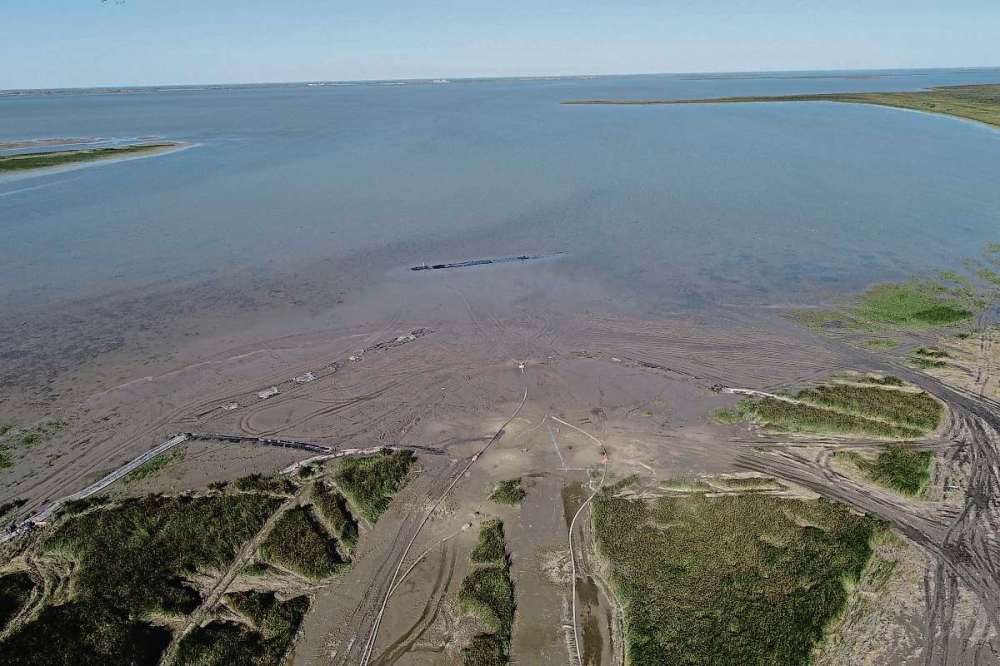
Earlier this month, the provincial government committed $150,000 to help fund a pilot project that seeks to revegetate the Netley-Libau marsh, north of Winnipeg being overseen by the Red River Basin Commission. The organization, whose Canadian offices are located at 1111 Munroe Ave., has been working on international water quality issues for over 40 years.
“This affects everyone,” said managing director Steve Strang. “We’re happy we’ve seen some changes in direction and guidance from provincial government here. We’re excited to get that funding, and looking to expand on what we’ve done this year.”
Described as “the kidneys of Lake Winnipeg,” the marsh, which filters water from the Red River into Lake Winnipeg, is a huge wetland, measuring over 22,000 hectares. For over a century, the marsh has been negatively impacted by human interactions with the environment to the point where it is no longer a properly functioning ecosystem.
Made up of shallow lakes, channels, and lagoons, the marsh, which is also recognized as an important area for migratory birds, not only filters water coming into the lake from the Red, but also lake water that is blown by northwestern winds back into the marsh. A healthy marsh would not only have impacts on water quality, but also biodiversity and carbon sequestration, Strang explained.
“There’s huge value in protecting this,” Strang said. “The actions we’re taking, if we create a healthy marsh, it becomes multi-beneficial.”
With Manitoba in the midst of a multi-year drought, the level of Lake Winnipeg is down over two feet. As a result, vegetation in the marsh is on a rebound. However, should water levels bounce back to normal, much of that vegetation would disappear.
“The vegetation we’re creating should be there permanently,” Strang said.
The pilot project that RRBC is overseeing involves building the bottom of the marsh back up to a level that would allow for vegetation to grow back, so the area could return to a ‘hemi-marsh’ state, with an equal balance of water and vegetation.
Charles Posthumus, East St. Paul ward 4 councillor, has been involved with the RRBC for over a decade, currently acting as board chair for the organization’s North Chapter.
“The bullrushes or cattails that grow when it’s shallow, they protect fish and filter the lake, pulling out the nutrients,” Posthumus explained. “With 30 per cent or more of that gone, we’re seeing the algae and pollution in the lake.”
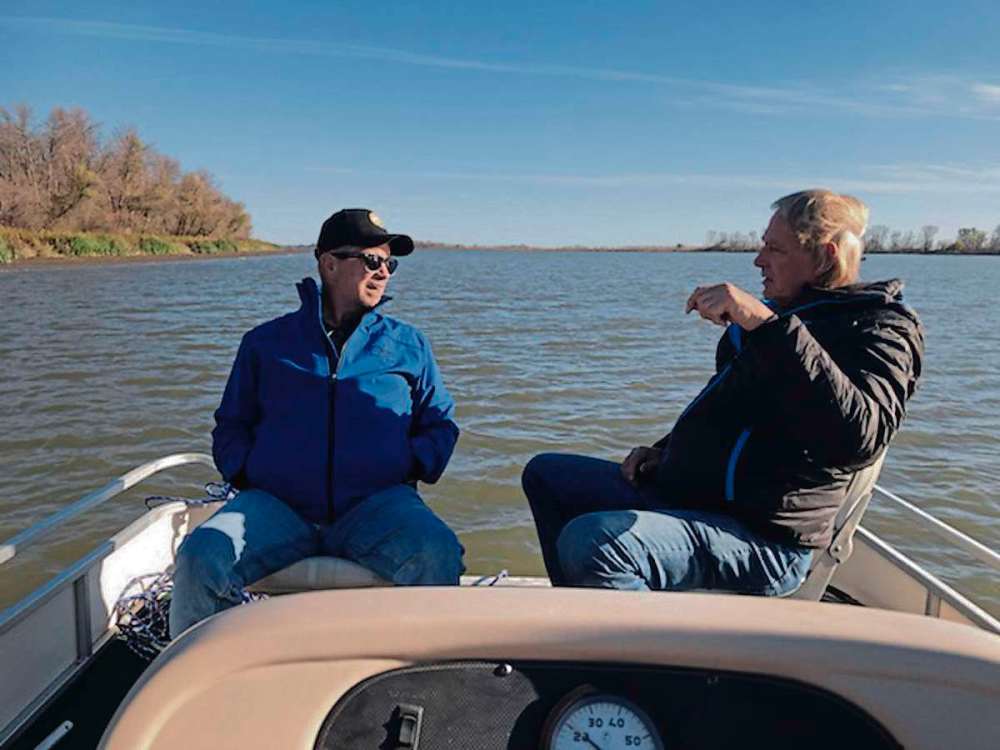
“When I was out there yesterday, seeing how quickly nature reclaims its place is pretty astonishing,” Coun. Shawn Nason (Transcona), who sits on the RRBC board as a representative from the City of Winnipeg, told The Herald. “This is one step towards a much larger problem we have. Working on this, as a buffer zone, for agricultural discharge does show considerable promise.”
Strang said it is the hope of the RRBC and its partners in the project — which include the Southern Chiefs Organization, Peguis First Nation, the Southern Basin Mayors and Reeves, the University of Manitoba, the International Institute for Sustainable Development, Manitoba Hydro, among many others — can be extended for another five years, and from there indefinitely.
“Change is only going to come if we make change,” Strang said. “We cannot rely on others to do this. We all need to participate. It’s about people coming together to work for a common cause, and that’s protecting the environment.”
“This is one of my favourite projects,” Posthumus added. “This is for the future, for my grandkids and their grandkids.”
Visit savenetleymarsh.com for more information on the project.
Sheldon Birnie
Community Journalist
Sheldon Birnie is a reporter/photographer for the Free Press Community Review. Email him at sheldon.birnie@freepress.mb.ca or call him at 204-697-7112
Our newsroom depends on a growing audience of readers to power our journalism. If you are not a paid reader, please consider becoming a subscriber.
Our newsroom depends on its audience of readers to power our journalism. Thank you for your support.
Sheldon Birnie
Community Journalist
Sheldon Birnie is a reporter/photographer for the Free Press Community Review. Email him at sheldon.birnie@freepress.mb.ca or call him at 204-697-7112
Our newsroom depends on a growing audience of readers to power our journalism. If you are not a paid reader, please consider becoming a subscriber.
Our newsroom depends on its audience of readers to power our journalism. Thank you for your support.
Advertisement Advertise With Us
Advertisement Advertise With Us