



Finding moments to treasure
Alzheimer campaign helps raise awareness

Advertisement
Hey there, time traveller!
This article was published 14/01/2019 (2642 days ago), so information in it may no longer be current.
Life goes on after a diagnosis of Alzheimer’s disease or dementia.
That’s one of key messages imparted in this year’s Alzheimer Awareness Month campaign, which was launched locally by the Alzheimer Society of Manitoba on Jan. 7. The campaign’s tagline this year is: “Yes. I live with dementia. Let me help you understand.”
Officials say the premise of the campaign is to help others understand what it’s like to live with dementia, and it showcases the diverse stories of individuals across the nation living with Alzheimer’s or another form of dementia, and one of the main aims of the campaign is to help change attitudes about the disease and eradicate the stigma associated with it, as well as increase awareness about the warning signs of the disease and encourage families to seek help and support.

Cristy’s Law’s father, Terry, was diagnosed with early onset Alzheimer’s three years ago when he 63, and the last three years have been a big learning curve for herself; her mother, Jan; and her sisters, Kerri Pleskach and Tara Liske.
“It’s been a major journey for us,” Law, who lives in Norwood Flats, told The Lance. “There have been lots of changes as we’ve adapted to a new reality, and found different ways to interact with my dad. We always try to talk about silver linings, so now we’re more likely to go with the flow and let things go.”
“And I think as a family we now communicate more, and process our feelings about this, which is a huge step. The society has helped us talk about it, and I think we’ve gotten closer as a family. I think it’s important to try and find happiness in something that can be so different and difficult to deal with, and you need to find moments of joy, and moments to treasure.”
Now in a care home and needing lots of assistance with day-to-day functions, Law’s dad will have days when he is “super excited” to see his family, but may not remember their names. Despite this, Law said it’s important to try and remain positive and upbeat.
“He can sense emotion, and he’ll respond to a familiar smiling face,” Law said. “And it’s important not to get frustrated with them or correct them, as something abrupt can easily upset them.”
In terms of warning signals, Law said over time her family gradually began to notice things about Terry’s behaviour or actions that might have been considered slightly unusual or out of character.
“At first, it was little things, like he might go to the wrong seat or grab someone else’s drink. Also, he was usually the driver, and he started going to the passenger side instead,” she said.
On another occasion, Law said, her dad was playing checkers with his six-year-old granddaughter.
“Dad was always a big strategy person, and on this occasion he was struggling to play checkers against my niece, and didn’t know what moves to make. When my sisters brought it to our attention, my mum said she’d started noticing his sense of direction was starting to go, and there were lots of these types of things starting to happen.”
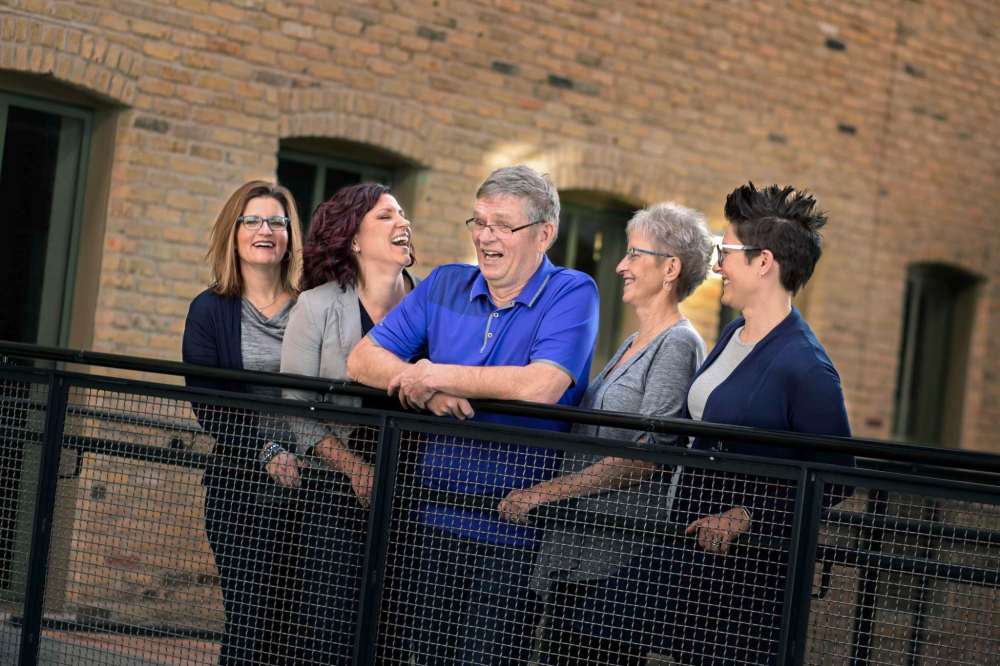
Law is thankful for the support of the Alzheimer Society of Manitoba, which is located at 10-120 Donald St., throughout the family’s journey.
“The society has been a huge support and resource for us, and everyone there has been absolutely amazing and incredible to deal with,” she said, noting her family been has been involved with different support groups and sessions.
In a news release, the Alzheimer Society of Manitoba’s chief executive officer Wendy Schettler said it’s important to turn “the conversation over to the experts — the people who are living it every day.”
“We believe sharing the stories of Manitobans living with dementia will fuel a more open, supportive and inclusive dialogue around dementia, and give confidence to others who have this disease to live their best lives,” Schettler said.
Go online at alzheimer.mb.ca for more information, which includes a number of resources.
Our newsroom depends on a growing audience of readers to power our journalism. If you are not a paid reader, please consider becoming a subscriber.
Our newsroom depends on its audience of readers to power our journalism. Thank you for your support.
Our newsroom depends on a growing audience of readers to power our journalism. If you are not a paid reader, please consider becoming a subscriber.
Our newsroom depends on its audience of readers to power our journalism. Thank you for your support.
Advertisement Advertise With Us
Advertisement Advertise With Us