


Fire hall’s history to be preserved
Sargent Avenue hall added to historical buildings commemorative list
Advertisement
Hey there, time traveller!
This article was published 09/12/2014 (4236 days ago), so information in it may no longer be current.
A West End landmark will now be safe for years to come.
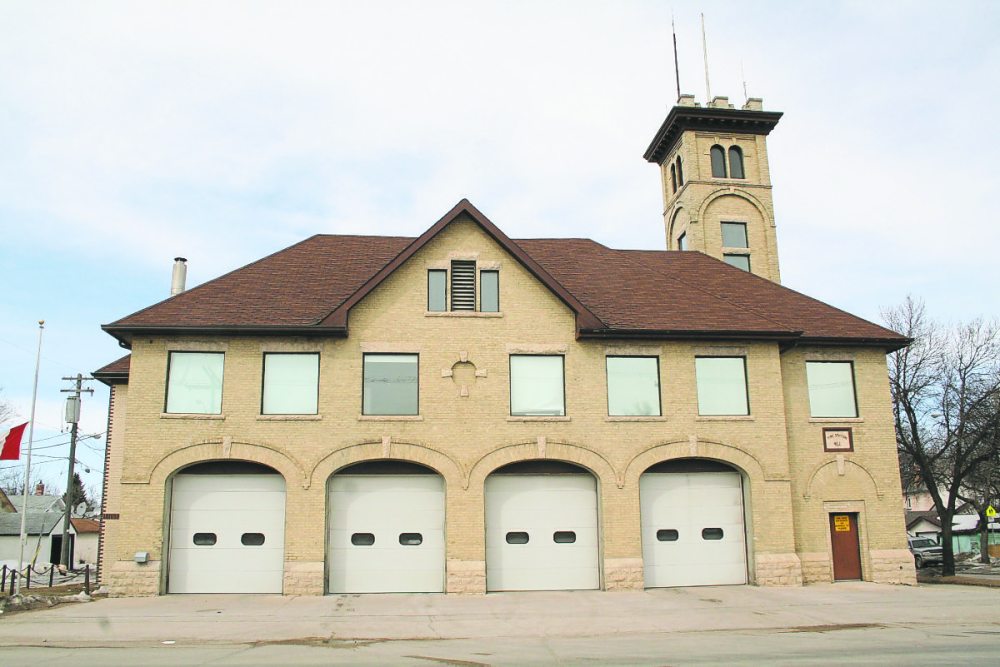
Fire Hall No. 5, located at 845 Sargent Ave., was added to the City of Winnipeg’s historical buildings commemorative list on Nov. 27.
The active fire hall was built in 1910 as Winnipeg was expanding outwards from its downtown core.
During this time, to get a fire hall in your community was a landmark moment, as it signified that their neighbourhood was a permanent development, said Murray Peterson, historical buildings officer for the City of Winnipeg. Peterson authored the report submitted to the standing policy committee on downtown development, heritage and riverbank management.
“It was almost like a badge of honour when you got a fire hall, because it really sort of pointed out that you were there to stay,” he said.
The building was designed by Alexander and William Melville, who were best known for their fire hall design. By 1914, their original design had been used to build 13 fire halls in Winnipeg and one in St. Vital, at the time considered a separate municipality.
Technology related to firefighting and building construction was expanding rapidly at the time the fire hall was built, Peterson’s report points out. Motorized vehicles soon replaced horse-drawn carriages, high pressure pumps took the place of chemical wagons, and live-in firefighters took the place of split shift employees.
As the city continued to expand, more men were needed to protect an ever-growing population.
As a result, the city needed fire halls “that were basic enough to be inexpensive, adaptable enough to keep pace with ever-changing technology, and efficient enough to aid in the task at hand,” the report states.
City officials decided to use one basic floor plan to address these issues, for which the Melvilles’ design worked perfectly.
Like many designed by the Melvilles across the city, Fire Hall No. 5 was designed to be esthetically pleasing to passersby, with intricate ornamental detailing, rustic stone bases, and a large tower.
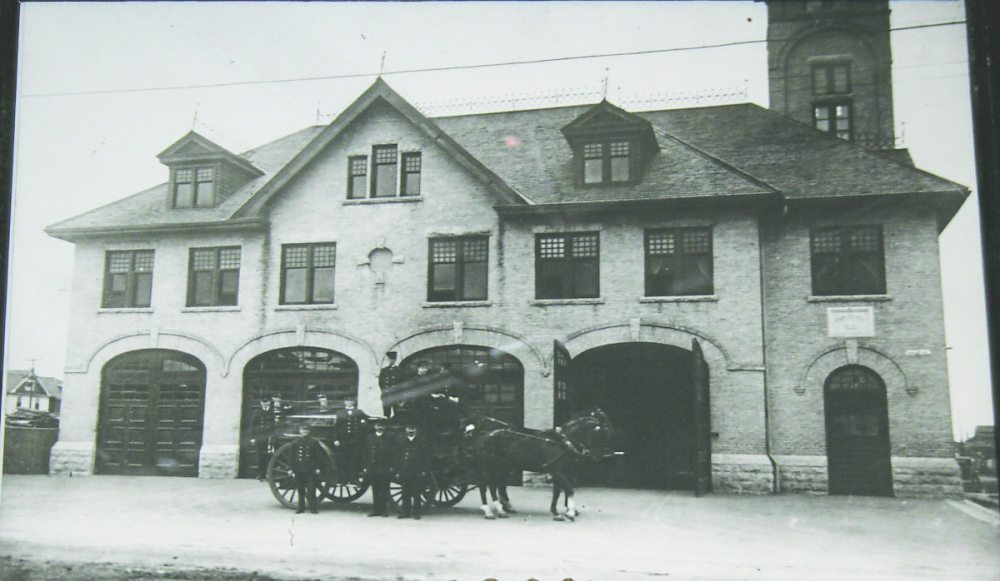
The building stands on a busy corner in the West End, and continues to be a landmark in the community.
“I dare say that people really feel like they’re home when they see the fire hall tower,” Peterson said.
Along with Fire Hall No. 5, Fire Hall No. 15 at 524 Osborne St., and Fire Hall No. 9 at 1466 William Ave. were also added to the City’s commemorative list.
Facebook.com/TheMetroWPG
Twitter: @MetroWPG