



The Ruby Street bison and friends
Advertisement
Hey there, time traveller!
This article was published 21/11/2016 (3418 days ago), so information in it may no longer be current.
Talk about old news.
Forty-seven years ago this month, bones of likely Bison antiquus occidentalis were uncovered by workers excavating a sewer on Ruby Street just north of Palmerston Avenue, alongside the Laura Secord schoolyard. This ancient species, with horns considerably larger than those of modern bison, became extinct 5,000 to 4,000 years ago.
In a 2010 blog article about the discovery, Dr. Graham Young, curator of geology and paleontology at the Manitoba Museum, reproduced the November 1969 field notes of his predecessor, Dr. George Lammers:
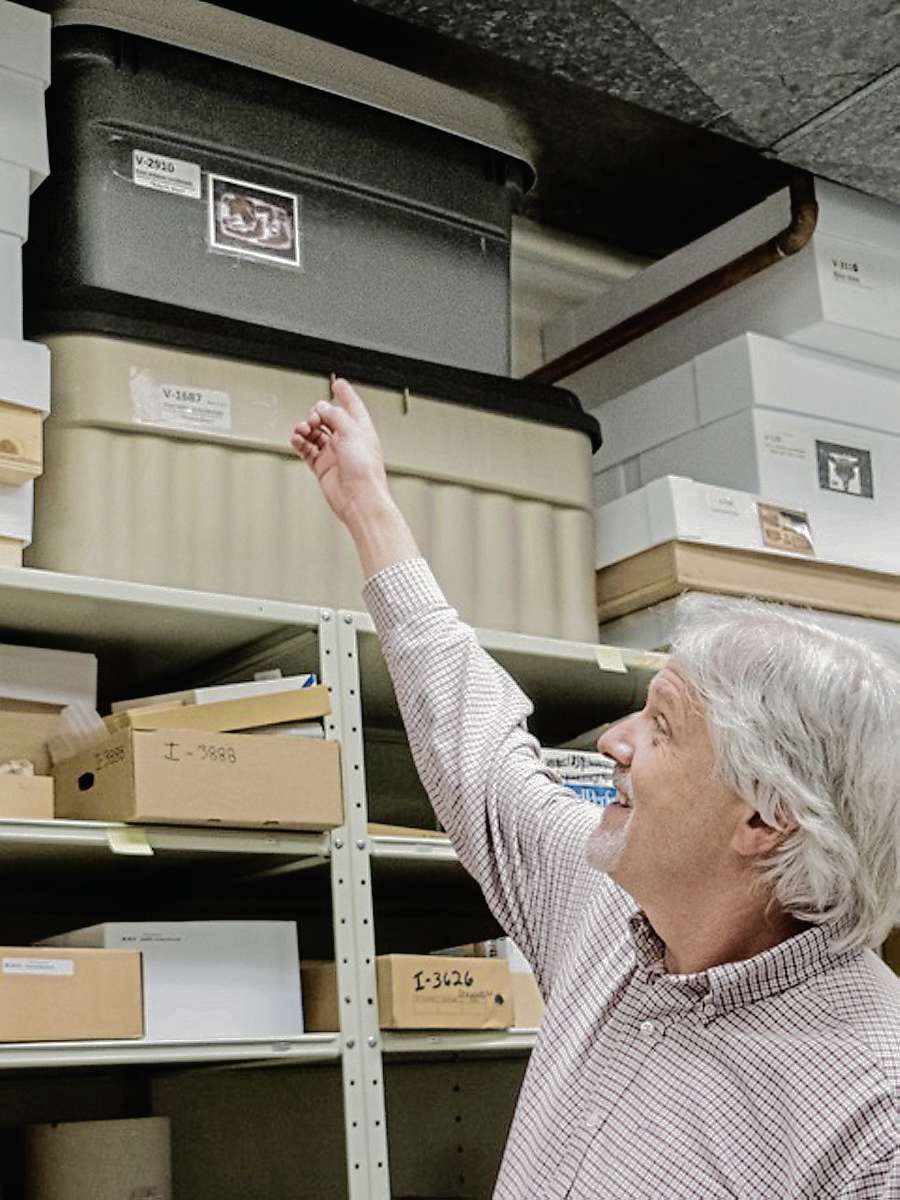
“…today I went underground. Dave, foreman on the job, seems willing to have the site visited frequently, samples taken, etc. Arrangements made to visit site every Wednesday 08:30 until job completed.”
Bison bones, as well as elk bones from the same period, ancient spruce, willow and poplar wood, clam shells, sand and gravel were found 10.7 metres (35 feet) below ground.
In a March 14, 1970, Winnipeg Free Press article, Lammers said of the sewer trench, “That was ground level at Ruby and Wolseley (sic) 60 centuries ago.”
It’s difficult to conceive of a time so long ago. In an interview, Young said Winnipeg’s terrain doesn’t help:
“Geologically, Winnipeg is a challenge. It is flat, a blank canvas to build on. We’re on top of layers of sediment and we can only go down.”
This is in contrast to places with slashes in the landscape, such Halifax, N.S., and Saint John. N.B. There, he said, the land’s exposed cross-sections clearly reveal, for example, bedrock that yields Coal Age plants and Cambrian trilobite deposits.
Then again, he added, if you look where our city rivers down-cut, exposing riverbank, “you can see 5,000 years down.”
Young said in his blog that the clay found in the Ruby excavation site was probably deposited by a glacial lake, which once covered Manitoba and receded by 8,000 years ago. Because some recovered wood was radiocarbon dated at about 7,500 years old, the site indicates “the ancient Assiniboine River had already cut a valley within a thousand years after the lake had left the area.”
As for the Ruby Street bison, he explained, “The sand and gravel have features of an ancient river bar, in which the clams lived, and onto which the wood and the bison were deposited.”
That’s “bison” plural. The discovery included not only a large skull portion, but two left jaw bones.
Gail Perry is a community correspondent for Wolseley. She can be reached at: gailperry.writer@gmail.com