


Abandoned sites a reminder of rural life

Advertisement
Hey there, time traveller!
This article was published 27/02/2017 (3454 days ago), so information in it may no longer be current.
At a recent Charleswood Historical Society presentation, Gordon Goldsborough, author of a new book Abandoned Manitoba, shared how he came to explore the province looking for hidden sights of Manitoba’s history.
His quest to seek out historic sites in Manitoba started in 2007 when he accompanied his wife (who at the time was working for a wind farm) on a trip to Deloraine. While looking around the town, he noticed a reference to an old bank vault, which he couldn’t find. Upon further investigation, he learned that the town of Deloraine had actually been moved a couple miles to a hook up with the rail line, and because the bank vault was made of stone, it was left behind.
After talking to people in the area, he eventually found the original 1880s bank vault behind a farmer’s barn.
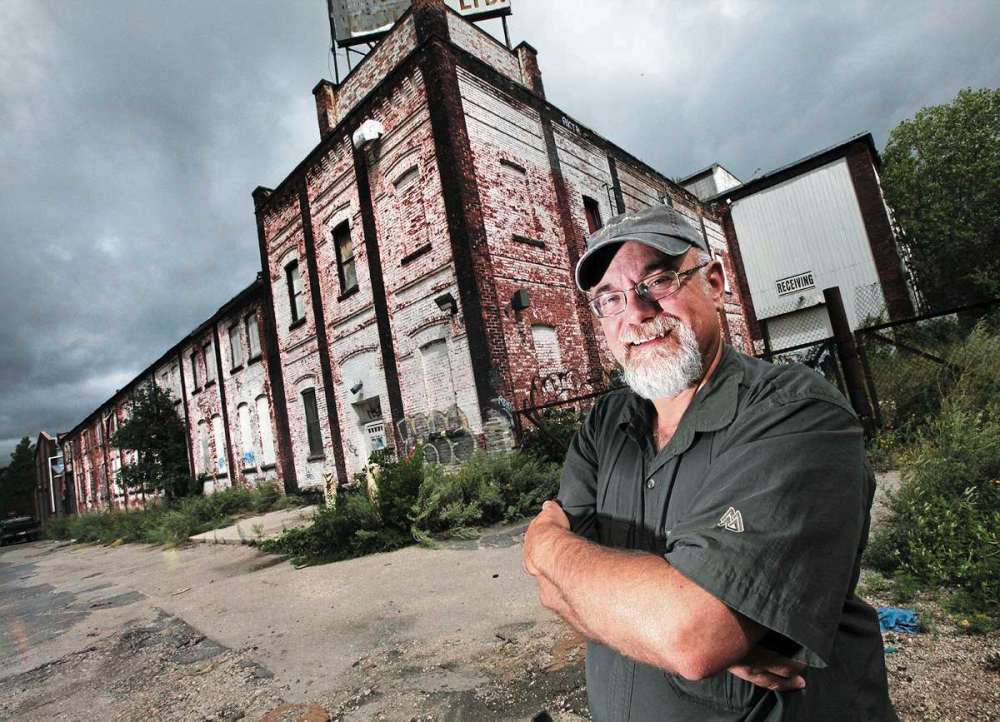
A volunteer with the Manitoba Historical Society, Goldsborough took on a project to find small museums in Winnipeg; a project that evolved to include small museums across the province.
This was the impetus for a passion to find and map historical sites. And a tool called Google Maps, which was a relatively new technology at the time, took the search to a whole new level.
What started as a project to identify a few museums evolved to an inventory of thousands of sites — ranging from monument to building and cemeteries — for which exact co-ordinates can be obtained. And anyone who has an interest in historic sites can search them out, according to Goldsborough, who is an associate professor of biological sciences at the University of Manitoba.
He provided many examples of sites he has identified in his Exploring Manitoba’s Historic Places by Ground & Air presentation, some of which are included in Abandoned Manitoba.
These sites — abandoned grain elevators, the oldest flour mill, bridges (one to nowhere because the highway was rerouted), hospitals, one-room schoolhouses — symbolize how Manitoba’s communities have changed, and stand as tangible reminders of the past.
Goldsborough also identified a couple of military sites used for training, including Camp Hughes National Historic Site near Carberry, which has the remains of infrastructure that supported a community of 25,000 people who trained or worked there, along with the province’s largest outdoor swimming pool.
He points out that identifying some of these sites was possible because of his drone — another technological advancement — which he used to photograph sites he wasn’t able to get close to.
Goldsborough suggested anyone who has knowledge of a site they would like to see added to his list of abandoned sites can contact him at gordon@mhs.mb.ca
Donna Minkus is a community correspondent for Charleswood.
Donna Minkus
Charleswood community correspondent
Donna Minkus is a community correspondent for Charleswood.
Our newsroom depends on a growing audience of readers to power our journalism. If you are not a paid reader, please consider becoming a subscriber.
Our newsroom depends on its audience of readers to power our journalism. Thank you for your support.
Donna Minkus
Charleswood community correspondent
Donna Minkus is a community correspondent for Charleswood.
Our newsroom depends on a growing audience of readers to power our journalism. If you are not a paid reader, please consider becoming a subscriber.
Our newsroom depends on its audience of readers to power our journalism. Thank you for your support.
Advertisement Advertise With Us