Hey there, time traveller!
This article was published 23/11/2018 (2738 days ago), so information in it may no longer be current.
A unanimous vote at a recent Winnipeg School Division board meeting was met with cheers from a group of local immigrant advocates.
On Nov. 19, the board threw support behind a motion that would give newcomers, regardless of their citizenship status, and high school students the right to vote in school board elections.
The motion, put forward by Ward 3 trustee Mark Wasyliw, will now be presented to the Minister of Education since any changes to the Municipal Councils and School Board Elections Act have to be approved by the province. The elections act currently requires all voters to be Canadian citizens.
“We have the largest newcomer population in any school division,” Wasyliw said during the board meeting. “Families move into our division and they raise their children in our schools… they buy property and pay taxes and yet they don’t have any say in our elections or who runs their schools because they’re not Canadian citizens.”
Abdikheir Ahmed and Noelle DePape of Immigration Partnership Winnipeg spoke in support of the motion at the board meeting and were thrilled by the unanimous vote.
“It’s a wonderful outcome,” said Ahmed. “It shows the interest and the commitment of our leaders at the school division level to include people who are not normally included in decision-making.”
Ahmed lives in Elmwood and his children attend school in the division. While he would like to see permanent residents voting for every level of government, he believes school board elections are a good starting point.
“For the future it signifies that great change is coming,” he said.
Newcomers and refugees who have been granted permanent resident status from the federal government are entitled to social benefits, like health care coverage, and are protected under Canadian law. They are required to pay taxes, but can’t vote or run for political office.
Through IPW, Ahmed and DePape have been advocating for permanent resident voting rights at a grassroots level for several years. Finding an ally in the city’s largest school division was a welcome surprise.
“To see an institution like the Winnipeg School Division… actually take this on and unanimously pass this, I feel like it could be a historic movement,” said DePape, who lives in Wolseley and also has children attending school in WSD.
Toronto and Vancouver city councils have recently passed similar motions seeking changes to the voting rules in those provinces.
“If Winnipeg continues with this momentum and the province moves forward, Manitoba could actually be the first province in Canada to do this,” DePape said.
Wasyliw’s motion also proposes to lower the voting age in school board elections to 16 years old. He argues this change would get more young people engaged in the democratic process and help increase voter turnout in the division — only 42 per cent of eligible residents voted in the Oct. 24 school board election.
The WSD board will draft a letter to and seek a meeting with Education Minister Kelvin Goertzen on the newcomer and students’ right to vote issue; and plans to make a presentation to the Manitoba School Boards Association.
A unanimous vote at a recent Winnipeg School Division board meeting was met with cheers from a group of local immigrant advocates.
Photo by Eva Wasney
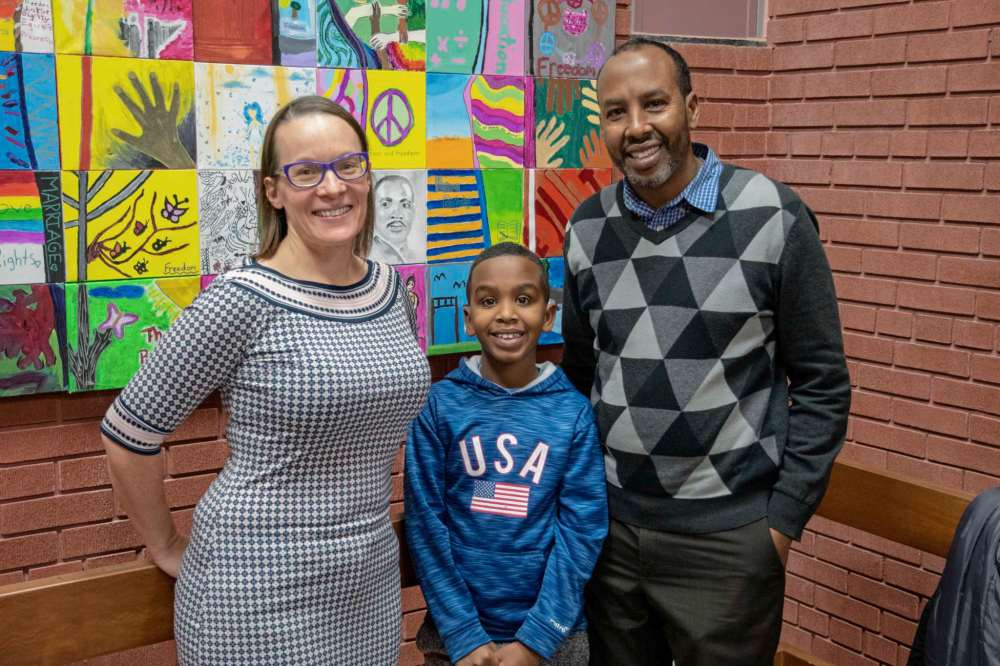
Immigration Partnership Winnipeg’s Noelle DePape (left), Abdikheir Ahmed and his son Ibrahim, 9, pose for a photo at the Winnipeg School Division’s administration office (1577 Wall St.) following the Nov. 19 board meeting.
On Nov. 19, the board threw support behind a motion that would give newcomers, regardless of their citizenship status, and high school students the right to vote in school board elections.
The motion, put forward by Ward 3 trustee Mark Wasyliw, will now be presented to the Minister of Education since any changes to the Municipal Councils and School Board Elections Act have to be approved by the province. The elections act currently requires all voters to be Canadian citizens.
“We have the largest newcomer population in any school division,” Wasyliw said during the board meeting. “Families move into our division and they raise their children in our schools… they buy property and pay taxes and yet they don’t have any say in our elections or who runs their schools because they’re not Canadian citizens.”
Abdikheir Ahmed and Noelle DePape of Immigration Partnership Winnipeg spoke in support of the motion at the board meeting and were thrilled by the unanimous vote.
“It’s a wonderful outcome,” said Ahmed. “It shows the interest and the commitment of our leaders at the school division level to include people who are not normally included in decision-making.”
Ahmed lives in Elmwood and his children attend school in the division. While he would like to see permanent residents voting for every level of government, he believes school board elections are a good starting point.
“For the future it signifies that great change is coming,” he said.
Newcomers and refugees who have been granted permanent resident status from the federal government are entitled to social benefits, like health care coverage, and are protected under Canadian law. They are required to pay taxes, but can’t vote or run for political office.
Through IPW, Ahmed and DePape have been advocating for permanent resident voting rights at a grassroots level for several years. Finding an ally in the city’s largest school division was a welcome surprise.
Photo by Eva Wasney
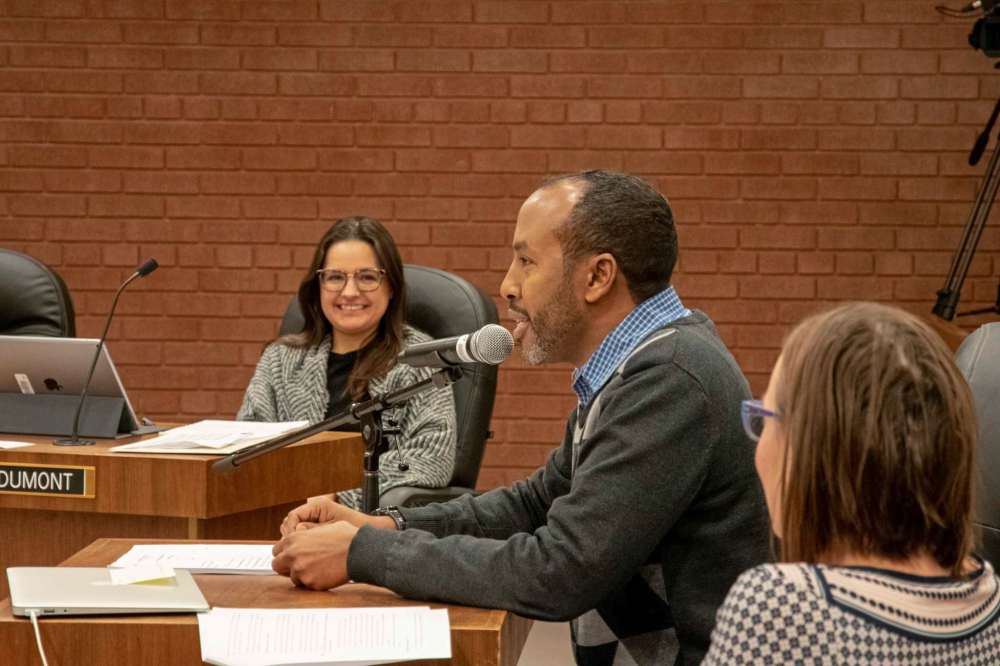
Immigration Partnership Winnipeg director Abdikheir Ahmed speaks in support of the newcomer and students’ right to vote motion at the Winnipeg School Division’s Nov. 19 board meeting.
“To see an institution like the Winnipeg School Division… actually take this on and unanimously pass this, I feel like it could be a historic movement,” said DePape, who lives in Wolseley and also has children attending school in WSD.
Toronto and Vancouver city councils have recently passed similar motions seeking changes to the voting rules in those provinces.
“If Winnipeg continues with this momentum and the province moves forward, Manitoba could actually be the first province in Canada to do this,” DePape said.
Wasyliw’s motion also proposes to lower the voting age in school board elections to 16 years old. He argues this change would get more young people engaged in the democratic process and help increase voter turnout in the division — only 42 per cent of eligible residents voted in the Oct. 24 school board election.
The WSD board will draft a letter to and seek a meeting with Education Minister Kelvin Goertzen on the newcomer and students’ right to vote issue; and plans to make a presentation to the Manitoba School Boards Association.