


The history of food in Manitoba
Advertisement
Hey there, time traveller!
This article was published 08/11/2019 (2490 days ago), so information in it may no longer be current.
A University of Winnipeg project is telling the history of Manitoba foods through digital media and podcasts.
The Manitoba Food History Project aims to collect a comprehensive history of food creation, retail, and consumption in the province of Manitoba from 1870 to today. The project has travelled across the province, using a repurposed food truck so locals can cook and share their recipes with the researchers.
The idea is to create an accessible history of Manitoba food that can reach a wider audience than a traditional article in a history journal. The project aims to produce podcasts, digital stories, pop-up events and oral history records that will be archived at the Oral History Centre.
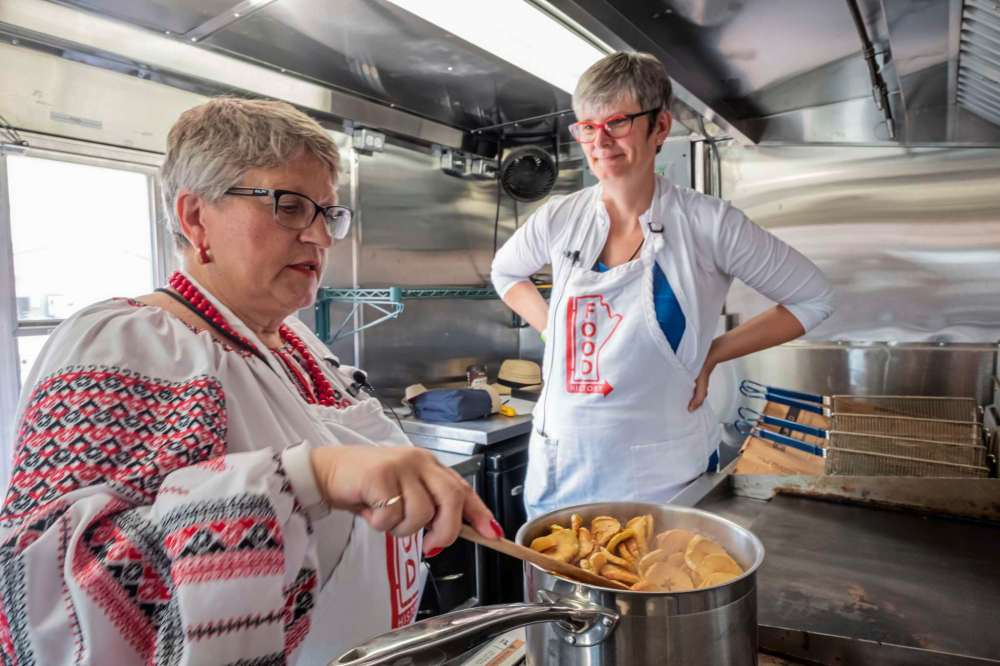
Janis Thiessen is a professor of history at the University of Winnipeg and one of the primary researchers for the project. She said projects like these are often criticized for not being scholarly or reputable sources.
“One of the criticisms of (the project) is they’re not scholarly. We want our podcasts to be as well-researched as any book and article,” Thiessen said. “Our scripts are on the website, and they’re footnoted. So (people) can follow through on the sources, and figure out where these claims come from.”
Thiessen credits the Oral History Centre at the University of Winnipeg with helping her realize this project. The work of transcribing and creating footnotes is shared between Thiessen, U of W students, as well as the other collaborators on the project: Kent Davies, audio technician and Kimberley Moore, program co-ordinator of the Oral History Centre.
Davies said most students have really taken to the project.
“So far they’ve reacted very well. Most students have rose to the occasion, (they) explored themes we didn’t consider ourselves, a lot of them are excited to engage with this process,” Davies said. “We’re teaching students how to produce a podcast, how to record good audio, how to tell a story, frankly. Having those skills will help them in their careers.”
In the summer of 2019, the food truck visited Manitoba’s Sunflower Festival in Altona and Canada’s National Ukrainian Festival in Dauphin. The team plans to continue the project for the next few years, traveling and archiving history.
The project is funded by a four year grant, and Thiessen said she hopes to continue the project for several years.
“There’s no shortage of food stories in this province,” Thiessen said.