


Acceptance doesn’t have to mean loss of hope

Advertisement
Hey there, time traveller!
This article was published 26/05/2020 (2271 days ago), so information in it may no longer be current.
Many years ago while working on my English degree, I took a psychology course in which I studied a book called On Death and Dying, by international bestselling author Elisabeth Kubler-Ross.
Her book outlines the five stages of the dying process: denial, anger, bargaining, depression and acceptance. The emotional experience she examines in each of these stages correlates with the experiences of grief. The grief one feels can be due to the death of a loved one, the end of a relationship or even the loss of a job. Recently, I began to wonder if the stages of grief could also describe feelings about the loss of one’s freedom.
It’s not my intent to provide a review of a book I studied more years ago than I care to remember, but with all the focus on death due to COVID-19, I couldn’t help but speculate that the stages of grief might be something many of us are going through in this time of social isolation. I know I have certainly passed through at least four of them.
When we first heard about the virus in early March, I have to admit, I thought: “This is just another form of the flu. An overreaction to a health threat and it will pass.”
I was in denial. As the weeks wore on and the virus spread throughout the world, killing thousands, I had to rethink my initial proposition.
I moved on to, “OK, this is serious. We’re being told to stay home, businesses are closing, jobs are being lost, and livelihoods are being destroyed. Now I’m angry. How could ‘they’ let this happen? Why didn’t ‘they’ know about this sooner and take steps to eliminate or contain this disease?”
I have to admit some of that anger stemmed from the stay-at-home restrictions that were imposed, disrupting my life and daily routine.
I may have skipped the bargaining stage of the grieving cycle or just skimmed through it with the understanding that I would agree to stay home for a while but this better not last long. Fairly quickly, though, I moved on to the next phase. I don’t know if I’d call it depression, at least not in the clinical sense, but a certain form of sadness set in.
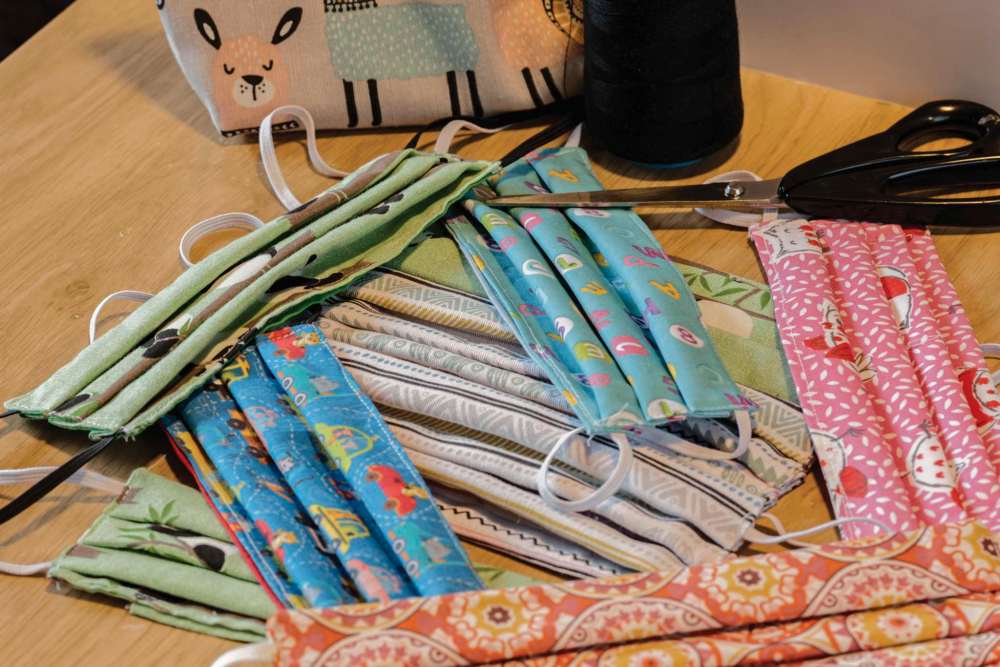
Two months from the official announcement that we were in the midst of a pandemic, I have arrived at acceptance. Social distancing and wearing face masks are the new way of the world.
I am learning to be OK with that, and for good reason.
In the ongoing reporting of COVID-19 cases throughout Canada, we find that Manitoba has been extremely fortunate. So I guess ‘they’ — the health-care officials in charge of dealing with this unprecedented crisis — have taken the right steps. Flanked by a dedicated team of health-care staff who cared for those who were victims of this life-threatening disease, Manitoba is in an enviable position compared to most provinces.
In coming to this place of acceptance — where I might use the common phrase— “it is what it is,” my desire is that acceptance does not mean loss of hope. The hope that things will get better.
According to Kubler-Ross’s theory of grief, acceptance means adjusting to a new situation. For us, acceptance might mean changing our expectations of what is normal.
Right now, my hope is to find something inspirational to cover in my next column.
We need some good news. Readers who have ideas or news to share can reach me at dminkus@shaw.ca
Donna Minkus is a community correspondent for Charleswood.
Donna Minkus
Charleswood community correspondent
Donna Minkus is a community correspondent for Charleswood.
Our newsroom depends on a growing audience of readers to power our journalism. If you are not a paid reader, please consider becoming a subscriber.
Our newsroom depends on its audience of readers to power our journalism. Thank you for your support.
Donna Minkus
Charleswood community correspondent
Donna Minkus is a community correspondent for Charleswood.
Our newsroom depends on a growing audience of readers to power our journalism. If you are not a paid reader, please consider becoming a subscriber.
Our newsroom depends on its audience of readers to power our journalism. Thank you for your support.
Advertisement Advertise With Us
Advertisement Advertise With Us