


They’re baaaack
Living Prairie Museum brings in sheep to help with vegetation management
Advertisement
Hey there, time traveller!
This article was published 20/07/2020 (2138 days ago), so information in it may no longer be current.
The Living Prairie Museum hired some baaaaad employees this summer.
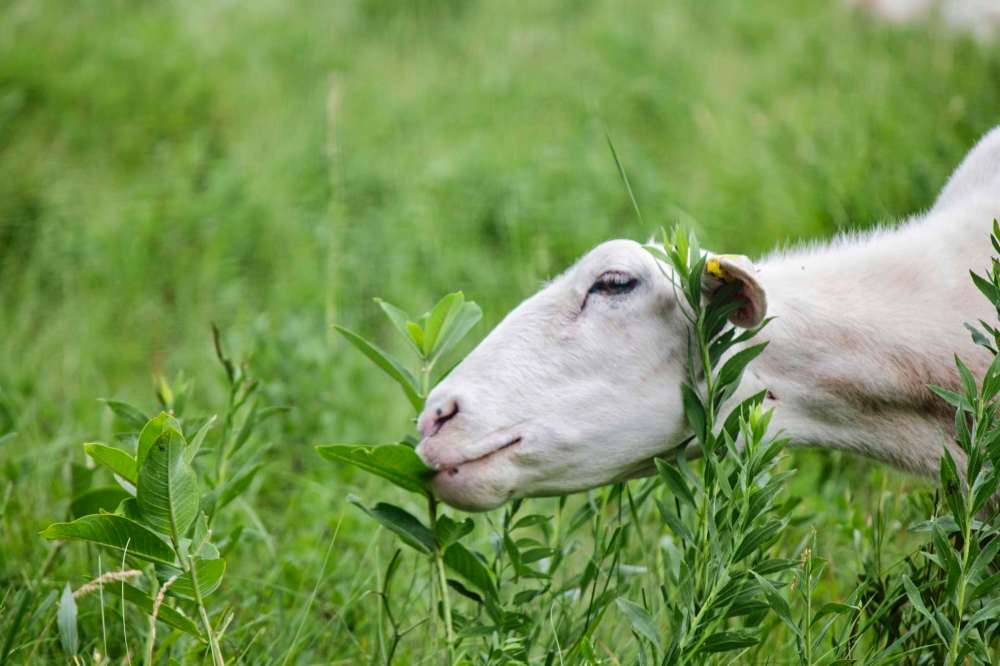
The museum brought a flock of sheep on as an unofficial maintenance crew. Twenty-eight adult female sheep and four lambs are grazing and sleeping in an enclosure near the museum’s Interpretive Centre.
It’s a continuation of a pilot project from 2019, a test to see if grazing sheep can manage prairie vegetation in a natural way.

The sheep were brought to the centre on July 13, and they’ll be there until the end of the month.
Sarah Semmler, museum director, said the sheep will put invasive plant species at a competitive disadvantage.
“Historically, tall grass prairie is an ecosystem that adapted to fire and grazing. In the past, bison would be doing the grazing, which helps maintain plant diversity,” Semmler said. “But since we don’t have any bison present, sheep are a nice alternative. We just put them on site, leave them to do their grazing, and get some of those positive ecological effects for the prairies.”
Semmler hopes that the sheep will graze evenly. Tall grass prairie flora is used to being burned and eaten, after the plants go away, they come back stronger. The invasive species do not have the same defences. So as the sheep eat everything, the invasive plants will wither away while the prairie plants regrow throughout the season.
This pilot project began last year. Sheep were brought in for the summer, where they successfully curbed the invasive plants. If the sheep do well this year, they might be a viable, natural alternative to using chemicals to kill harmful flora.

Rodney Penner, City of Winnipeg naturalist, said this might be a viable way to restore the tall grass prairie ecosystem.
“We’re really excited to have the sheep back, it’s great to bring grazing back to the ecosystem. Tall grass prairie is one of the most endangered ecosystems on the face of the earth,” Penner said. “Anything we can do to help manage and restore (it), we want to take those steps.”
Currently, the city hasn’t made any plans to use sheep grazing at any other location. Penner said they’ll be surveying the results of the pilot project, and look at the feasibility of housing the sheep on site before they move forward on anything. They’ll also be reviewing what plants they eat, if they prefer to eat certain invasive species over others, the city may move the sheep to an area that struggles with those plant types.
The sheep are in a 1,500 square foot enclosure by the museum’s parking lot. They have water and a truck to bed down in for the night.
The museum asks that people don’t try to pet, feed or directly interact with the sheep while they’re here. Semmler said this is for their safety as much as it is the public’s. Residents can view the sheep in the parking lot, or on one of the museum’s trails.
For more information, visit winnipeg.ca/publicworks/parksOpenSpace/LivingPrairie/default.stm
