



Showcasing Indigenous traditions
Elder Audrey Logan raises funds for Indigenous garden
Advertisement
Hey there, time traveller!
This article was published 17/08/2020 (2009 days ago), so information in it may no longer be current.
Elder Audrey Logan has been keeping Indigenous traditions alive for 20 years. She’s been showing residents the benefits of Indigenous permaculture, a method of farming practiced for over 10,000 years that’s more sustainable and ecologically friendly than western farming.
In a few months, Logan will be able to showcase Indigenous farming on one of the busiest streets in the city.
Greg MacPherson, executive director for the West Broadway Community Organization, put up a GoFundMe to help fund the West Broadway Indigenous Agriculture Site. The site, located in front of the old Klinic building at 545 Broadway St., will act as a community space and a place where Indigenous residents can connect with their heritage.
Logan said it’s also a way to dispel some myths about how Indigenous Canadians fed themselves before colonization.
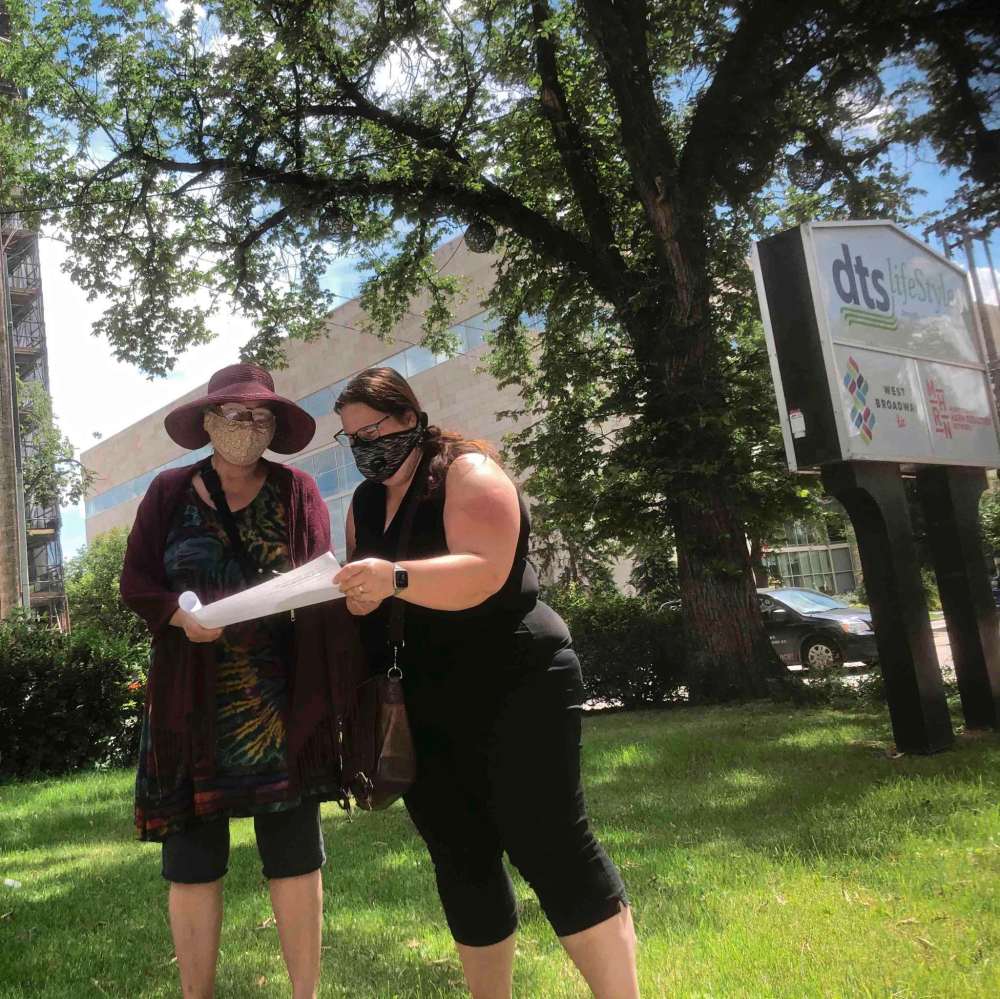
“It’s a challenge to get rid of the romanticized myth of (Indigenous Canadian) food. They think we’re just walking around, picking berries and foraging,” Logan said. “But really, every tomato you eat, every pepper, all of that was (cultivated by) First Nations. Most of the food people eat now came from First Nations (cultivation.) Helping people realize that, and helping young people reclaim their heritage, that is what’s important to me.”
Logan gave a brief description of Indigenous permaculture versus western agriculture. Western agriculture is “destructive,” ground is tilled and ripped apart, then left in direct sunlight, which dries it out, which then forces farmers to water it, thus using up that resource, among other things. Western farming employs more chemicals, herbicides and pesticides, which harm Manitoba’s pollinators who are instrumental in plant growth.
Indigenous permaculture is a more symbiotic practice. It’s based on “companion planting,” where plants are paired up to work together. Some plants which western farmers might consider “weeds” are used to deter pests and help insects pollinate the produce.
They also use more organic materials, ground up bone acts as homemade fertilizer. Working with a bunch of other practices, including controlled burning and covering plants in the winter, Indigenous permaculture is more sustainable, healthy and eco-friendly. Their gardens retain moisture better, meaning they won’t have to spend a lot of money on sprinkler systems.
Logan is hoping to pass on her knowledge to others to keep the tradition alive.
MacPherson said he’s happy to promote Indigenous culture in the heart of downtown Winnipeg.
“It’s a great space to showcase Indigenous culture, on one of the busiest streets in the city. On the same street our legislative building is,” MacPherson said. “Having a highly visible testament of (Indigenous) culture right here … I feel really excited about that happening. Everyone I’ve spoken to is excited about it, it resonated with a lot of us. We’re trying to help in a spirit of forward thinking and reconciliation.”
The GoFundMe is looking for $50,000 in donations, which will go towards construction costs of the garden. The WBO is providing the land, HTFC Architects donated a drafted design, with the U of W Community Renewal Corporation and Bockstael Construction donating over $15,000 worth of labour.
For more information, or to donate, visit www.gofundme.com/f/west-broadway-indigenous-agriculture-site