


Rescued farm animals enjoy new lives
Little Red Barn Micro Sanctuary offers compassionate home
Advertisement
Hey there, time traveller!
This article was published 16/11/2020 (2164 days ago), so information in it may no longer be current.
A local teen endeavours to bolster a sense of empathy for farm animals at her Charleswood-based micro-sanctuary.
Jessica Walker, a Grade 10 student at Shaftesbury High School, established The Little Red Barn Micro Sanctuary at her family’s acreage in June 2019 to allow people to connect with rescued farm animals.
“To date, we have helped save and re-home over 70 cats, five piglets from factory farms, three culled Jersey cows from the dairy industry, three lambs, goats and over 3,000 hens from the battery cage cullings,” said the 15-year-old.

“We have also established relationships with other rescues such as The Good Place to help save, transport, foster and re-home dozens of horses from horse auctions where they would have been sold for meat.”
Before the province shifted to code red pandemic restrictions, limited visitors could meet with these animals and learn about their history. For now, tours are shut down until restrictions ease.
“During COVID, children and their families reconnected with being outdoors in nature with the farm animals and found it an amazing experience,” Walker said.
“We have a book of comments to record people’s reactions and they have been overwhelmingly positive. People state how important our mission is, which is to teach individuals — both children and adults — compassion and empathy towards farm animals.”
Through the Zen Bovine program, visitors also had the chance to connect with a Jersey cow named Daisy on an individual basis.
“Cows have a slightly warmer body temperature and slightly slower heart rate than humans, and people find it most therapeutic. Have you ever hugged a cow? People find this an overwhelming experience of joy,” said Walker, who also encourages families to grow their own vegetables to decrease their carbon footprint.
“Living with COVID also provides the opportunity to discuss how our food choices not only affect animals but also the risks intensive factory farming plays in pandemics, both in the past and the risks to the future.”Walker’s interest in animal welfare led her to complete a research project on the topic while she was a student at Linden Meadows School.
“In Grade 8 at the age of 13, I wondered why children in my school were not aware about animal welfare issues such as intensive factory farming, the horse meat trade, pet overpopulation, the role of plant-based diets, and the significance of climate change,” she said.
“Without knowledge, they appeared to have a lack of compassion and empathy towards these issues. As humans, we are actually hard-wired to be compassionate, but empathy takes practise.”
Her research project, which shows that it’s possible to teach kids empathy towards animals and the environment, earned Walker a gold medal at the Manitoba School Science Symposium in 2019. She also received the Woman’s Health Research award and a place on the provincial team to the Canadian Wide Science Fair in Fredericton in May 2019. Her research was published in the Canadian Science Fair Journal in January 2020.
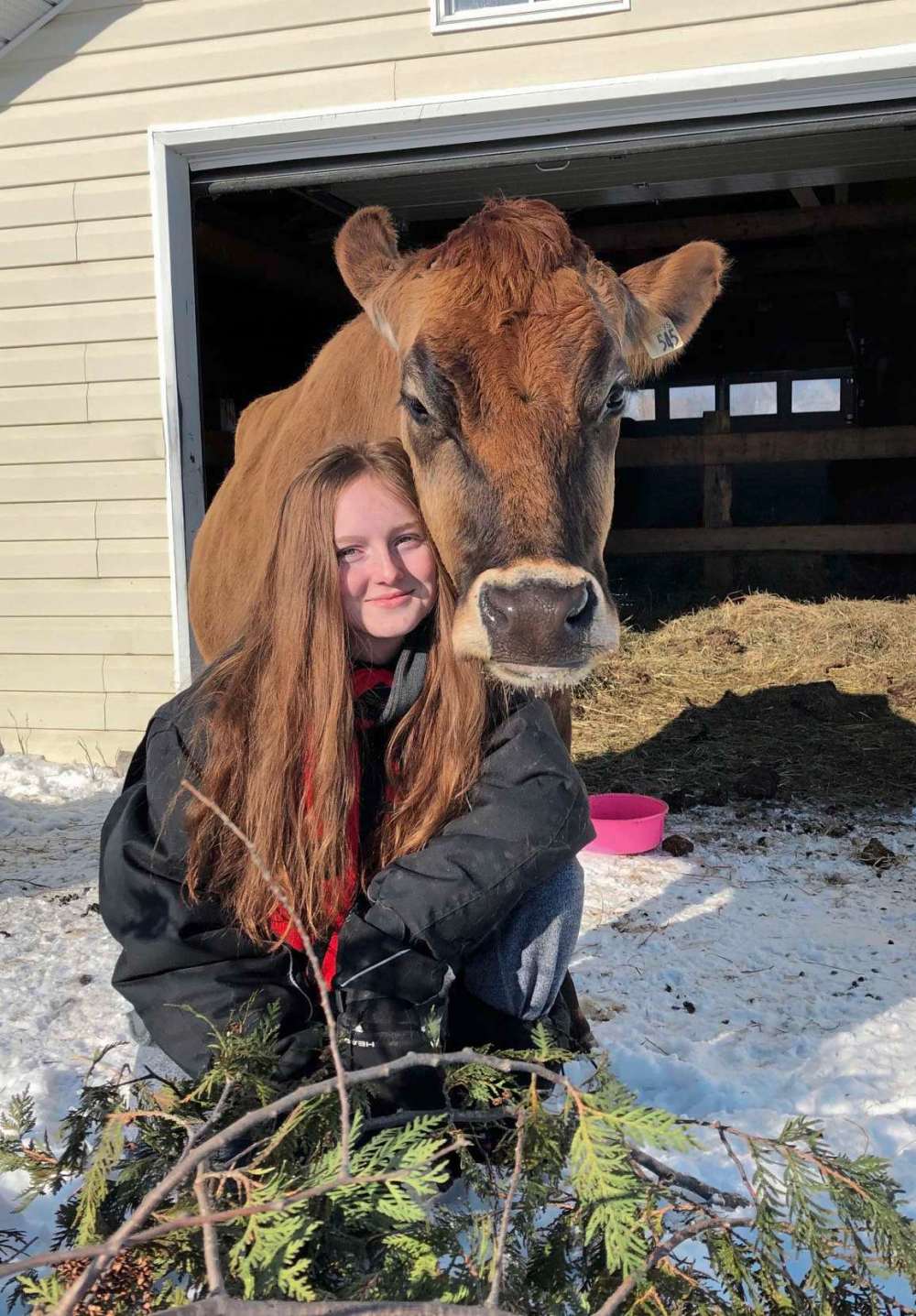
Now she is working on a second research project to determine if individuals’ beliefs towards farm animals, and towards their own diet, is impacted by meeting sanctuary residents.
“The results have been nothing short of astounding. I am currently evaluating the six-month follow-up to see if the positive changes towards diet and beliefs towards farm animals has been maintained,” she said.
“Upon initial results, I can report a strong positive correlation between meeting farm animals and changing beliefs and diets long-term, with many individuals choosing to follow more of a plant-based diet.”
Sponsorship opportunities are available for each sanctuary animal, either through one-time donations or monthly contributions, to help cover nutritional and veterinary costs.
“In this time of COVID, a lot of people are realizing that the material things are not that important,” Walker said.
“Making connections and supporting animals in our care, which support our education to teach children compassion and empathy, goes along way.”
For more information about The Little Red Barn Micro Sanctuary, visit the Facebook page or email littleredbarnsanctuary@mymts.net