Hey there, time traveller!
This article was published 17/12/2014 (4229 days ago), so information in it may no longer be current.
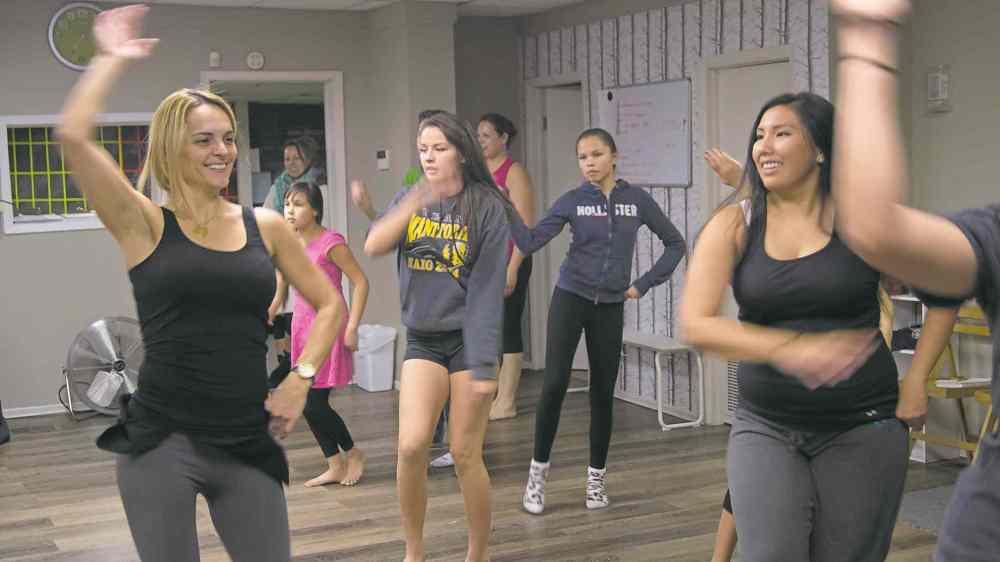
As the sound of drums and horns pulsates from the corner stereo, Marcia Monteggia calls out to the eight dance students in the class: “This is a warm-up! Move everything!”
Monteggia instructs the samba class at the Aboriginal School of Dance located at 694 Osborne St. She begins her class with the basic samba step and the dancers’ feet move in quick succession, forward and backward.
She tells the students, who are between nine and 50 years old, to use their entire body, engaging the hips and arms as they move to the beat.
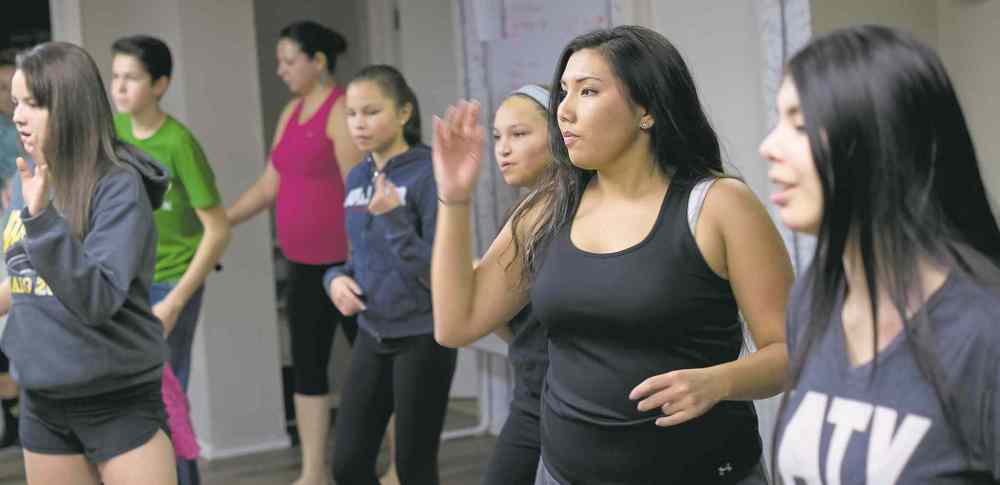
Bella Flett, 22, is focused on her steps as the class goes through the paces. She watches Monteggia, imitating the instructor’s movements in the mirror.
“It’s fantastic,” Flett said of samba dancing. Flett has been dancing in the samba style for three years and was first exposed to the popular Brazilian dance when Monteggia was hired at the studio.
See ABORIGINAL on page 2
Continued from front page
“I did Latin ballroom before, I did that for two years, and I found a lot of similarities between the two,” Flett said. “Embracing your sexuality is one. It’s a dance style where you have to be confident.”
When Flett, who at first introduction appears to be soft-spoken and shy, begins to move to the 4/4 beat of the music her reserved nature disappears. Her face lights up as her feet glide across the dance floor and an intensity that hadn’t been present before reveals itself.
Flett explained that the movements bring out her self-confidence, which sometimes isn’t evident from the surface.
“I think it has always been inside me because I am most confident when I am dancing,” Flett said.
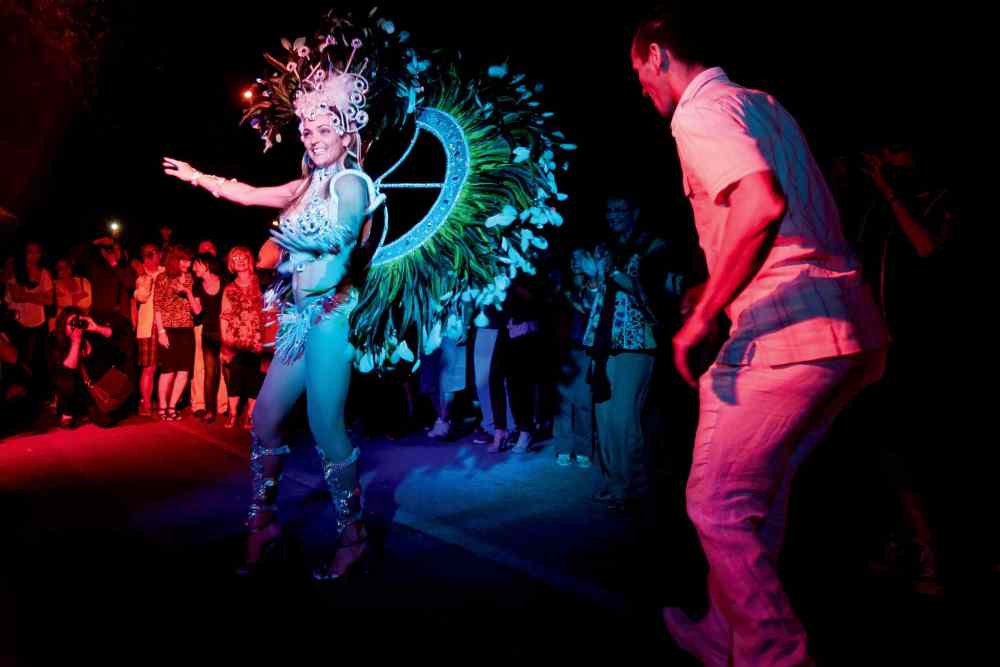
Samba first originated in Brazil and is believed to have roots in African culture transported to the Americas during the slave trade. The dance is often associated with women who wear elaborate feathered headdresses and ornate garments which cover very little. Samba is also an important part of the Carnaval celebration that takes place in Brazil every February.
“I like to say that (samba) is a display of my culture,” Monteggia said. “It’s the best way to understand my culture — to dance the samba.”
Monteggia who was born and raised in São Paulo, Brazil moved to Winnipeg 10 years ago and settled in St. Vital. She occasionally performs at Hermanos Restaurant and Wine Bar and takes part in the Carnaval Street Party on Bannatyne Avenue.
“Samba was always my passion. It was something that I learned, not even from a teacher,” she said. “You learned it at home watching TV and that’s what they show because we have the Carnaval every year, so that is kind of a lesson right there.”
The samba, Monteggia said, can be a great fitness routine as it emphasizes co-ordination, cardio, and posture. She also says it helps with self-esteem and positive body image.
Monteggia says some of her students come in very shy and aren’t aware of what they can do with their bodies.
“They look at their bodies and are sometimes shy or don’t like what they see, and in my class I try to make them use what they have and to explore their body but not in a sexual way,” Monteggia said.
“I say ‘Let’s move,’ so I use very cordial words and sometimes jokes; this way they don’t take it too seriously,” Monteggia said.
Over time the students begin to embrace their bodies and feel confidence in what capabilities they possess when it comes to movement. Monteggia believes the self-confidence arises from the combination of the dance movement and a more intimate understanding of one’s body.
“They learn what they could never do before, they start to know themselves and they start to trust themselves too, because they didn’t know what they were able to do,” she said.
“They say ‘Look at this. I can do this and I can do better,’ and every class they come and they notice that they are getting better.”
Continued on next page
Continued from previous page
Buffy Handel, founder of Aboriginal School of Dance, said she brought in Monteggia to instruct samba because she saw it as a healthy way of expressing the body.
Handel said although samba dancers in Brazil are often wearing very little clothing during a performance, they are still treated with respect.
“People aren’t looking at the naked bodies but they are looking at the beauty of the art form and the sound of the music and the movement, and that’s very different from how Canada expresses dance,” Handel said.
“I wanted to make sure, that especially with the samba dance, not only the history was explained to them, but also the understanding that there is a way to celebrate your body without exploiting it.
“I think that is extremely beneficial for, especially, really young aboriginal youth in a society which they are pushed and pulled and prompted to look a certain way,” said Handel.
The students also get to experience a bit of Brazilian history, culture, and family structure, which Handel says is an important component to the lessons.
“It’s a teaching of balance,” she said. “How can you ever expect anybody to develop empathy for aboriginal culture or the style of dance and the history behind it if you don’t do the same.”
Since the beginner/intermediate samba class began four years ago, Handel said she has noticed more assuredness in her dancers and they have advanced to the point where they want to perform in the samba style.
On Dec. 19, the samba dancers will perform at Circle of Life Thunderbird House, 715 Main St., as part of the Aboriginal School of Dance’s seasonal performance.
And although the dancers may not hail from samba’s country of origin, they’ve got an instructor on their side who lives and breathes the culture — and it’s rubbed off on the students.
“I am telling you, they can dance better than some Brazilians I’ve been teaching,” Monteggia said with a laugh.
For more information on the samba class or for tickets to the performance call 204-956-2095.
Facebook.com/TheSouwesterWPG
Twitter: @SouwesterWPG
As the sound of drums and horns pulsates from the corner stereo, Marcia Monteggia calls out to the eight dance students in the class: “This is a warm-up! Move everything!”
Danielle Da Silva - Sou'wester
Dec. 17, 2014 - Marcia Monteggia (left) leads the samba class at the Aboriginal School of Dance on Osborne Street. The dancers come from different backgrounds and have varying levels of experience.(CANSTAR/SOU'WESTER/DANIELLE DA SILVA).
Monteggia instructs the samba class at the Aboriginal School of Dance located at 694 Osborne St. She begins her class with the basic samba step and the dancers’ feet move in quick succession, forward and backward.
She tells the students, who are between nine and 50 years old, to use their entire body, engaging the hips and arms as they move to the beat.
Bella Flett, 22, is focused on her steps as the class goes through the paces. She watches Monteggia, imitating the instructor’s movements in the mirror.
“It’s fantastic,” Flett said of samba dancing. Flett has been dancing in the samba style for three years and was first exposed to the popular Brazilian dance when Monteggia was hired at the studio.
“I did Latin ballroom before, I did that for two years, and I found a lot of similarities between the two,” Flett said. “Embracing your sexuality is one. It’s a dance style where you have to be confident.”
When Flett, who at first introduction appears to be soft-spoken and shy, begins to move to the 4/4 beat of the music her reserved nature disappears. Her face lights up as her feet glide across the dance floor and an intensity that hadn’t been present before reveals itself.
“I think it has always been inside me because I am most confident when I am dancing,” Flett said.
Flett explained that the movements bring out her self-confidence, which sometimes isn’t evident from the surface.
“I think it has always been inside me because I am most confident when I am dancing,” Flett said.
Samba first originated in Brazil and is believed to have roots in African culture transported to the Americas during the slave trade. The dance is often associated with women who wear elaborate feathered headdresses and ornate garments which cover very little. Samba is also an important part of the Carnaval celebration that takes place in Brazil every February.
“I like to say that (samba) is a display of my culture,” Monteggia said. “It’s the best way to understand my culture — to dance the samba.”
Monteggia who was born and raised in São Paulo, Brazil moved to Winnipeg 10 years ago and settled in St. Vital. She occasionally performs at Hermanos Restaurant and Wine Bar and takes part in the Carnaval Street Party on Bannatyne Avenue.
“Samba was always my passion. It was something that I learned, not even from a teacher,” she said. “You learned it at home watching TV and that’s what they show because we have the Carnaval every year, so that is kind of a lesson right there.”
Danielle Da Silva - Sou'wester
Dec. 17, 2014 - Bella Flett (second from right) focuses in on the mirror at the front of the room as she practises her steps. (CANSTAR/SOU'WESTER/DANIELLE DA SILVA).
The samba, Monteggia said, can be a great fitness routine as it emphasizes co-ordination, cardio, and posture. She also says it helps with self-esteem and positive body image.
Monteggia says some of her students come in very shy and aren’t aware of what they can do with their bodies.
“They look at their bodies and are sometimes shy or don’t like what they see, and in my class I try to make them use what they have and to explore their body but not in a sexual way,” Monteggia said.
“I say ‘Let’s move,’ so I use very cordial words and sometimes jokes; this way they don’t take it too seriously,” Monteggia said.
Over time the students begin to embrace their bodies and feel confidence in what capabilities they possess when it comes to movement. Monteggia believes the self-confidence arises from the combination of the dance movement and a more intimate understanding of one’s body.
“They learn what they could never do before, they start to know themselves and they start to trust themselves too, because they didn’t know what they were able to do,” she said.
“People aren’t looking at the naked bodies but they are looking at the beauty of the art form and the sound of the music and the movement, and that’s very different from how Canada expresses dance,” Handel said.
“They say ‘Look at this. I can do this and I can do better,’ and every class they come and they notice that they are getting better.”
Buffy Handel, founder of Aboriginal School of Dance, said she brought in Monteggia to instruct samba because she saw it as a healthy way of expressing the body. Handel said although samba dancers in Brazil are often wearing very little clothing during a performance, they are still treated with respect.
“People aren’t looking at the naked bodies but they are looking at the beauty of the art form and the sound of the music and the movement, and that’s very different from how Canada expresses dance,” Handel said.
“I wanted to make sure, that especially with the samba dance, not only the history was explained to them, but also the understanding that there is a way to celebrate your body without exploiting it.
“I think that is extremely beneficial for, especially, really young aboriginal youth in a society which they are pushed and pulled and prompted to look a certain way,” said Handel.
Danielle Da Silva - Sou'wester
Dec. 17, 2014 - The class strikes a silly pose at the end of practice (CANSTAR/SOU'WESTER/DANIELLE DA SILVA).
The students also get to experience a bit of Brazilian history, culture, and family structure, which Handel says is an important component to the lessons.
“It’s a teaching of balance,” she said. “How can you ever expect anybody to develop empathy for aboriginal culture or the style of dance and the history behind it if you don’t do the same.”
Since the beginner/intermediate samba class began four years ago, Handel said she has noticed more assuredness in her dancers and they have advanced to the point where they want to perform in the samba style.
On Dec. 19 at 7 p.m., the samba dancers will perform at Circle of Life Thunderbird House, 715 Main St., as part of the Aboriginal School of Dance’s seasonal performance. And although the dancers may not hail from samba’s country of origin, they’ve got an instructor on their side who lives and breathes the culture — and it’s rubbed off on the students.
“I am telling you, they can dance better than some Brazilians I’ve been teaching,” Monteggia said with a laugh.
For more information on the samba class or for tickets to the performance call 204-956-2095.
Melissa Tait / Winnipeg Free Pre
Marcia Monteggia dances in a Carnival costume with Tom Cardaso during the inaugural Carnaval Street Party on Bannatyne Avenue - Saturday, August 25, 2012 - Melissa Tait / Winnipeg Free Press