


Winnie’s best friend
Archive, exhibit tells powerful true tale of the soldier, vet who raised famous bear
Advertisement
Hey there, time traveller!
This article was published 08/03/2016 (3744 days ago), so information in it may no longer be current.
The story of living-stuffed-bear Winnie the Pooh and his menagerie of friends is pretty fantastical but it doesn’t hold a candle to the true tale behind it.
That story belongs to Harry Colebourn, the British-born Winnipegger from Fort Rouge who served in the First World War as a veterinarian, and his pet and companion, Winnie.
It’s a well known and oft-mentioned fact that the inspiration for author A. A. Milne’s Winnie-the-Pooh character can be tied back to Winnipeg.
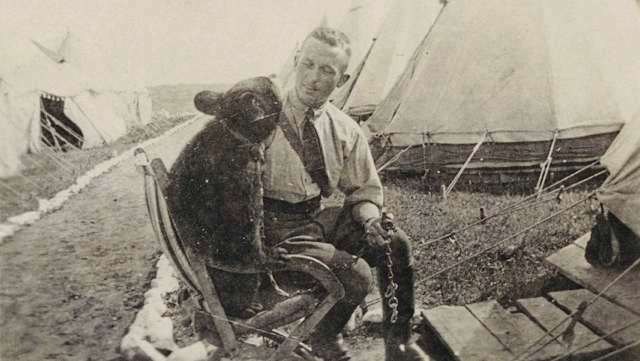
The black bear cub at the London Zoo that Milne’s son became smitten with was purchased by Colebourn en route to Valcartier, Que., where he would prepare to serve in what was later known as the Great War. The bear, which was named for Colebourn’s home town, was given to the London Zoo when Colebourn was shipped off to the front lines.
The rest they say, at least when it comes to Winnie, is history.
The man behind the bear
Less well known is the story of Colebourn, an understated, generous man who lived on Corydon Avenue with his family, operated a veterinary practice on McMillan Avenue, and volunteered to serve his country with the Fort Garry Horse Regiment.
His is a true tale that is slowly reframing the mythology of Winnie, and one that Ryerson University history professor Dr. Arne Kislenko believes has the potential to help Canadians understand the “personal dimensions about the greatest event in human history.”
“It personifies history and it makes it come home. The whole Colebourn story, the real Colebourn story, really speaks volumes about curious things that happened in war — like glimpses of humanity, kindness and human drama,” Kislenko said. “Here in this great madness that shifts entire continents and changes everything in human history… is a really telling story, a really personal story.”
“It speaks volumes about the generation and about that man”– Arne Kislenko, professor of history, Ryerson University
More information has surfaced publicly about Colebourn in recent years due to the efforts of his family and the veterinary officer’s great-granddaughter, Lindsay Mattick.
To commemorate the 100th anniversary of Colebourn’s purchase of Winnie in White River, Ont., Mattick embarked on a public exhibition of her family archives with the Ryerson Image Centre.
Remembering the Real Winnie: The World’s Most Famous Bear Turns 100, a comprehensive interactive collection, features dozens of photos, Colebourn’s war diaries, essays written by leading professors in literature and history, and artifacts from his vet kit. The collection will arrive in Winnipeg this summer for a brief residency at Assiniboine Park Conservancy.
Mattick, an alumna of Ryerson who currently lives in Ontario, said interacting with Colebourn’s personal effects gave the incredible story of Winnie the bear, and her connection to it, validity.
“We had all these amazing items in our family archive, things that are now back in the family album, that are photographs, diaries and it never seemed fair to me that our family had access to these things but nobody else really had seen them,” Mattick said. “I felt like everyone who loves Winnie the Pooh should have a chance to see these things.”
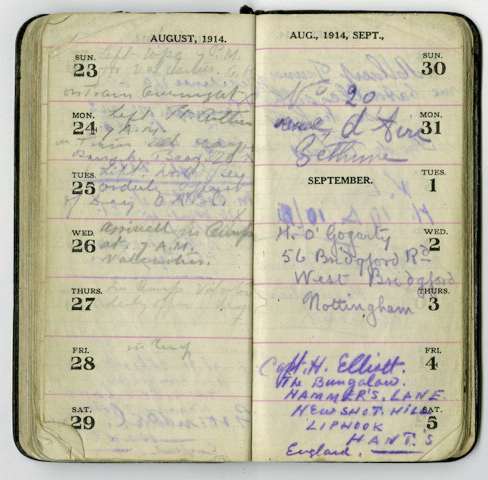
The diaries — six pocket-sized and leather bound books, found in the family archive — detail Colebourn’s service in his own words from 1914 to 1918.
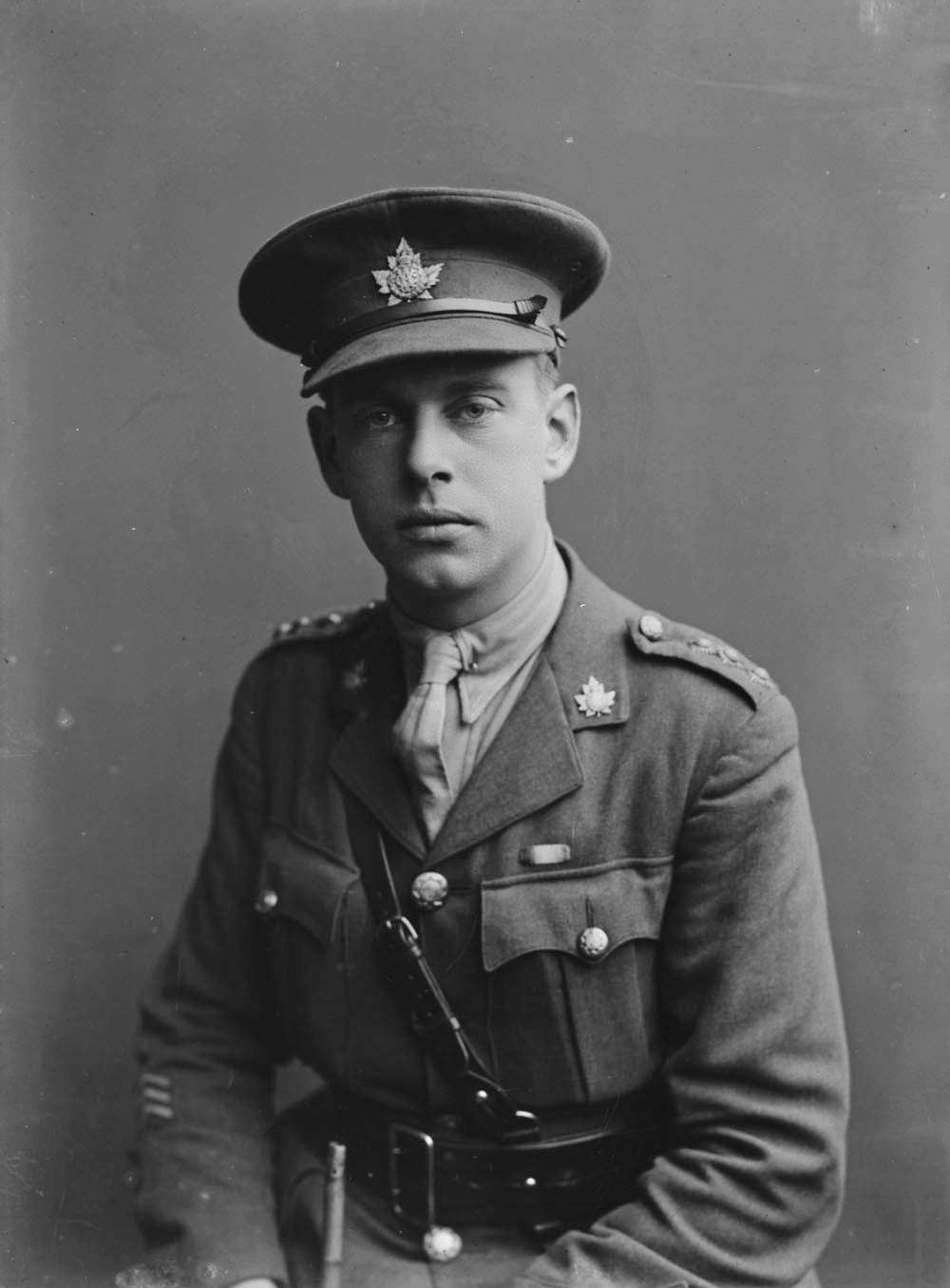
An original member of the 34th Fort Garry Horse, Colebourn volunteered his services when England declared war on Germany in 1914. Before arriving in Valcartier, where troops were stationed before going overseas, Colebourn was transferred to the Canadian Army Veterinary Corps, of which Winnie became the beloved mascot.
On Oct. 3, 1914 Colebourn departed for Salisbury Plain, England aboard the S.S. Manitou with Winnie in tow.
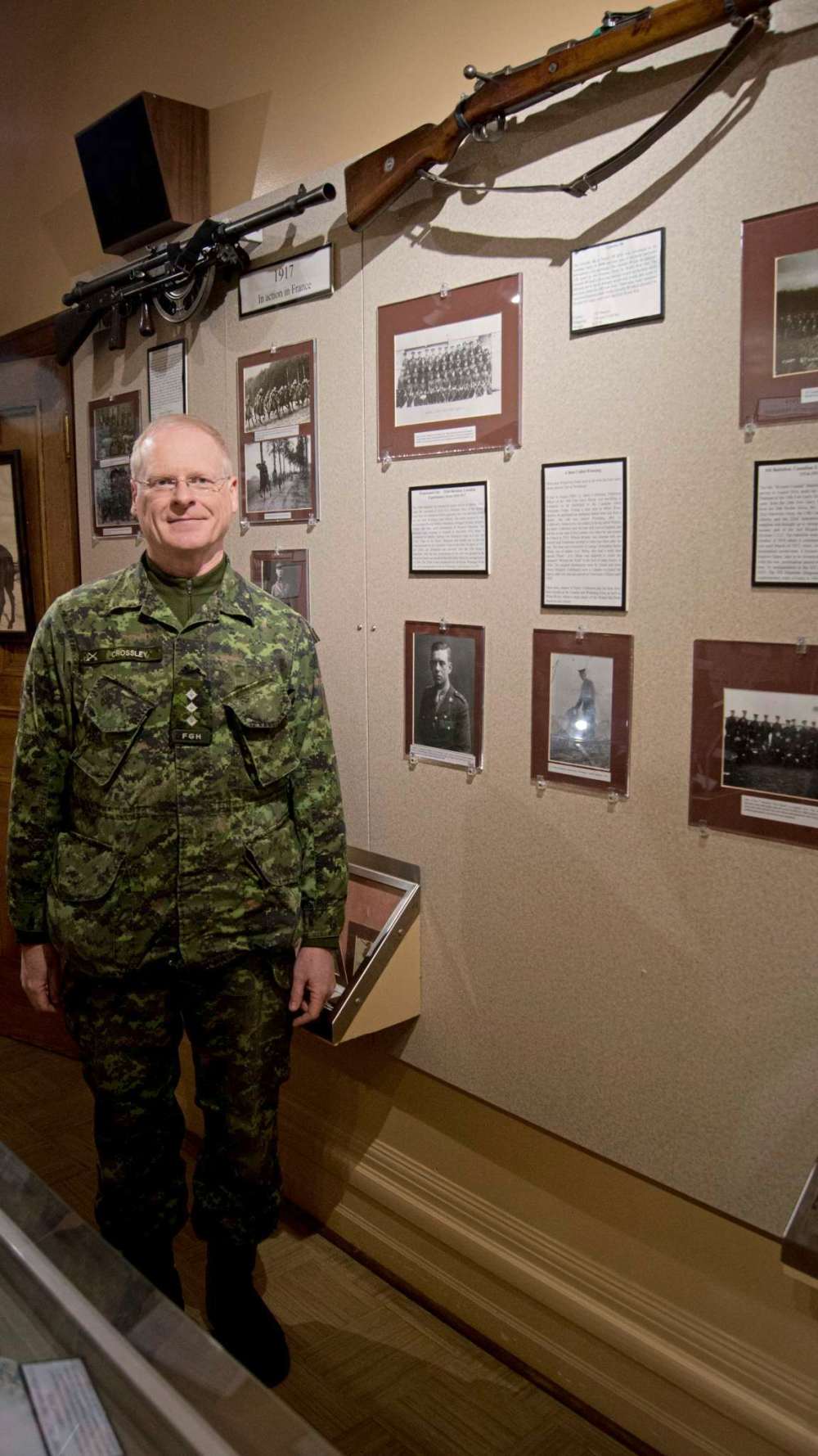
“Bears grow very fast so he was fortunate in being an officer when they went overseas on the ship, he had his own cabin so he had a place to put the bear,” said Captain Gord Crossley, director of the Fort Garry Horse Museum and Archives. “They were not supposed to take mascots overseas so these things were smuggled and a bear that small he could probably put in a large trunk, get it on board, and (it) stayed in his room.”
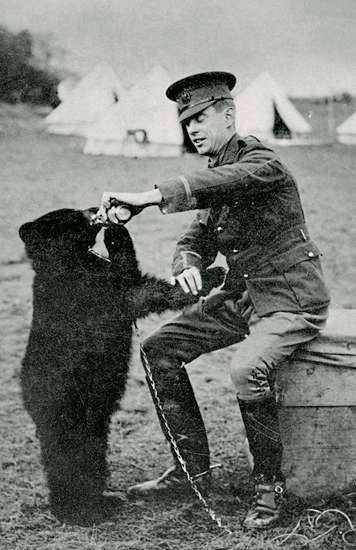
At Salisbury Plain, Winnie was popular with the soldiers, who took photos with the young cub and brought her up as their pet, Crossley said. Winnie wasn’t the only bear in the camp either — he says at least four cubs kept the men company, though Winnie stood out as the tamest.
Sparse journals speak volumes

On Dec. 9, 1914, Colebourn bid farewell to Winnie, donating her to the London Zoo, as his regiment was mobilized for action in France.
“Germans shell town and kill 4 soldiers in Grand Place. Many others injured. Saw Aeroplane fall. Stay in cellar under large grocery store for several hours. Tremendous shelling,” Colebourn wrote in his sparse fashion on April 19, 1915 from a location near Ypres, Belgium.
Kislenko, who studied Colebourn’s diaries as part of the Remembering the Real Winnie project, said he was both moved and amazed by Colebourn’s consistently understated manner.
“He was absolutely a soldier doing his duty. Even if he was a veterinarian and didn’t see the sort of combat his colleagues did,” Kislenko said. “Understated as he was, he was at places like Vimy or very close to it.
“He was there and wrote in very sparing fashion about the sort of horrors that he himself saw and saw around him,” he added. “It speaks volumes about the generation and about that man, I think.”
On April 21, Colebourn penned another short entry:
“Shelled out of my Billet & lost everything. Stayed at no. 16 Vet mobile station. Have supper with English Cavalry.
Many killed.
Warm.”
Dr. Irene Gammel, Canada Research Chair in modern literature and culture at Ryerson and co-curator of Remembering the Real Winnie, explains that to understand the nuance of the diaries you must read between the lines.
“Harry Colebourn rarely allows his emotions to surface,” Gammel said. “As a soldier he was trained to suppress his feelings, and thus he talks about matters of life and death like we might talk about good or bad weather.”
After the war
Colebourn returned to Winnipeg in early 1920 with trauma from the war and without Winnie. In the years he was away she had become a star attraction at the London Zoo.
According to Mattick, Colebourn was gassed during the war and suffered from various health issues on his return. However, he did go on to open a veterinary practice at 471 McMillan Ave. where he practised until 1927.
“From all accounts, he was known in the Winnipeg community for looking after animals when people couldn’t afford to pay his services,” Mattick said. “So I think he was a very good person but it’s hard to get a huge sense of him.”
However, Mattick, through the publication of her children’s book Finding Winnie — which tells the “true story of the world’s most famous bear” — and the work of the team at Ryerson, each day a more complete image of Colebourn surfaces.
“I just feel like it’s a story that should be on the public record,” Mattick said. “While Disney owns Winnie-the-Pooh and it’s everywhere, there’s a whole other piece that is the real history and I’m really happy to see people becoming familiar with that and taking inspiration from it.”
Kislenko says with the new narrative comes opportunity for younger generations to have more than a passing understanding of the sacrifices made in the First World War by women and men just like Colebourn.
“He struck me as a salt of the earth guy who does his damn job. And that makes him even more important,” Kislenko said.
“When it comes time for reading Winnie-the-Pooh to my kids, that’s what I’m going to do; I’m going to remind them of the real Winnie.”

Animals in the war
Mascots and animal companions were very valuable to soldiers during the First World War, Captain Gord Crossley of the Fort Garry Horse Museum and Archives explains.
Winnie was only one of many animals adopted by Canadian units as they served in battle.
Among the animals taken as mascots, bears, monkeys, goats, and cats and dogs were popular.
“Small animals like cats and dogs did go into the trenches because they were small enough and could survive there, but large animals needed a lot of care.”
Crossley points to photo evidence of animals in the trenches, though he admits some of the critters in the trenches were likely strays adopted by soldiers looking for company.
“It’s the idea of companionship,” he said. “Especially in the situation where the soldiers were far from home and in terrible conditions, something like that would be very valuable to them.”
Horses were also incredibly important during the First World War. Besides being a part of the cavalry, horses were used to haul supplies to the front lines and transport the men.
As a veterinary officer, Colebourn was responsible for caring for the horses, mending broken bones, performing surgeries to remove shrapnel, tending to illness such as mange and more.
“So many millions of animals were slaughtered like men,” Arne Kislenko, Ryerson University history professor, said. “For a person with that sensitivity it would be a horror.”
— Da Silva

Colebourn at Assiniboine Park
Assiniboine Park Conservancy has long celebrated Winnipeg’s connection to the story of Winnie-the-Pooh.
According to Laura Curtis, spokeswoman for Assiniboine Park, the current Pooh Gallery and statue of Harry Colebourn with Winnie draw some of the biggest crowds to the park.
“It’s one of the most popular attractions here,” Curtis said. “Not only for locals but for tourists abroad — that also goes for the Pooh Gallery.”
“I think a lot of local people connect the story of Winnie the bear with Assiniboine Park because we’re able to tell the story through the statue, the gallery and the exhibit,” she said.
With the arrival of the Remembering the Real Winnie exhibit at the Pavilion Gallery this June, the focus will shift from the literary connection, to Harry Colebourn.
“I think it will be great because it is telling a different aspect of the story,” Curtis said. “There’s more of a historical aspect to it and I think it will be really neat, for not only people from Winnipeg, Manitoba but for tourists to hear that story and connect to it in a different way.”
Irene Gammel, director of the Modern Literature and Culture Research Centre at Ryerson, says presented together, the work of A. A. Milne and the Remembering the Real Winnie exhibit stands to have enormous impact as it shifts the perspective on a literary classic.
“I would like to change perceptions and help people to see that the story is important not just because of the story of the cute bear, but because of the story of her owner and of Canada at war,” Gammel said. “At the same time, both stories emphasize friendship and companionship, showing that the need for friendship is all the more urgent during times of stress and trauma.
“In the end, Winnie was not just about the war, it was also about human connections and the desire for peace.”
— Da Silva

• To view the Remembering the Real Winnie: The World’s Most Famous Bear Turns 100 interactive exhibit, hosted by the Ryerson Image Centre visit therealwinnie.ryerson.ca
• Lindsay Mattick’s book Finding Winnie: The True Story of the World’s Most Famous Bear is available to purchase online and at local booksellers.
• The Fort Garry Horse Museum and Archives is located at 551 Machray Ave. It is open on Tuesday evenings.
Related Articles
The real Winnie comes to Assiniboine Park gallery
Advertisement Advertise With Us
Advertisement Advertise With Us