



Not your typical science fair project
FRC, SJR students take top nods in high school science competition
Advertisement
Hey there, time traveller!
This article was published 02/05/2016 (3507 days ago), so information in it may no longer be current.
Students at two Winnipeg high schools are seeking the answers to some tough medical queries on their spares.
Justin Lin, 16, and Maitry Mistry, 15, are the two runners up in the regional Sanofi Biogenius Competition. The nation-wide science research competition is open to high school students who are paired with leading experts in their field. Together, the students work with the researchers to develop projects that have real-world applications.
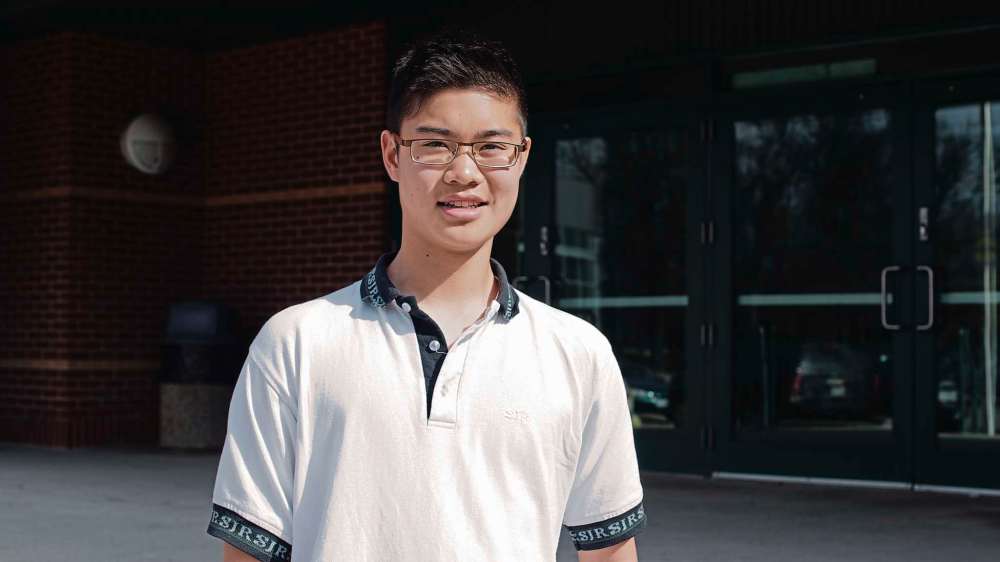
Lin, a Grade 11 student at St. John’s-Ravenscourt whose work focused on cardiac fibrosis and identifying a protein that may cause rigidity around the heart, was also awarded with the Best Biological Science Individual – Senior project at the Manitoba Schools Science Symposium on April 24.
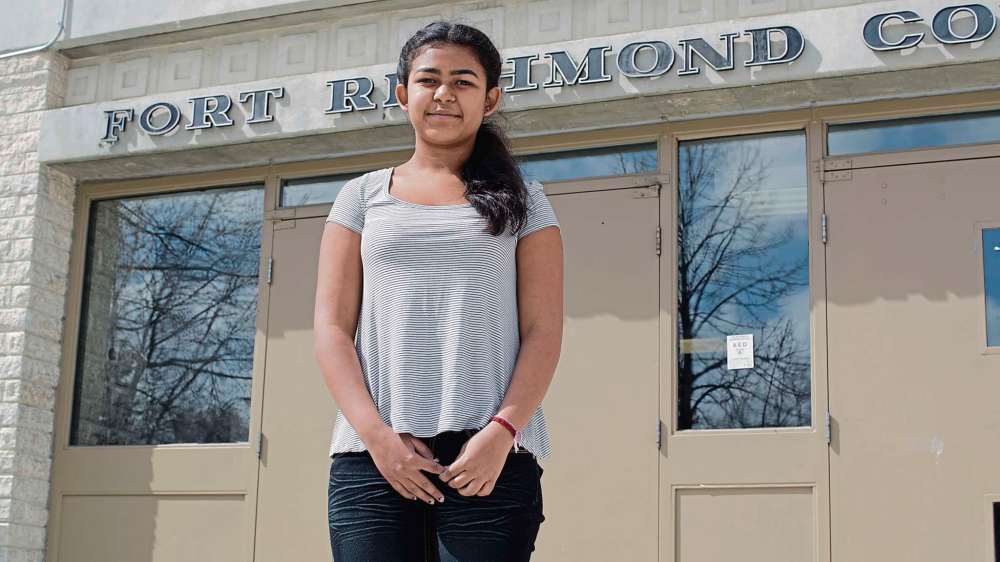
And Mistry, a Grade 10 student at Fort Richmond Collegiate whose experiments test methods of identifying bone fractures without X-rays, received the Best Overall Individual – Intermediate award.
Both students will represent Manitoba at the Canada-Wide Science Fair in Montreal.
For the young researchers, the experience of working with experts at the top of their respective fields who generously welcomed them into their labs has been transformative.
Under the supervision of Dr. Michael Czubryt at the St-Boniface Hospital Albrechtsen Research Centre, Lin believes the research team has identified the protein scleraxis as being responsible for activating parts of the heart’s protein skeleton leading to cardiac fibrosis.
“I had to immerse myself very deeply into the science,” Lin said. “There’s a lot of different techniques that I had to master, including Western blotting.”
Lin says the field of research around cardiac fibrosis and heart disease is up and coming and he was excited to get into the complex science.
“The biggest thing was that it taught me a very important lesson in terms of overcoming challenges,” Lin said. “This really forced me to overcome challenges because I was really struggling with some the techniques but I was forced to persevere.
“Working on the research has been a life changing experience,” he said.

Mistry says the technology she is experimenting with under the supervision of professor Zahra Moussavi at the University of Manitoba isn’t being tested elsewhere. Using vibration analysis, Mistry is trying to determine whether tapping a bone can detect a fracture. She was inspired to pursue this project after seeing labourers in India continue to work despite injuries.
“I’m from a country that is considered underdeveloped, and right now the problems that these countries face are mostly diseases. And there are bigger problems than that too, such as people who have common bone injuries or fractures, but that is not heard of because people push that factor away,” Mistry said. “This is definitely applicable to not only underdeveloped countries, but in modern countries and up north in territories like Nunavut and the Yukon where they don’t have access to X-rays.”
Director of the biomedical engineering program at the U of M, Moussavi said there is still more work to be done in testing whether vibrations can effectively identify the presence of a bone fracture, but Mistry’s work has motivated her to continue pursuing the idea.
“I love working with the high school students,” Moussavi said. “I believe if you can motivate them and inspire them with research projects then you are helping to shape their future.”
Fort Richmond students Tooba Razi, Derek Yin, and Himanshu Sharma and St. Maurice School’s Rohan Sethi, will also participate in the Canada-Wide Science Fair.