


St. Norbert has a long and rich history
Advertisement
Hey there, time traveller!
This article was published 21/02/2017 (3393 days ago), so information in it may no longer be current.
Throughout the years my life has intersected with St. Norbert.
Recently, a number of online sources added details to my knowledge. If you are a history buff, the Manitoba Culture, Heritage and Citizenship: Historic Resources site is one of many to check out.
This bilingual community is tucked onto the City of Winnipeg at its southernmost area, just outside the Perimeter.
Bordering the Red and La Salle Rivers, the area originally was home to a group of First Nations people.
Archaeological evidence suggests their existence may go back as far as 6000 BCE.
Fish were plentiful in the rivers and a bison trail ran along the La Salle for many kilometres, providing good hunting grounds. The rivers were transportation routes.
With the arrival of the French, Scots and other Europeans and the growth of the Métis population, a permanent settlement began. In 1857 it was given the status of a parish and named St. Norbert after Bishop Joseph-Norbert Provencher.
Who was St. Norbert? He was born about 1080, nearly 800 years before the settlement in Manitoba received its name. His father was a member of the high nobility in the diocese of Cologne in the Holy Roman Empire. St. Norbert died on June 6, 1134 and was canonized in 1582.
Over the years, the parish of St. Norbert flourished and a number of landmarks appeared.
I have fond memories of visiting all of them. The most easily seen is a three-storey building with its huge centre dome. It has been home to a convent, an orphanage, a seminary, and currently is occupied by the Behavioural Health Foundation.
The ruins of the then-vacant Trappist monastery destroyed by fire set by vandals are now an historic site set in a two-hectare provincial park. Years ago, I attended Macbeth performed by Shakespeare in the Ruins. The setting was magnificent.
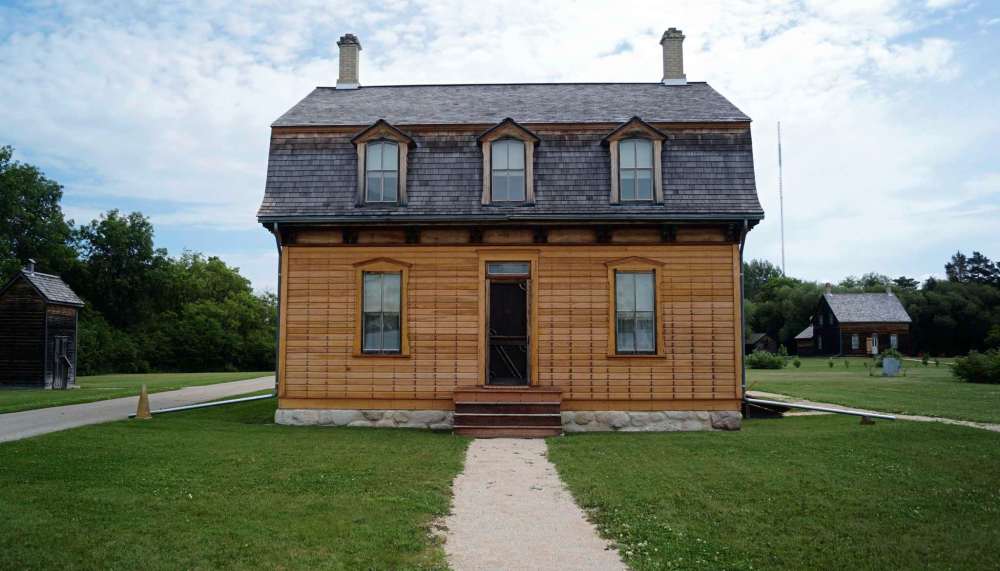
Located at the junction of the Red and La Salle Rivers is St. Norbert Provincial Heritage Park. A few 19th century log homes, two restored, and exhibits trace the growth of the area through Métis settlement and the coming of Quebec families. If possible, tour the site with a park staffer.
Another building worth visiting is St. Norbert Catholic Church with its twin towers. Across from the church is the tiny open-air Our Lady of Good Help Chapel. Built in 1875, it is now a provincial heritage site.
Since 2010 Remembrance Day services have been held at the once-forgotten cenotaph which honours 13 First World War soldiers. It is located in the St. Therese Avenue cemetery.
Last, experiencing the St. Norbert Farmers’ Market on a Saturday, from Victoria weekend to Halloween, is a must.
Jeannette Timmerman is a community correspondent for Richmond West.