


Protesters preparing for hard battle
Judge denies companies’ urgent request to remove demonstrators from Parker lands
Advertisement
Hey there, time traveller!
This article was published 28/07/2017 (3345 days ago), so information in it may no longer be current.
An application for an urgent injunction to remove demonstrators blocking development on the Parker lands in Fort Garry has been denied.
On July 26, Court of Queen’s Bench justice Herbert Rempel decided against a request to fast track an injunction and damage claims against members of the Rooster Town Blockade and Parker Wetlands Conservation Committee brought forward by two numbered companies.
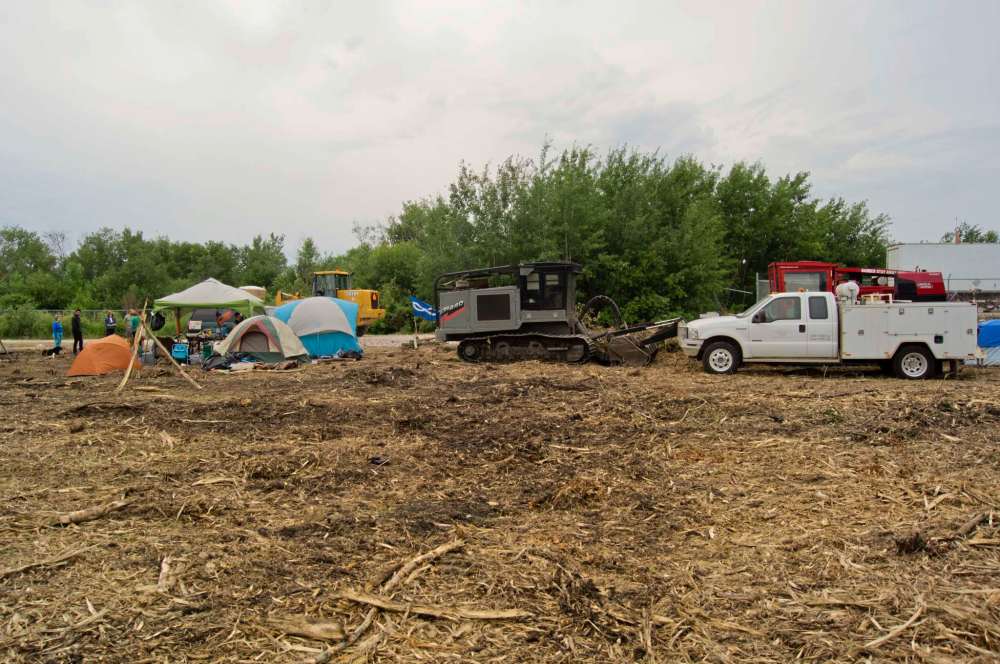
Since July 14, about a dozen people have occupied land behind the Winnipeg Humane Society, off of Parker Avenue, blocking machinery that had been used to clear cut about 15 acres of forest. The land is owned by developer Gem Equities which plans to build a new transit-oriented residential development called Oak Grove on the site.
Rempel told court that the expedited proceedings, with the first statement of claim filed on July 19, had not allowed the defendants time to find a lawyer and that he disagreed with the stated urgency, scheduling for a full day’s court proceeding to take place Nov. 2.
“I don’t see irreparable harm that couldn’t be compensated,” Rempel said, adding that while the perceived risk of violence at the protest site is a concern it hadn’t hit a “critical mass yet.”
Demonstrators have called the property disputed Métis land, citing its proximity to the former Rooster Town settlement that occupied land near Grant Park Shopping Centre until the mid-1950s. It was also the subject of a controversial land swap in 2009 that saw the approximately 24-hectare property given to Gem Equities in exchange for a smaller piece of land in the Fort Rouge Yards.
Jenna Vandal, one of the organizers of the blockade and a defendant in the lawsuit, said she was pleased by the court’s decision.
“I’ve said this again and again but my concerns for Métis interests and rights is legitimate,” Vandal said. “We will be moving forward with this in a good way and hopefully good things will come of it.”
Vandal said the protest remains peaceful and there are no weapons on-site, though there are tools, and demonstrators are not fortifying the camp. She expects the blockade will remain until at least November unless the developer agrees to stop cutting down trees.
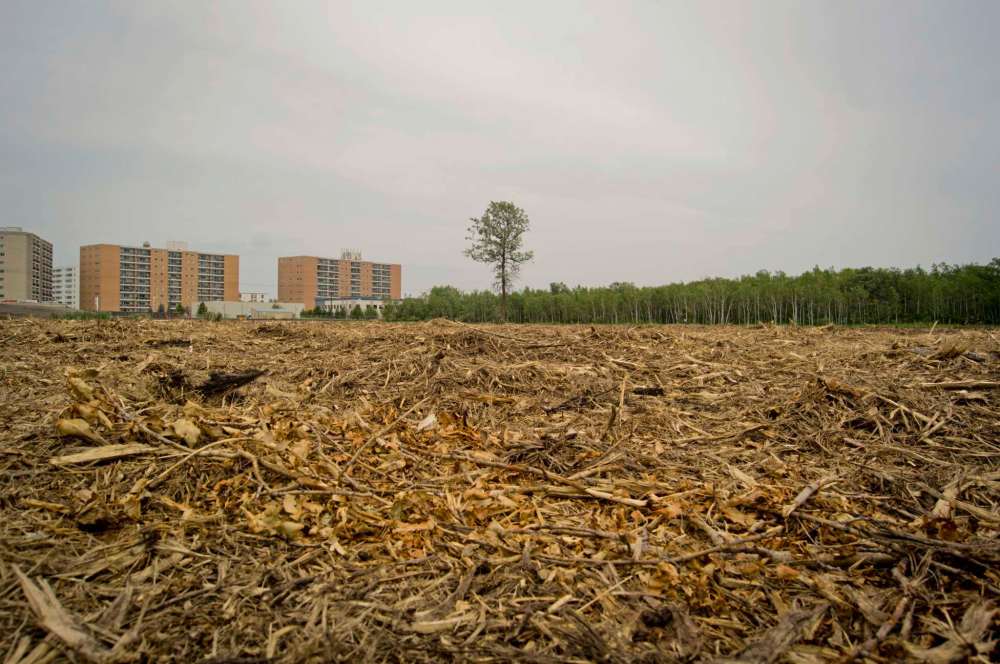
“We have enough people, and like they said in court, the movement is growing so that’s always good. More people are going to come down and support it I’m hoping,” Vandal said. “We’re going to have to keep fighting hard, doing our research and doing our due diligence. It will be a hard road for sure.”
Cal Dueck, co-chair of the Parker Wetlands Conservation Committee and a Fort Garry resident, said he was relieved by the judge’s decision.
“I’m concerned about the environment and I think Winnipeggers as a whole are concerned about the environment and the unjust shredding of forests and natural heritage areas that we have here,” Dueck said. “We need to get people together who are concerned about the environment, people who are concerned about wildlife and say enough is enough.”
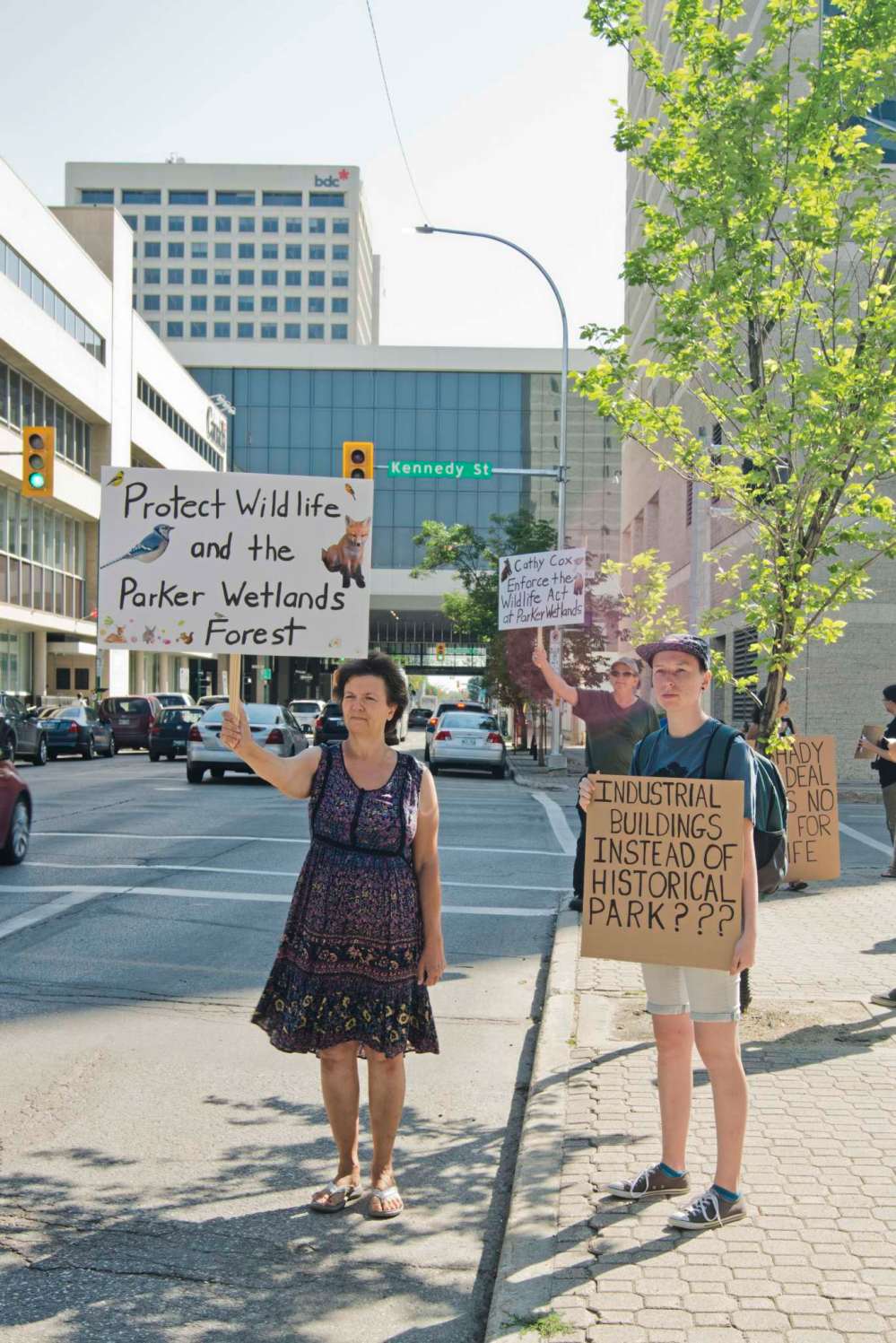
Dueck was named as a respondent in the injunction though he claims he has not participated in the blockade, restricting his advocacy instead to social media and discussions with the groups involved. Dueck said his opposition has been centred on the clear cutting, threats to species at risk, and the disruption of migratory birds that use the forest.
“Whatever happens now, the birds have a chance to leave and we were really concerned that there were a lot of birds being shredded in that forest,” he said. “Now at least we have an opportunity that the migratory birds can go through.”
Kevin Toyne, lawyer with Hill Sokalski Walsh Olson representing the two numbered companies, said the plaintiffs will consider whether they pursue removing protesters with private security. According to Toyne, the Winnipeg Police Service have not been co-operative in clearing the blockade.
“Our clients are going to need a bit of time to digest the judge’s decision and they have a number of different options that are available to them,” Toyne said. “They need to decide what they’d like to do next to clear the illegal protest and their chosen course of action will become known in due course.
“Our client is entitled to clear the trees and they’d like to continue to do that,” he said.