


The wonderful chemistry of snow
Advertisement
Hey there, time traveller!
This article was published 20/11/2017 (3180 days ago), so information in it may no longer be current.
It looks like winter is here to stay for the next few months, and even though winter comes every year, the first snowfall seems to surprise us and catch us off guard.
Winter does come with things like slippery roads, shoveling walks, and cold temperatures that tend to keep people inside, but winter also brings with it the beauty of snow.
Snowflakes are nature’s intricate and interactive artwork, and fortunately for us, Winnipeg provides the perfect conditions. For snowflakes to form, there must be water vapour in the air. Water vapour is usually not visible but with the presence of dust in the air, it will attach itself to dust particles. When it freezes, that water vapour attached to the dust particle turns into an ice crystal. As an ice crystal collects more water vapor, it becomes heavier, and eventually falls through the air accumulating more water molecules. It grows in size and becomes a snowflake.
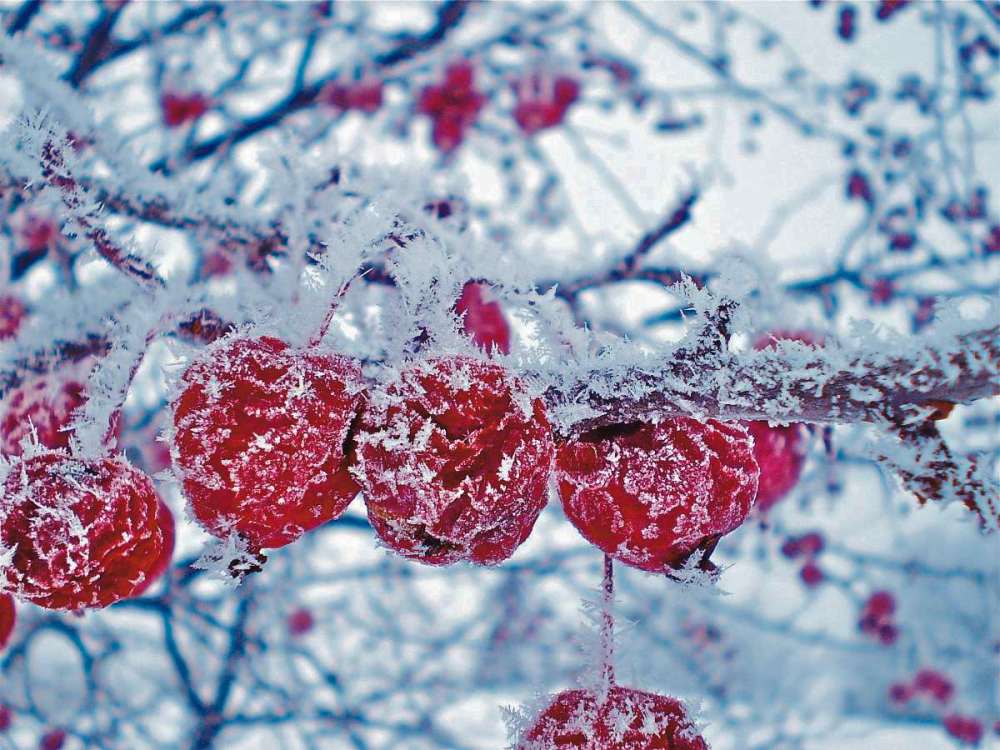
If you look at snowflakes under a microscope quickly before they melt, you will find that most snowflakes have six sides, but each has a different shape and pattern. The patterns, shapes, and sizes of snowflakes are dependent on the different atmospheric conditions, humidity in the air, and temperature. Higher humidity results in more intricately shaped snowflakes. Snow that falls at temperatures around 0 C results in flat, star-shaped snowflakes. Snow that falls at colder temperatures like -15 C results in more elaborate lace patterns.
Although snowflakes generally look white and fluffy, the reason no two snowflakes are alike is that each has its own journey from sky to earth, thus collecting different particles in flight and growing differently.
The reason snow looks white is because snow reflects all colors of light. Snow actually contains a mixture of the colors of the rainbow. When snow accumulates, the world turns quieter because snow absorbs sound. When snow gathers on the ground, it leaves spaces between snowflakes making it more difficult for sound to bounce off like it would off water. Suddenly traffic on winter roads is muffled.
This is just a brief look into the many wondrous things about the quiet beautiful snowflakes that we can enjoy for the next few months.
(With information from Discovery Education: www.science.dadeschools.net)
Helen Lepp Friesen is a community correspondent for Fort Garry. You can contact her at helenfriesen@hotmail.com