


Great work done at PWRC

Advertisement
Hey there, time traveller!
This article was published 25/06/2018 (2917 days ago), so information in it may no longer be current.
Established in 2008, the Prairie Wildlife Rehabilitation Centre rescues and cares for injured, sick and orphaned wildlife.
Animals at PWRC come primarily from the Winnipeg area but the centre does accept wildlife from anywhere in Manitoba. The organization is often contacted by provincial conservation officers who have encountered wildlife in need of rehabilitation.
In 2017, 1,400 animals were admitted with 38 per cent eventually released back into their native habitats. Of the balance, approximately 30 per cent died due to stress and/or injuries sustained and another 30 per cent had to be euthanized.
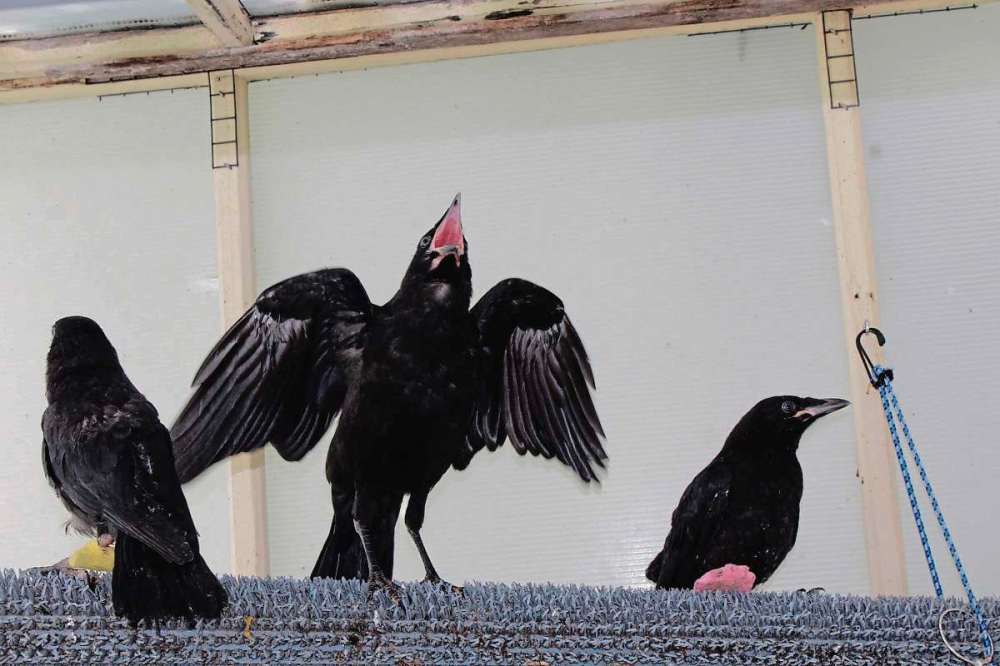
There are currently 121 animals in care. That includes everything from a bobcat to porcupines, woodchucks, eagles and owls to baby squirrels, ducklings and goslings. There is even a scarlet tanager, a songbird not typically found in Winnipeg, with a broken collarbone.
“(People) tend to interfere too quickly,” says Lisa Tretiak, PWRC’s president, of human interventions into the natural world. In doing so, she said, “unnecessary orphans are being created.”
With that in mind, there are some basic do’s and don’ts Tretiak recommends that the public keep in mind, when coming across injured or possibly orphaned wildlife.
Do:
• Take a photo and call the centre before moving an animal. By looking at the photo, the centre’s team can often decide whether intervention is required.
• Trust the expertise and advice provided by the PWRC team.
Don’t:
• Make assumptions. Spotting a young animal on its own, like a fawn for example, doesn’t necessarily mean that it’s in distress or orphaned.
• Provide food or milk. Many animals are actually lactose intolerant.
If it’s decided that intervention is required, Lisa and her team have established two drop-off locations in the city and are prepared to send specialized and trained volunteers to help. In the case of dangerous wildlife, provincial officers are called in for assistance.
As a registered charity, donations to PWRC are welcome and tax receipts will be provided. Sponsorships of the educational ambassadors are also welcomed.
To volunteer or for more information, the PWRC website is www.pwildlife.ca
Debbie Ristimaki is a community correspondent for Bridgwater Forest.
Debbie Ristimaki
Bridgwater Forest community correspondent
Debbie Ristimaki is a community correspondent for Bridgwater Forest.
Our newsroom depends on a growing audience of readers to power our journalism. If you are not a paid reader, please consider becoming a subscriber.
Our newsroom depends on its audience of readers to power our journalism. Thank you for your support.
Debbie Ristimaki
Bridgwater Forest community correspondent
Debbie Ristimaki is a community correspondent for Bridgwater Forest.
Our newsroom depends on a growing audience of readers to power our journalism. If you are not a paid reader, please consider becoming a subscriber.
Our newsroom depends on its audience of readers to power our journalism. Thank you for your support.
Advertisement Advertise With Us