


Southwest transit plan presented to committee
Advertisement
Hey there, time traveller!
This article was published 04/11/2019 (2441 days ago), so information in it may no longer be current.
The framework for public transit in southwest Winnipeg is about to be reset.
Administrators with Winnipeg Transit presented their plan to increase efficiency, speed, and reduce the number of pass-ups for transit users in the southwest quadrant of the city to the standing policy committee on infrastructure renewal and public works on Nov. 4.
“One of the most important things here is that it’s not just about the speed, it’s about reliability and about the frequency,” said Bjorn Rådström, Transit’s manager of service development, on Oct. 29, following the release of the Southwest Transitway Route Network.
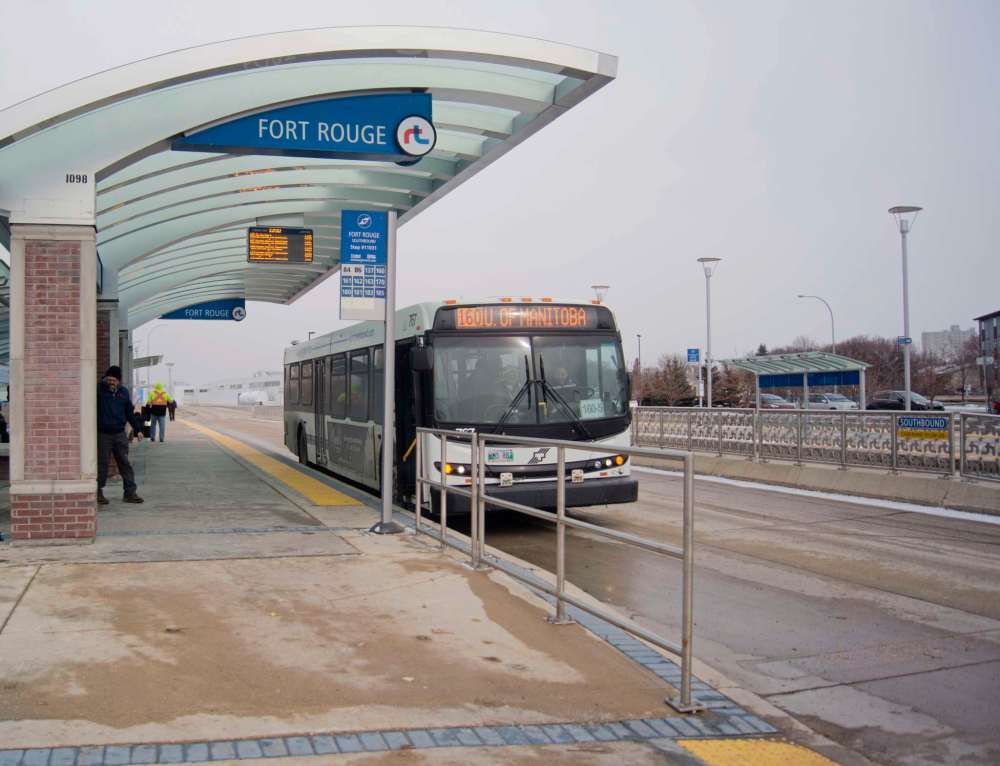
The entire 11.2-kilometre bus rapid transit corridor connecting downtown to the University of Manitoba is expected to come into operation on April 12, 2020, and will be accompanied by a slew of route changes.
In all, Winnipeg Transit is proposing to delete 18 routes which will be replaced by a new “feeder and spine” network encompassing 14 new routes, and the main BLUE Line, which will run the length of the transit corridor.
Winnipeg Transit also plans to alter 10 existing routes to better integrate into the new transit system in southwest Winnipeg, including the consolidation of route 47 Transcona and route 160 Pembina, to the University of Manitoba, into one.
“If somebody is going anywhere along the BLUE Line, or transferring to a feeder route at one of the stations, they don’t need to check the schedule,” Rådström said. “They just show up at the stop, their bus comes every three to four minutes, they get on and they get to where they need to go.”
Transit officials estimate the changes will save commuters between eight and 10 minutes on the average trip, but in exchange many passengers will have to give up their single-seat ride. Passengers will be expected to catch their neighbourhood feeder bus, take it to a BLUE Line station, and transfer to a BLUE Line bus, according to Winnipeg Transit. In some cases, riders will have to take a feeder bus to a stop on Pembina Highway to catch their next bus.
Adam Budowski, project manager with Winnipeg Transit, said the planning team heard concerns from riders about transferring under the proposed network during public consultations.
“U of M students seemed to really like this, as well as anyone from the south end of the city, even a lot of people who are taking transit to go downtown already — once we explained the frequency to them and how their commute would work, they were more or less OK and liked what they were hearing,” Budowski said.
“There’s a lot of freedom and flexibility that comes with this service plan even if it means transferring,” Rådström said.
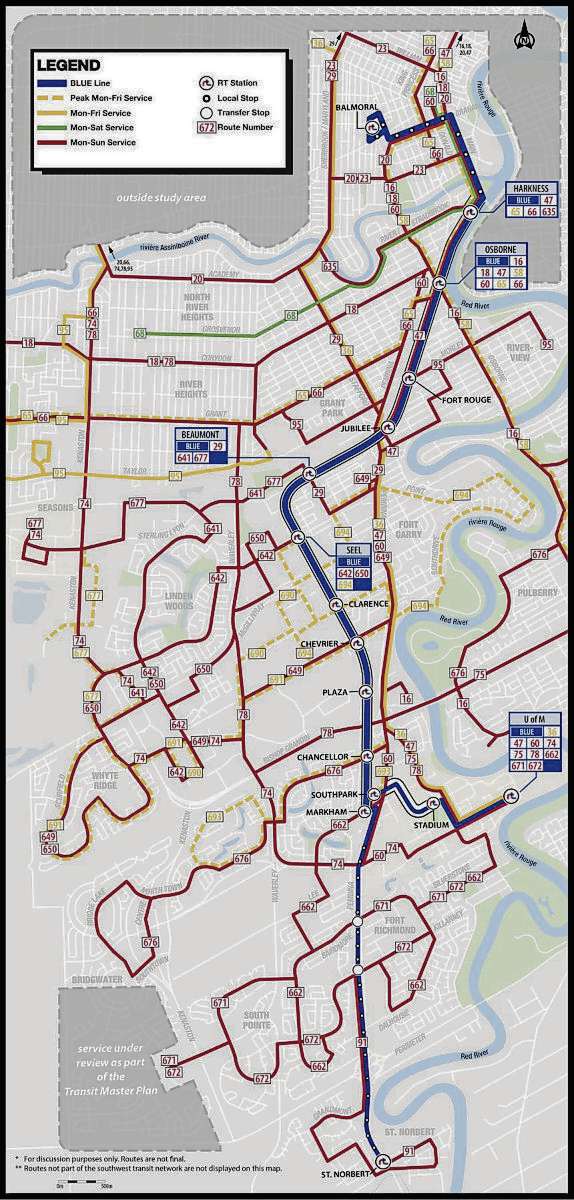
Winnipeg Transit projects wait times to transfer from a feeder bus to the BLUE Line will be between two to three minutes, during peak service. The BLUE Line will be serviced by articulated buses, and feeder routes in the suburbs have a proposed frequency of 10 to 20 minutes during peak service.
Transit has also proposed cancelling service at stops along Turnbull Drive with low use, and will not provide alternative service.
There are no changes proposed for routes 16 Osborne-Selkirk, 18 Corydon-North Main, 20 Academy-Watt, 58 Dakota Express, 67 Charleswood Express, 79 Charleswood, 95 Riverview-Grant Park-Polo Park, or 98 Grace Hospital-Westdale-Unicity.
According to an administrative report from Winnipeg Transit, operating expenses for the southwest transit network are estimated to be $4,555,620 in 2020 (a partial year) and $6,209,250 in 2021, the first full year of service.
“In order to proceed with the planning required to implement the schedule changes for April, 2020, there needs to be Council commitment that the required annual operating funding will be in place to support the service requirements,” the report states.