



Basic income touted for post-pandemic society
Advertisement
Hey there, time traveller!
This article was published 30/10/2020 (1969 days ago), so information in it may no longer be current.
A community health sciences professor at the University of Manitoba is one of three scholars behind a report which makes recommendations to the federal government about a basic income guarantee for Canadians.
Dr. Evelyn Forget, along with co-authors, Queen’s University scholars the Honourable Hugh Segal and Keith Banting, recently published a report titled, A Federal Basic Income Within the Post-COVID-19 Economic Recovery Plan.
The report was commissioned by the Royal Society of Canada, which has a working group on economic recovery after the pandemic.

Forget is a leading authority on basic income in Canada. She began researching basic income by re-analyzing Canada’s 1970s Mincome experiment and continued that work as an economist in the School of Medicine at the University of Manitoba.
She said the delivery of pandemic income support systems, such as the Canada Emergency Response Benefit (CERB), highlighted the financial straits Canadians have been living with in pre-pandemic times. When millions of people found themselves out of work or with reduced hours due to the COVID-19 virus, the inadequacies of Employment Insurance and provincial income assistance programs were laid bare, she said.
“For a large number of Canadians getting by on minimum wage jobs, their income barely is enough to cover the cost of rent, but not enough for food, utilities, transportation and other basic necessities of life,” Forget said. “Not only that, but we know that poverty has ramifications for their health, and their interactions with society and the justice system.”
A basic income would provide guaranteed support for people who lose their jobs, including those who do not qualify for Employment Insurance, and also provide additional income for those who work in low-paying jobs, Forget said.
A guaranteed basic income for people 18 to 64 would provide a stable living for Canadians, which would ease the cost on the health-care and justice systems, among other services, she said.
“We recognize that people will be skeptical about providing a basic income guarantee. Employers are worried about not being able to hire enough people,” she said. “But this type of economic support system has been studied, and proven to not be outrageously expensive, and that employers will be able to find employees.”
Instead of seeing a basic income guarantee as a drain on federal coffers, Forget said people should view it as an investment in the community, in your neighbours and relatives who are struggling financially.
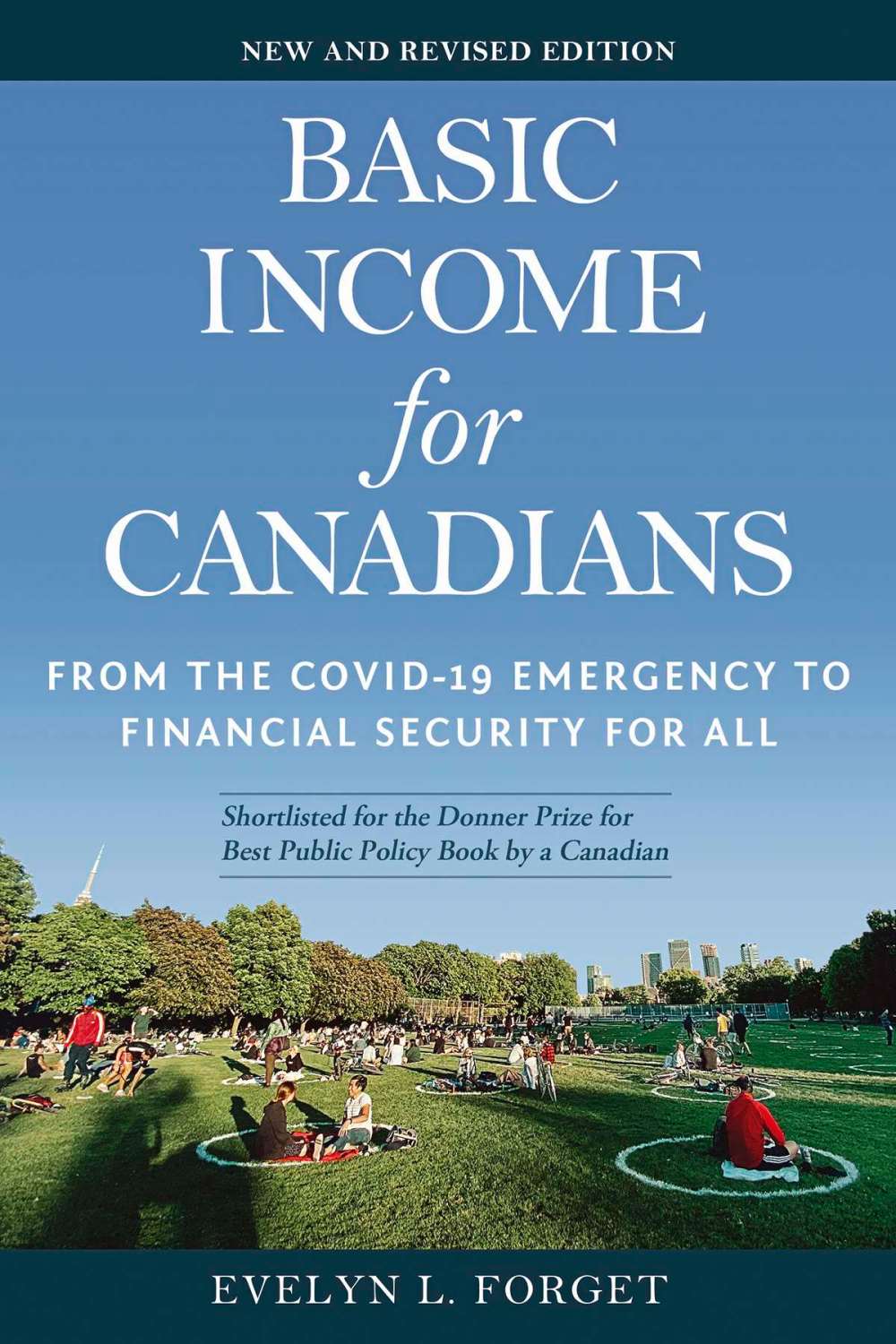
Forget recently released a second edition of a book on how the pandemic affected the financial lives of Canadians.
In Basic Income for Canadians: From the COVID-19 Emergency to Financial Security for All, Forget analyzes the CERB along with other basic income developments in Canada and around the world. She weighs the options, investigates whether Canadians can afford a permanent basic income program and describes how it could best be implemented.
The book is available from the publisher at www.lorimer.ca