


City approves St. Norbert heritage bid
Advertisement
Hey there, time traveller!
This article was published 29/01/2021 (1956 days ago), so information in it may no longer be current.
A key element in the quest to have the Old Town of St. Norbert designated as a national heritage site fell into place with a unanimous endorsement by Winnipeg City Council on Jan. 28.
Heritage St. Norbert is seeking heritage designation for 24 buildings and has submitted a formal application to the National Historical Sites and Monuments Board of Canada, according to a member of the organization.
“We have such an incredible inventory of historical buildings,” Louise May said, adding the paperwork on the designation was first submitted in 2016, with modifications made since then.
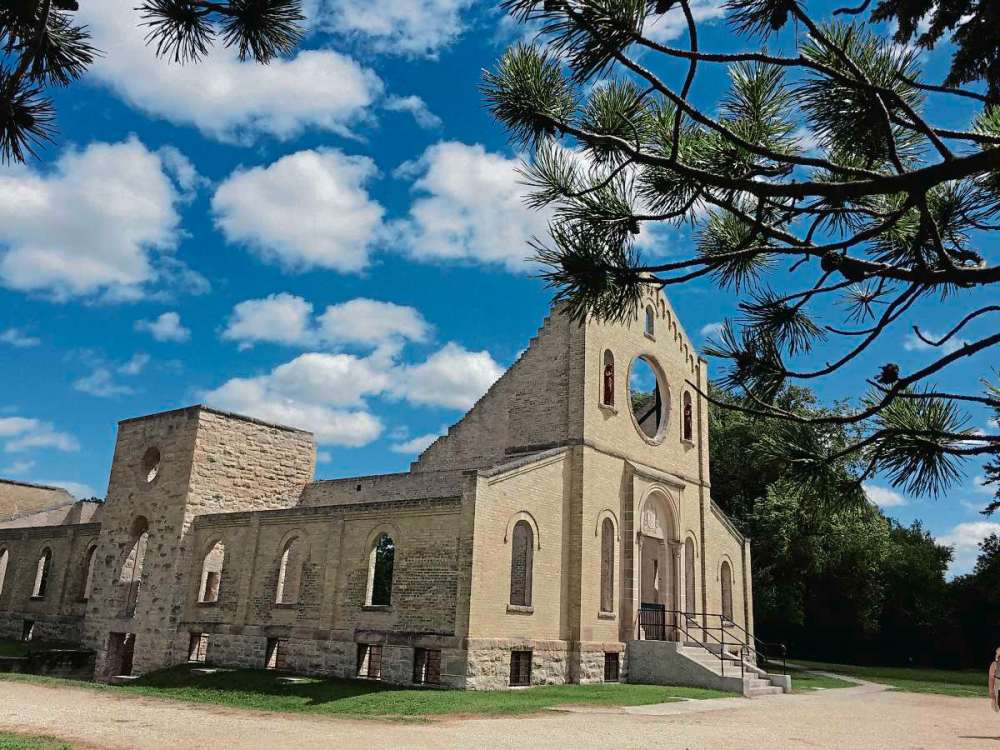
The City’s formal endorsement of the application is important because they are the “owners” of the old town.
“Normally, a national heritage designation is given to an owner, but when there’s a municipality involved, and the designation would be for a neighbourhood, we need the owners’ permission to apply,” May said.
She hopes the application will be reviewed by the National Historical Sites and Monuments Board of Canada at its next meeting this spring. “If we don’t get on the agenda, we’ll have to wait until their second meeting of the year, next December,” she said.
The designation would be a huge recognition of the history of St. Norbert. “We know that the Métis weren’t very well treated by Canada at the time, despite everything they did for Manitoba,” May said. “This recognition would be a part of reconciliation.”
The town’s recorded history dates back to 1821, when employees of the Northwest Company settled after the merger of the company with the Hudson’s Bay Company. The settlement was elevated to the status of parish in 1857 and given the name St. Norbert in honour of the first bishop of St. Boniface, Bishop Joseph-Norbert Provencher.
“A critical time in history was 1868 to 1869, when the Riel resistance led to Manitoba coming into Confederation,” May said. “At the time, the arrival of Canadian surveyors was seen by the Métis residents as an infringement on their rights. They had already laid out the map using the seigneurial system along the river. They knew that if surveyors could change that, they would lose their land.”
May said Riel and his mentor, Father Noel Ritchot, not only drafted the Manitoba Act, but they led the fight to hold off eastern Canadian troops by building a barrier — still known as La Barriere today — until Manitoba could enter confederation.
“That document enshrined the rights of the Métis and Indigenous people who were living with the settlers in the area at the time,” May said, adding the foundation of a provisional government by Riel led to the entry of Manitoba into confederation in 1870.
Coun. Markus Chambers (St. Norbert-Seine River), who first proposed the endorsement at the Louis Riel community committee meeting in early January, said he wants to acknowledge St. Norbert’s valuable contributions to Manitoba’s and Canada’s history
“There’s the fact that the residents of St. Norbert and area played such a role in Manitoba entering Confederation,” Chambers said, adding he had hoped to see the City’s endorsement come about in 2020 while the province celebrated its 150th birthday. “Other communities in Canada have heritage status, so it’s not difficult to see old St. Norbert gaining this as well.”
The historical designation would be commemorative in nature and would place the Old Town of St. Norbert into a national database of historical buildings. A designation would not restrict development of properties within the designation area, according to Chambers.
“Heritage St. Norbert has been documenting the history of all the buildings,” May said, adding the organization hires summer students to do the research, conduct tours of the neighbourhood and run McDougall House.
For more information on the Old Town of St. Norbert, see heritagestnorbert.ca