



A mental health tool kit for the Black community

Advertisement
Hey there, time traveller!
This article was published 03/12/2021 (1466 days ago), so information in it may no longer be current.
Mental health has become a front-and-centre health issue during the COVID-19 pandemic. People who had never experienced mental illness are reporting stress, anxiety and loneliness.
The Black community has also began talking about mental illness — a topic that had never gained much traction in the past.
However, since the United Nations declared 2015-2024 The Decade of Peoples of African ancestry, many opportunities for funding have become available in Canada to explore new and emerging issues for Blacks.
In 2019, a coalition of Black and other community organizations in Manitoba collaborated in a successful proposal to promote health equity in Canada.
The 24-month project was led by principals and co-researchers Charlotte Lwanga and Antoinette Zloty. Their research resulted in the development of a culturally appropriate tool kit packed with information and resources on mental illness as it pertains to Black mental health.
Other members of the inclusive team are Frank Idome, from Ghana; Alusola Akintola Nigeria; Jacqueline Obinnuju from Nigeria; Marty Kinnaore, Canada; Jennifer Otis, Nigeria; Arneila Myers, Jamaica; and Ebenezer Ayim, Ghana.
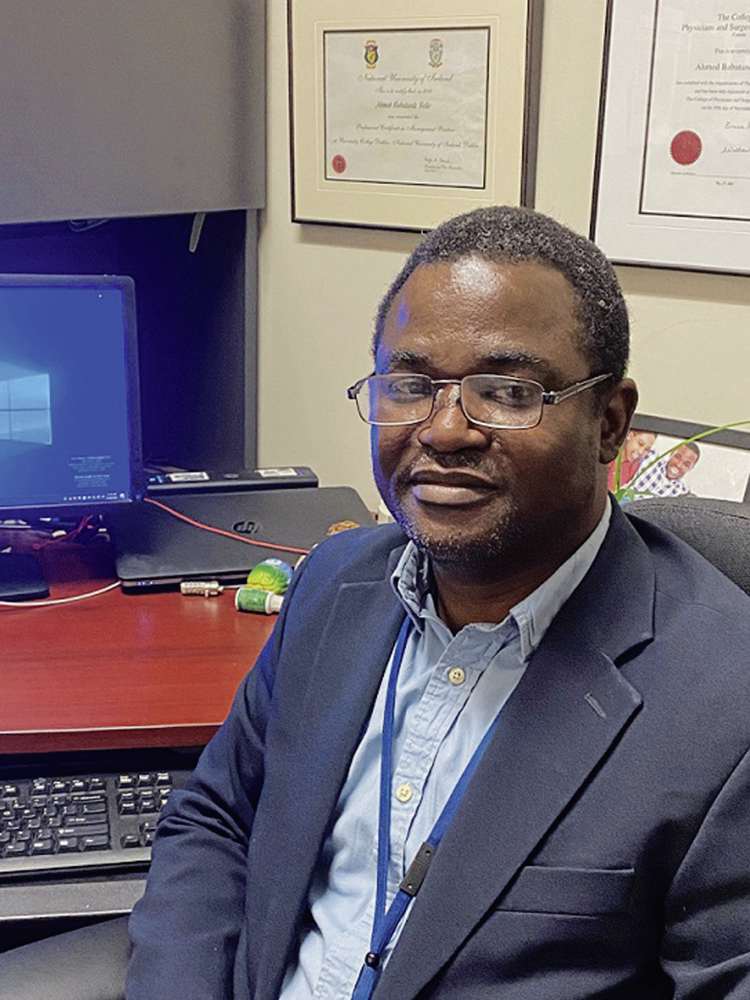
Dr. Tunde Bello, a registered psychiatrist with the Winnipeg Regional Health Authority has been tasked with promoting and explaining the tool kit to the Black and broader Winnipeg community.
A Winnipeg resident for about 10 years, Dr. Bello said that he is impressed with the tool kit. He also said he is impressed with the quality of volunteers within the Black community.
Dr. Bello said that over the 10 years he has lived in Winnipeg, he has witnessed an increasing number of Black African people who appear to be struggling with mental illness and concomitant poverty.
When asked who would benefit the most from the tool kit, he responded:

“If I have anxiety I would want to get a tool kit to know where to find resources to help me. Using our tool kit as a guide, policy makers will be able to develop culturally relevant services for Blacks.”
Dr. Bello said treating Blacks with mental illness can be complicated as underlying the illness are assumptions that may be strange to a non-Black service provider
“Having a background in black culture may help,” he said. “For instance, the supernatural or the belief that someone has performed witchcraft or voodoo on them because of jealousy is very common in many Blacks, while others believe that mental illness can be cured by praying 24 hours a day. A service provider would have to know how to effectively incorporate these beliefs in the treatment protocol.”
“‘Education and awareness are crucial,” he added. “Many people may present too late. Our people deny their diagnosis and tend to seek out second and third opinions before accepting their diagnosis and the time spent doing that could exacerbate their condition,” he said, adding, “I am very happy to be part of this work as a Black professional in the field”
Beatrice Watson is a community correspondent for Fort Rouge.
Beatrice Watson
Fort Rouge community correspondent
Beatrice Watson is a community correspondent for Fort Rouge.
Our newsroom depends on a growing audience of readers to power our journalism. If you are not a paid reader, please consider becoming a subscriber.
Our newsroom depends on its audience of readers to power our journalism. Thank you for your support.
Beatrice Watson
Fort Rouge community correspondent
Beatrice Watson is a community correspondent for Fort Rouge.
Our newsroom depends on a growing audience of readers to power our journalism. If you are not a paid reader, please consider becoming a subscriber.
Our newsroom depends on its audience of readers to power our journalism. Thank you for your support.
Advertisement Advertise With Us
Advertisement Advertise With Us